
For years Finland took its anti-personnel mines apart. Now it plans to buy a million new ones.
Al Jazeera reported on 19 October that Helsinki is looking to acquire one million anti-personnel mines and has set aside 100 million euros ($112 million) for them. The plan follows Finland’s exit, alongside its neighbours, from the international compact that rejects these weapons. Across its eastern border is Russia.
The order
The plan first appeared in Ruotuväki, the Defence Forces’ own magazine, before the national press picked it up. According to Yle, the Finnish public broadcaster, the army wants the mines made at home. Colonel Riku Mikkonen of the Army Command told the news agency STT that officials are collecting information from possible suppliers. The aim is to have contracts signed by the end of 2027 and production running by 2028. Mikkonen said roughly half a dozen Finnish companies could do the work, and he left one door open:
However, at this stage, buying the mines from abroad is not totally ruled out.
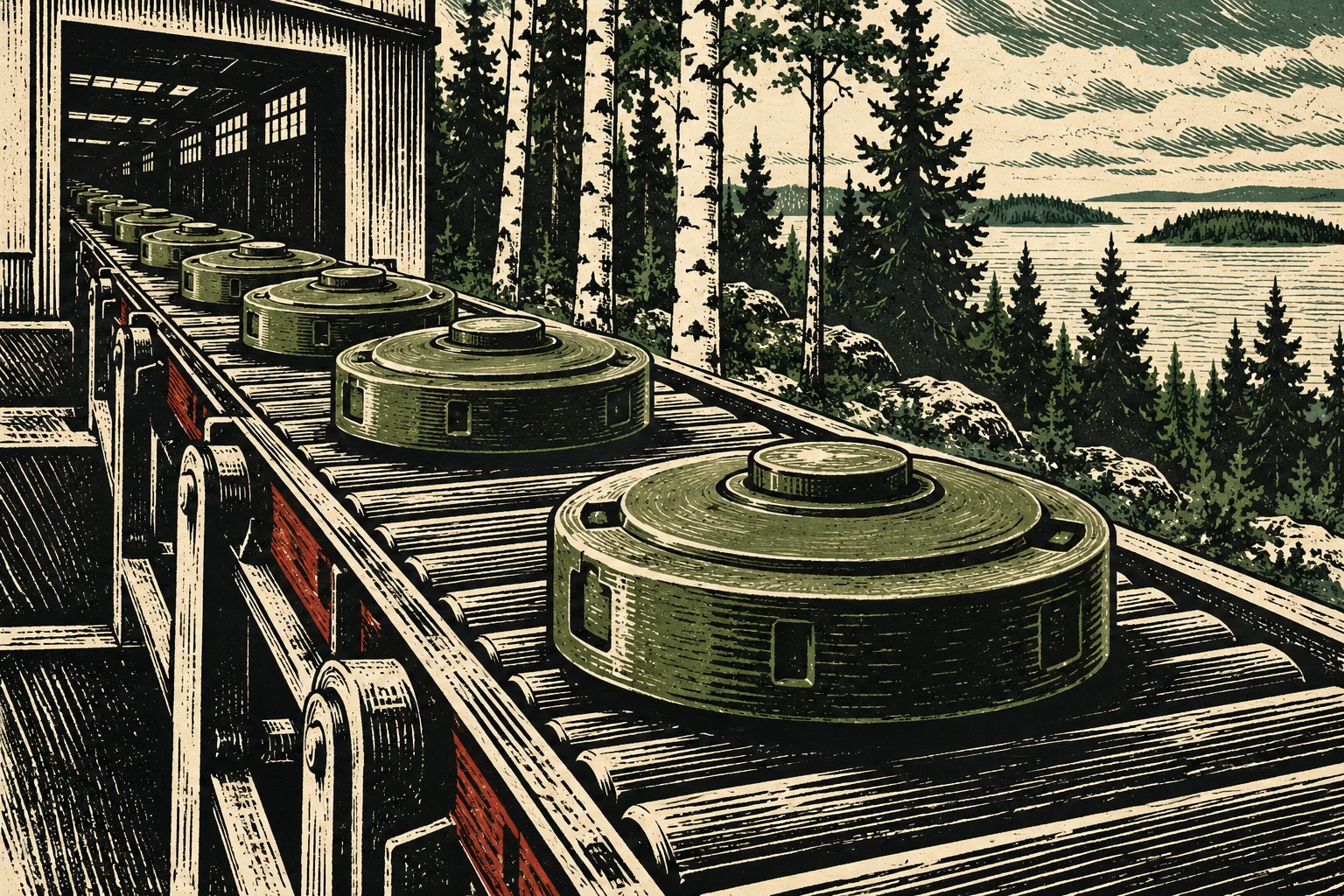
Divide the money by the number of mines and each one comes to about a hundred euros.
Some of the factories have already said they want the work. Reuters reported earlier that the Finnish defence firms Nammo Lapua, Insta and Raikka had told parliament’s defence committee they were interested in making mines.
Leaving the treaty
Al Jazeera described the agreement Finland left as a UN charter. It is the Ottawa Convention, the 1997 mine-ban treaty. The UN only enters the story because the Secretary-General is the treaty’s depositary, the official who receives countries’ notices of withdrawal. Finland joined it in 2012, later than most of Europe. Getting out was a slower and more formal business than the word “withdrawal” suggests.
The government began preparing the exit on 1 April 2025. On 19 June, Parliament approved it by 157 votes to 18. On 10 July, Finland sent its notice to the Secretary-General, to the Security Council and to every other state party. The treaty makes a withdrawal wait six months after that notice arrives, so Finland stopped being bound by it on 10 January 2026.
Ministers explained the decision with the war next door. Before it was taken, Prime Minister Petteri Orpo called Russia a long-term threat to the security of Finland and of Europe. The Defence Ministry said the Defence Forces had studied the fighting in Ukraine and asked what it meant for Finland’s own defences. When the exit took effect in January, Defence Minister Antti Häkkänen announced that the mines would be brought back and that the ministry would start talks with Finnish industry. He has pointed to what Russia is doing in Ukraine: laying mines, building fortifications and sending infantry forward in huge numbers.
Finland did not leave alone. Estonia, Latvia, Lithuania and Poland, all among Ukraine’s firmest allies, have also quit the treaty and all point to Moscow. Lithuania has announced it will start making anti-personnel mines again from 2026. One after another, the states along Russia’s western edge are taking back a weapon they had promised to give up.
The border
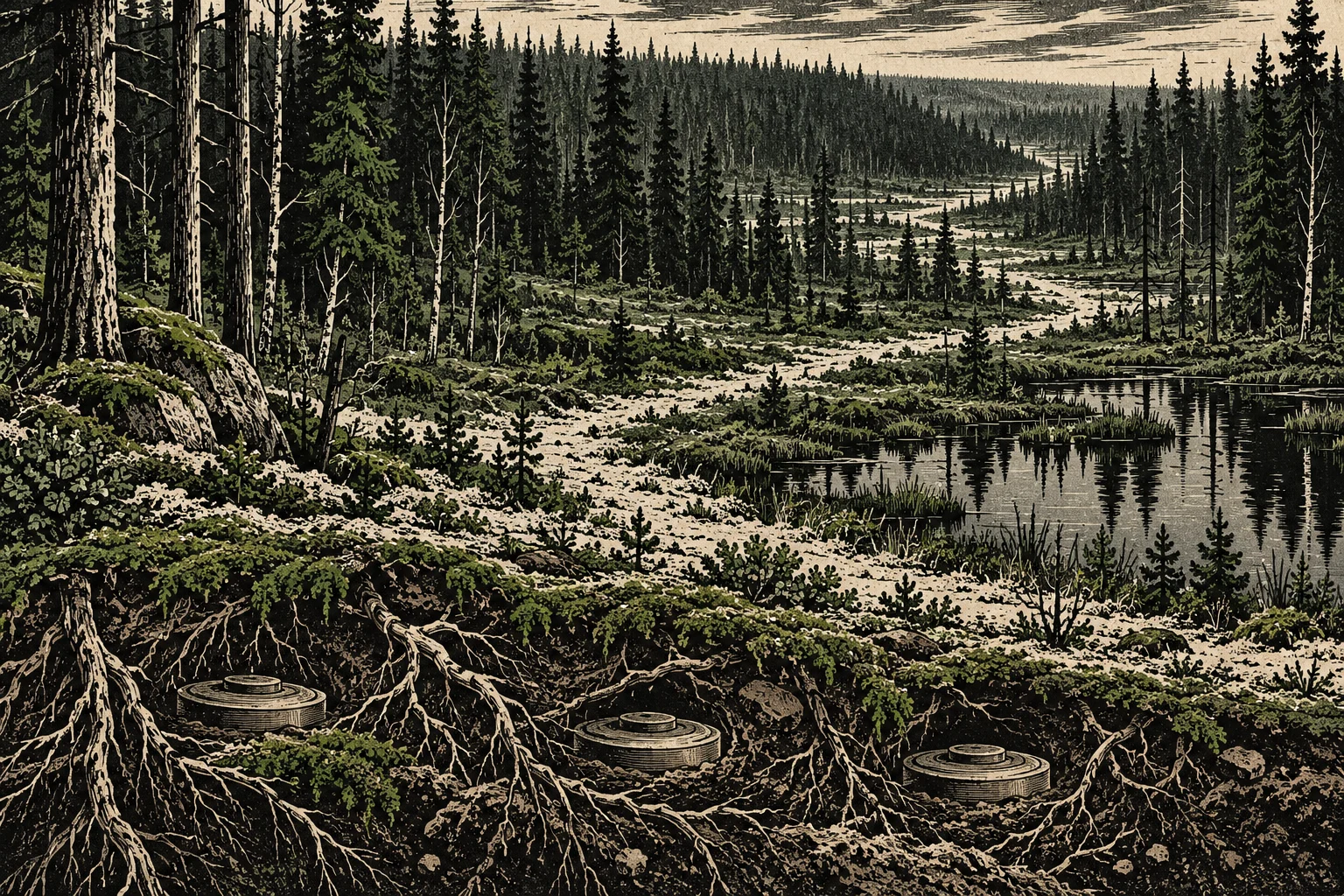
The border runs for about 1,340 kilometres (830 miles). For most of its length it crosses forest, lake and bog, and few people live near it. It is easy to see why a defence planner would think about mines there. Recent months have given them more reasons: Moscow has threatened nuclear weapons over Kaliningrad, and NATO describes a Russian sabotage campaign across the alliance.
The government has also tried to explain the decision to the rest of the world. Finland says it remains committed to the treaty’s humanitarian goals, that its other duties under international law, including international humanitarian law, are unchanged, and that it will keep paying for humanitarian demining. Officials stress that the mines would only ever be used in defence.
Even so, a government that says it still shares a treaty’s goals is now buying the weapon the treaty bans. In this argument, a promise not to use a weapon only binds a country until it decides it needs the weapon. A state’s first duty is to survive, and the ministries can say that without embarrassment. The people who usually pay for a mine are not the ones who ordered it, and are often not born yet when it is laid. That is a harder thing for any ministry to explain.
According to Yle, the one-million target is about the size of the old stockpile Finland destroyed after it joined the treaty in 2012. The aim is to have Finnish factories making them again by 2028.