
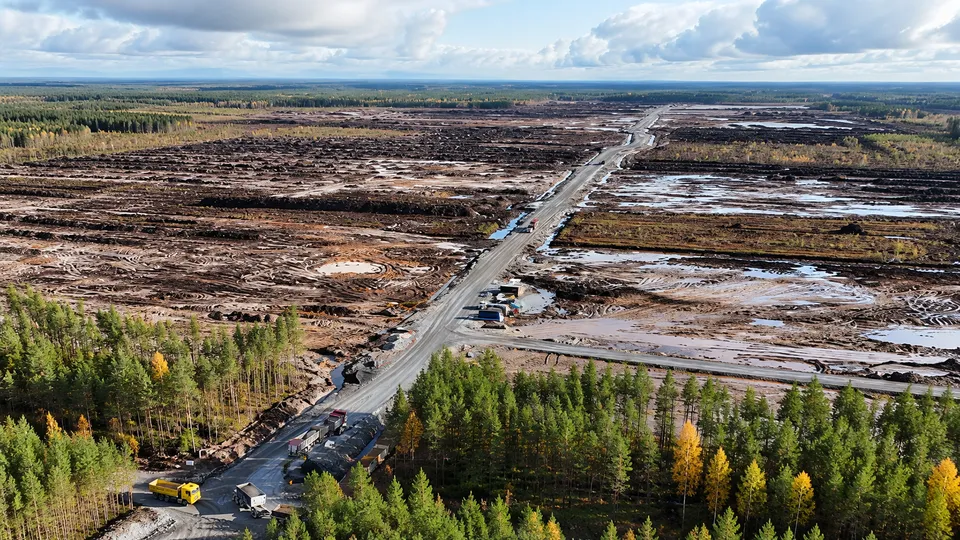
In northern Finland there are two places where the forest has been giving way to the future. One is in the municipality of Muhos, in the Leppiniemi area. The other is at Otanmäki, near the city of Kajaani. At both, Google plans to build data centres. On Tuesday, 6 October, the Finnish state told it to put down the chainsaws.
[As AFP and Reuters reported for Al Jazeera](<https://aljazeera.com/news/2026/10/7/finland-orders-halt-to-work-on-google-data-sites-over-environment-concerns>), a Finnish government authority has ordered work on the two sites to stop until the compulsory environmental impact assessments are finished. The authority is the Licensing and Supervision Authority, known as LVV. The order went to Tuike Finland, the Google subsidiary that runs the projects.
What must stop
The order is precise, as Nordic orders tend to be. According to the [Helsinki Times](<https://www.helsinkitimes.fi/business/29355-google-ordered-to-halt-data-centre-works-in-finland-over-environmental-concerns.html>), the work that must stop is tree felling, digging, blasting, crushing, removing soil, drainage, and building site roads and storage areas. Planning, measuring, soil surveys and other low-impact work that is easy to undo may go on. The company must stop at once, and [no later than 23 October](<https://english.news.cn/europe/20261007/c90bb9bed188430da1c130769453da35/c.html>), Xinhua reported, citing LVV. It has until 14 October to reply in writing and say whether it will comply.
The agency found that both sites had already been changed. Forest had been cleared and topsoil stripped. Roads and storage areas had been built. Ditches and culverts had been altered, and stormwater work had been done. Tommi Muilu, head of LVV’s environmental department, said that “these measures change the environment and cause impacts”. He added that finding and weighing such impacts is the whole point of an assessment.
The assessment is supposed to come first and the clearing afterwards. Here the order was reversed.
Two laws, one forest
The Finnish Association for Nature Conservation said in September that more than 300 hectares of forest had been cleared at Leppiniemi before the assessments were complete. It argued that changing land use on that scale required an assessment first. It also raised concerns about the work at Otanmäki.
Google’s defence relies on a different law. The company says it acted in good faith under Finland’s Forest Act, carried out nature surveys and left environmentally valuable spots alone. Sondre Ronander, its communications manager for Finland and Norway, did not argue the point.
“We understand the concern caused by the situation. In this case, we did not meet the high standards we set ourselves.”
A company worth more than many states read the forestry law and found permission there. The state pointed to the other law, the one about assessment. There is a reflection here, and it should be marked as one. The powerful rarely break rules in the open. They pick the rulebook that suits them, and the state has to remind them that the other rulebook exists too.
Google says it will comply. It also plans to plant trees on 130 hectares in Muhos. LVV said that if the company had refused, it would have considered administrative enforcement, possibly including a conditional fine. Since Google has agreed, no enforcement is needed for now. Both assessments are still unfinished and are expected to be completed during 2026. The pause may therefore last weeks or months rather than years.
Thirteen billion euros
The money explains the urgency. In September, Google announced it would invest 13 billion euros ($14.6bn) in digital infrastructure in Finland over the next two years to power its artificial intelligence ambitions. A sum that size makes a small country’s procedures look slow. It is also the kind of sum that tempts a company to start digging before the paperwork is done.
Finland’s opposition has pointed to a different cost. According to the AFP and Reuters report, it has called for measures to prevent power shortages and the soaring energy prices that data centres cause. The forest is visible, so it is the first loss people notice. Electricity is harder to see. Every household meter in the country is connected to it.
Finland is not alone in this. Across Europe, local opposition to data centres has delayed some $42bn in AI investment. On the other side of the Atlantic, hundreds rallied across Washington state for a moratorium. The fight is the same in each place. Machines need land, water and electricity, and the people who live nearby keep asking who decided, and when.
In Muhos and Kajaani the answer, for now, is the state. The deadline is 23 October.