
The FAA is reviewing a plan for up to 456 Starship launches and 912 landings per year at SpaceX’s Starbase complex outside Brownsville — roughly 18 times the currently permitted 25 launches and 50 landings, per the new edition of Stephen Clark’s Rocket Report at Ars Technica, citing the San Antonio Express-News. At that cadence, SpaceX would average a launch every 19 hours and about 2.5 landings a day. Two landings per launch assumes both halves of the stack return to Texas: the Super Heavy booster, which SpaceX has already landed back at Starbase, and the Starship upper stage, which it has never attempted there. Elon Musk says that first attempt could come on the next test flight, later this year.
The number disguises the dependency. Satellite operators increasingly fear an under-supply of U.S. launch capacity as SpaceX phases out the Falcon 9 in favor of Starship — the much larger, “relatively unproven” vehicle Clark’s report calls it bluntly — and the retirement timeline for Falcon 9 and Dragon is already compressing rideshare options. The rockets that might backfill the Falcon’s role mostly have 2027 or 2028 written on them this week.

Neutron: small voids, big delay
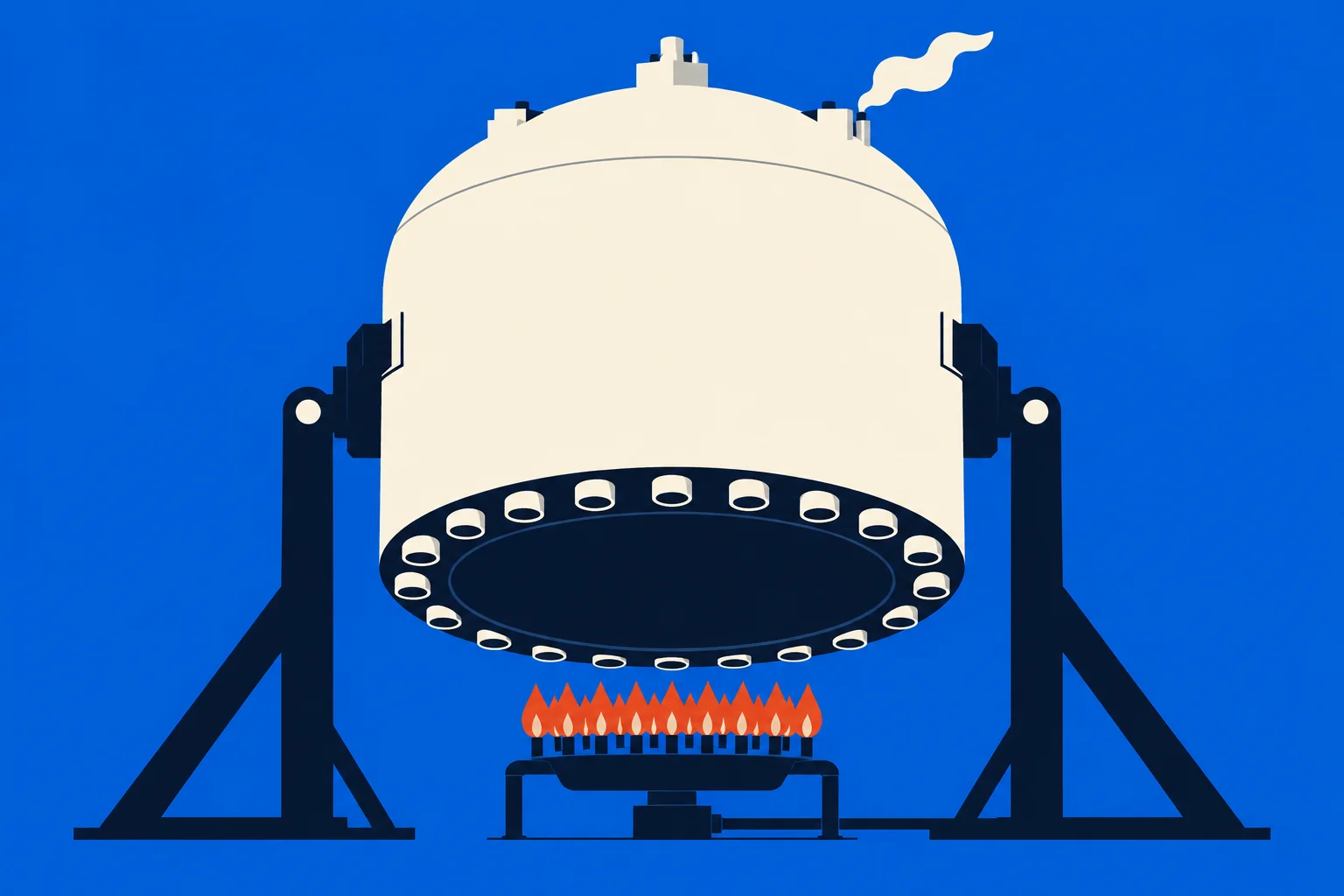
Rocket Lab confirmed Wednesday that its Neutron vehicle won’t fly until 2027, after technicians found small air pockets — voids — between carbon-fiber layers in the forward dome of the first-stage propellant tank. Clark notes the announcement publicly confirmed what nearly everyone inside the company and industry already knew: August’s official update still held out hope of delivering Neutron to its Wallops Island, Virginia pad before year-end, a schedule that would have pushed first flight into 2027 anyway. Carbon composites offer low weight, high strength, and corrosion resistance, but are generally harder to manufacture than metal structures. Neutron’s reusable first stage is built from them at scale, and the manufacturing is the thing that isn’t working.
Stoke ships the stage that matters
Stoke Space’s reusable second stage for the Nova rocket left its Kent, Washington factory for the last time this week, bound for the company’s Moses Lake test site where it will undergo cryo-proof testing and a hotfire campaign. The stage is the interesting half of the vehicle. Nova’s booster is a conventional reusable first stage — it finished “proto-qualification” testing earlier this year — but the upper stage carries a regeneratively cooled heat shield and a ring of 24 thrusters collectively named Andromeda. Good cold-soak and hotfire at Moses Lake send it to Cape Canaveral for final assembly and a launch targeted for next year. Nova is the only fully reusable Western rocket other than Starship in advanced development, which also means the U.S. margin for reusable capacity rests on two unproven vehicles.
The small end hedges its bets
Reflect Orbital, the California startup planning to fly roughly 50,000 in-space mirrors to sell sunlight on demand, bought two launches from India’s Skyroot Aerospace on Wednesday — one on Vikram-1, which in July became the first privately developed Indian rocket to reach orbit, and one on an upgraded variant called Vikram-1U. Reflect’s first satellite still flies on a SpaceX Falcon 9 rideshare next year — the FCC approved that satellite earlier this year — but the company’s selection of Skyroot for later flights is a direct vote against U.S. availability once Falcon retirement bites.
Colorado startup LEAP, meanwhile, wants its dedicated small-launcher, Bighorn, flying orbitally by 2028. The vehicle moves 320 pounds (145 kilograms) to low-Earth orbit using a single-engine booster and a kick stage named Cottontail. Its Denver-suburb factory is specified for six vehicles a year initially, scalable to two a month. “We know how to build remarkable vehicles. The challenge is building enough of them fast enough,” CEO Chris Beckman said last month. Both sides of the claim are currently aspirational: LEAP’s only flight to date is Bullfrog, a suborbital rocket that reached 130,000 feet (40 kilometers) in May.

Falcon 9 keeps carrying the U.S. calendar
Until the replacements fly, SpaceX’s workhorse keeps absorbing the demand. Saturday saw a Falcon 9 lift the Space Development Agency’s fourth plane of Tranche 1 Transport Layer satellites from Vandenberg — the first batch built by Northrop Grumman in the SDA’s missile-warning and data-relay network. The mission had aborted on October 5 when the rocket’s automated systems halted the countdown just before liftoff, then slipped twice more as SpaceX ran extra safety checks and the Space Force deconflicted it from other deployments.
On Tuesday a second Falcon 9 left Cape Canaveral’s Pad 40 carrying CRS-35, SpaceX’s 35th cargo run to the ISS: 6,322 pounds (2,868 kilograms) of science and supplies, including two roll-out solar arrays for the station’s power system, payload for more than 40 investigations (one testing a more flexible, durable type of glass in orbit), and fresh food for the seven-person crew. Dragon docked to the Harmony module on Thursday.
The next marquee launch is not American. As soon as Monday U.S. time, a Japanese H3 rocket is scheduled to send the Martian Moons Exploration (MMX) mission toward Phobos and Deimos, where it will deploy a rover and collect specimens for return to Earth in 2031. The numbers to watch afterward: whether the FAA opens the door at Starbase, whether the next Starship flight attempts a Texas landing, and whether Rocket Lab can close out its carbon problem anywhere near on schedule.