
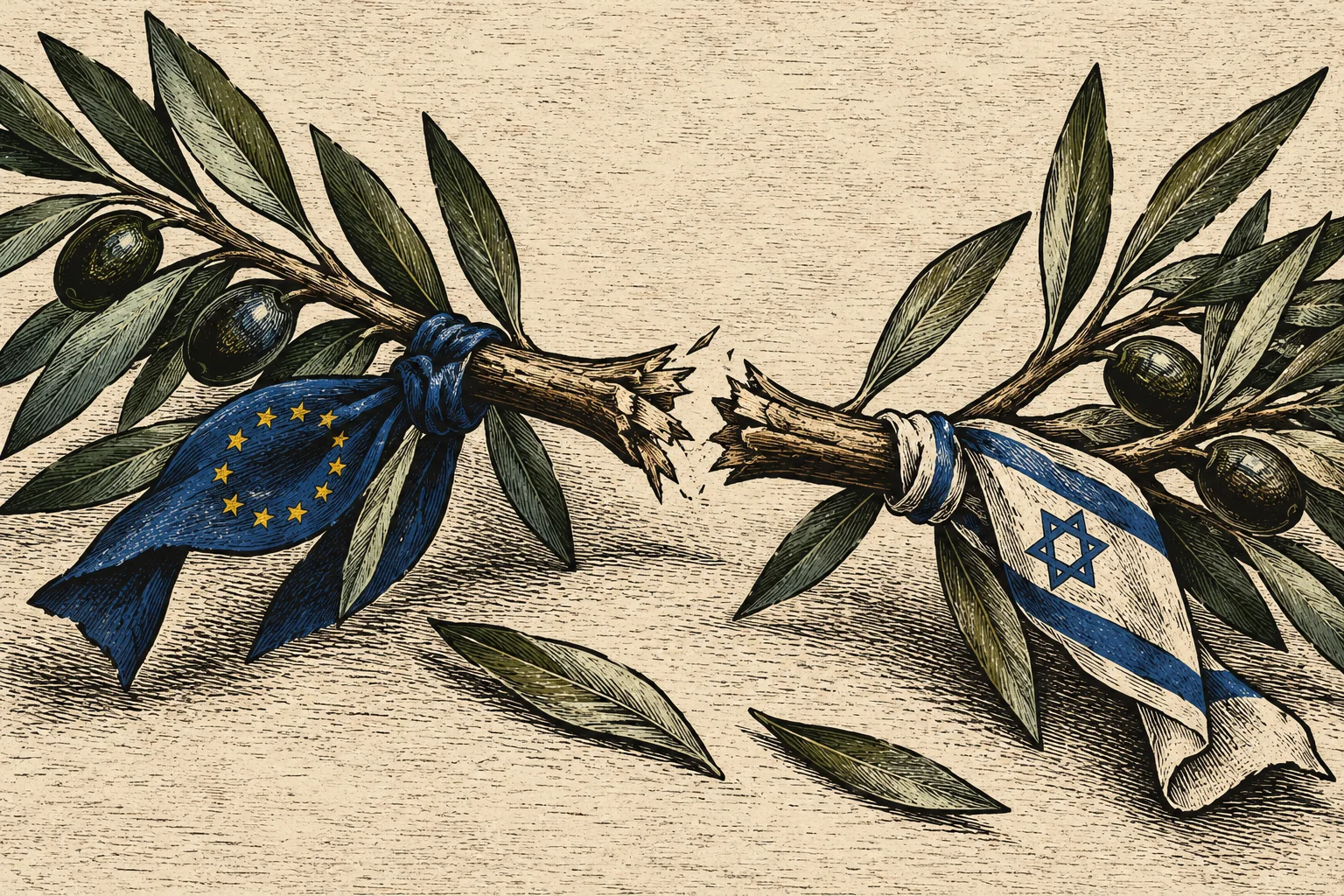
On April 23, 2023, marking Israel’s 75th anniversary, European Commission President Ursula von der Leyen said this: “Europe and Israel are bound to be friends and allies.” It’s the sort of thing you say at an anniversary. Three and a half years on, as Caolán Magee lays out for Al Jazeera, that friendship has frayed badly, and the question going into Israel’s October 27 election is whether a new government would change anything. The short answer from most of the people he spoke to is: a little, slowly, maybe.
The reason for the fraying is the war in Gaza, where at least 74,000 Palestinians have been killed. The ties that used to be routine (football, Eurovision, intelligence sharing, defence industries woven together) have all become contested. Some European countries pulled out of Eurovision over Israel’s participation, and some footballers refused to play Israel’s team. At the UN General Assembly, Ireland’s Micheál Martin said Israel’s actions in Gaza “will shame the world,” and Spain’s Pedro Sánchez condemned “the genocide that Netanyahu continues to perpetrate in Gaza.” Britain has banned goods from illegal settlements, and its foreign secretary has accused settlers of ethnic cleansing. On Saturday, settlers attacked Belgian, French and Polish diplomats who were visiting olive harvesters near Taybeh in the West Bank, part of a season of attacks on farmers; the day before, settlers attacked a US journalist north of Ramallah.
The voting math
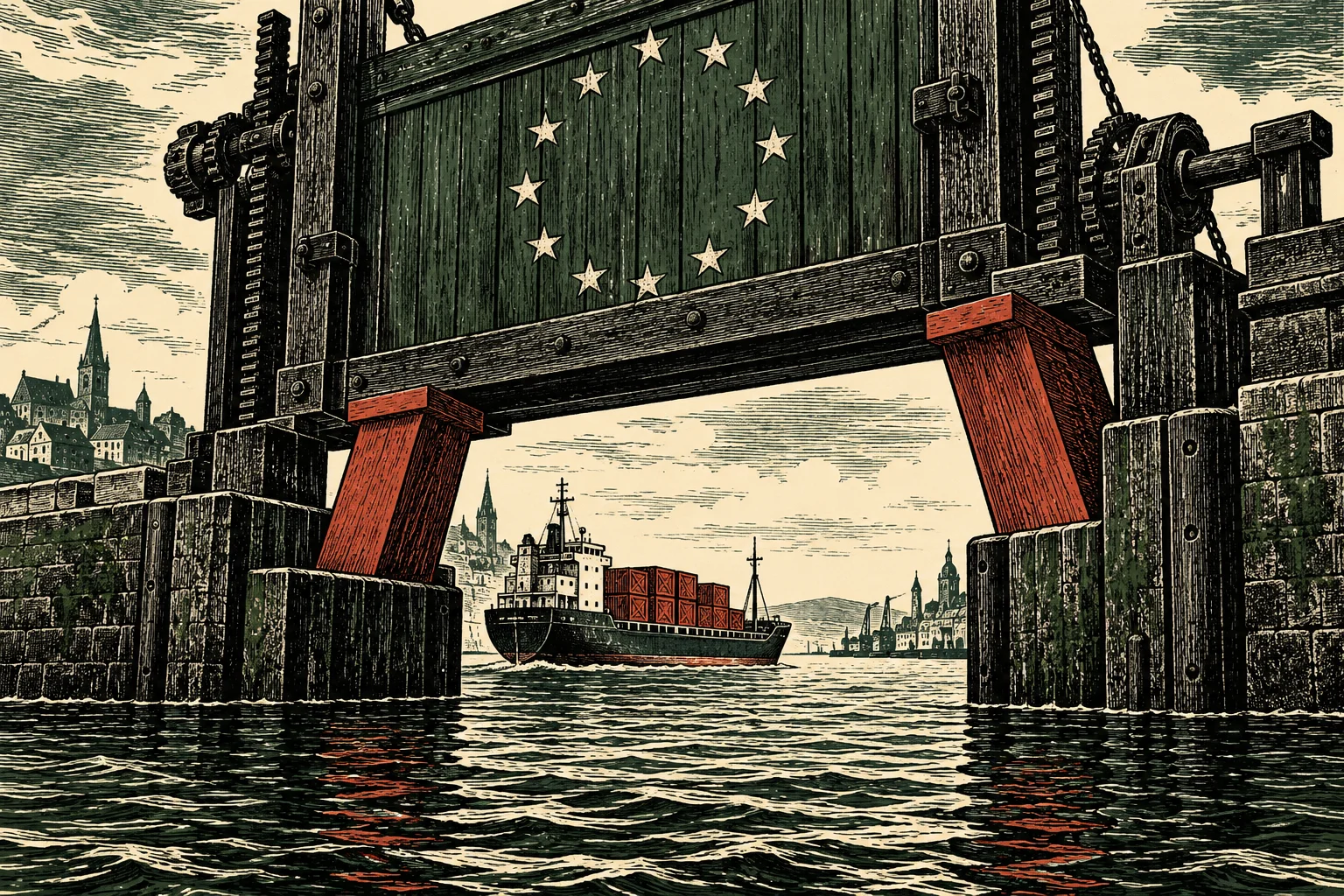
If you want to know how much Europe’s anger actually costs Israel, the answer runs through some fairly dull procedural rules. The EU’s main lever is the EU-Israel Association Agreement, the treaty that gives Israeli goods preferential access to the European market. In September 2025, after a review found Israel had breached the agreement’s human rights clause, the Commission proposed suspending some of its trade provisions and adding sanctions. As reported at the time, about 37% of the €15.9 billion in Israeli goods imported into the EU would lose tariff-free treatment, which works out to roughly €5.9 billion of goods, facing duties of about €230 million. That’s about 4% of the affected trade. A real cost, though not a ruinous one.
Then there’s the procedure. Suspending the whole agreement needs all 27 member states. Suspending just the trade parts needs a qualified majority: 55% of member states, representing 65% of the EU population. That second threshold is the interesting one, because it means a few large countries can block things. And they did. At an April 21 meeting in Luxembourg, a proposal from Ireland, Spain and Slovenia to partly suspend the agreement did not get enough backing, with Germany, Italy, Hungary, the Czech Republic and Austria not supporting it. The day before, UN experts had called for immediate suspension as a “minimum requirement” under international law. Germany and Italy are big countries; 65% of the EU population is hard to reach without them.
So the action shifted to things that are easier to do. Settlements fall outside the scope of the agreement, and the Commission has been weighing options on settlement trade. In an August petition response, the EU’s diplomatic service said the Commission had put its bilateral support to Israel on hold, apart from support for civil society and Yad Vashem, while “discussions continue in the Council” on measures needing member-state approval. Haaretz reported this month that Sweden’s opposition, which narrowly holds a majority, could push Stockholm toward backing suspension. Every vote counts when you need 55% of countries.
What moves those votes is public opinion, which is shifting in one direction. Pew found unfavourable views of Israel rising between spring 2025 and spring 2026: from 61% to 69% in the UK, 66% to 75% in Italy, and 64% to 73% in Germany. Neve Gordon of Queen Mary University argues that “the ruling elite in several countries is trying to align itself with the public.” Nathalie Tocci credits protests for European recognitions of Palestinian statehood, the moves toward suspending the agreement and the settlement import bans. Julie M Norman of Chatham House says Europe has gone from targeted steps, like sanctions on Itamar Ben-Gvir and Bezalel Smotrich, to scrutinising the Israeli state itself. The exception is Germany, where Oxford’s Janina Dill says two successive governments have been “utterly unwilling to act” on public criticism. That’s notable, because Germany is also one of the countries holding up the qualified majority.
Meanwhile, in Israel
Now look at it from the other side. A Mitvim Institute poll last year found 67% of Israelis saw the EU more as an adversary and only 14% as a friend. In April, the Israel Democracy Institute found 92% of Jewish Israelis rated the military’s handling of the Iran war highly, and 80% backed continuing to fight Hezbollah even if it meant friction with Washington. In September, the Jewish People Policy Institute found 72% of Jewish Israelis would reject pulling back to Gaza’s border without a security perimeter inside the territory. The campaign is about Hamas, Hezbollah and Iran, with the opposition adding the cost of living, an October 7 inquiry and drafting ultra-Orthodox men. Isolation, writes Yaakov Katz for Chatham House, “is barely discussed”; Israelis tend to read foreign criticism as either antisemitic or ignorant.
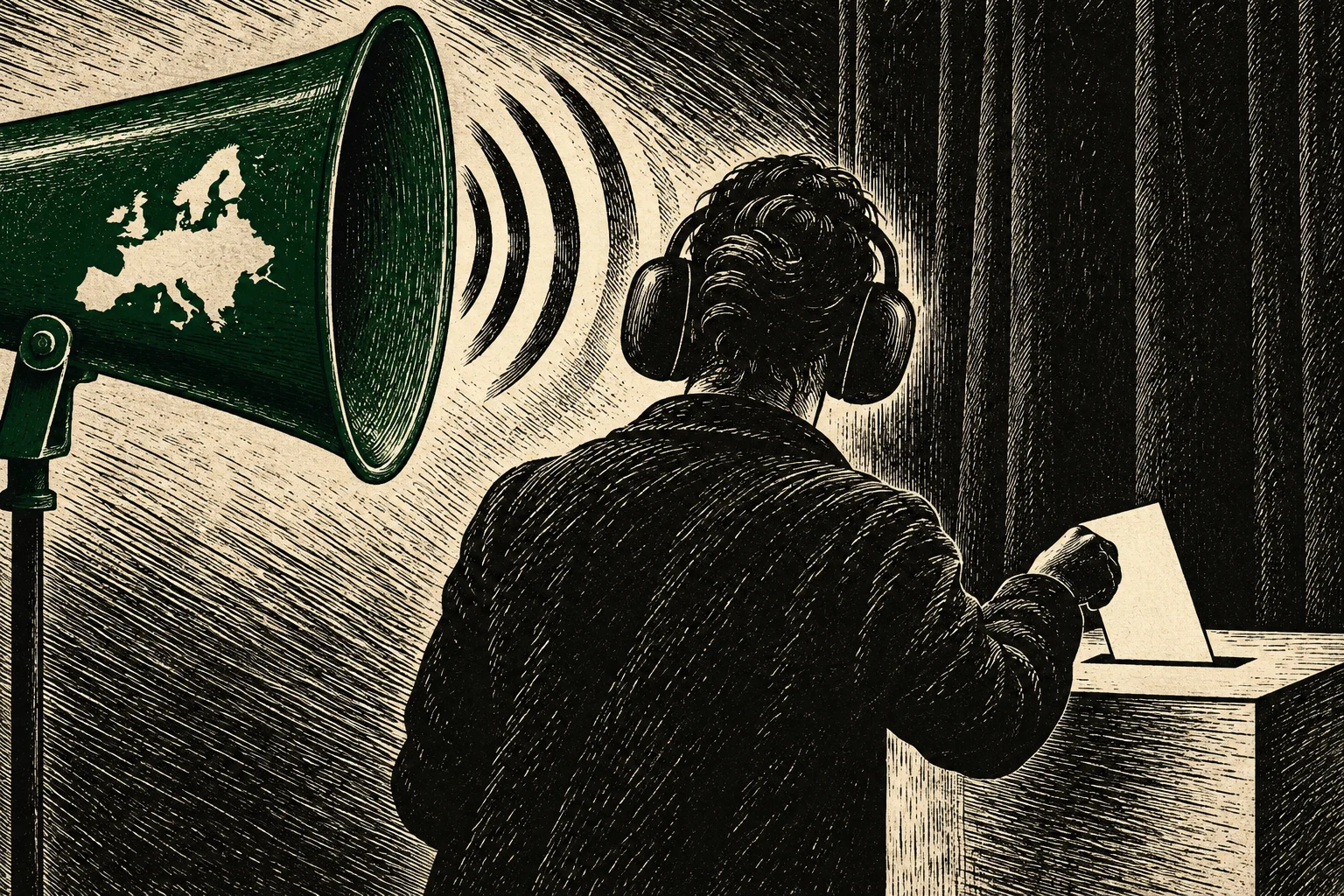
I think this is the core of the problem. European pressure is meant to change Israeli behaviour by raising the price of it. But a price only works if the buyer notices it, and Israeli voters mostly don’t seem to, or they treat it as more evidence that Europe is hostile, which is a fairly stable equilibrium.
The race is too close to call. The main challenger is Gadi Eisenkot, a former military chief who leads the centrist Yashar party and who opposes Palestinian statehood, as do most of the parties trying to replace Netanyahu. Chatham House’s Yossi Mekelberg warns that if Netanyahu returns with the far right, “certain things will become irreversible,” while a more liberal government would make dialogue with Europe “more reasonable and rational,” though change would be slow. A new government might bring more aid, slower settlement growth and possibly dropping the E1 plan. Nicola Perugini of the University of Edinburgh says re-electing Netanyahu, who is wanted by the International Criminal Court, would leave Gaza in “unliveable” conditions. Even a Netanyahu coalition that includes liberal parties, the argument goes, would still be led by a premier European governments can’t comfortably meet.
Israel, meanwhile, has been cultivating Europe’s far right, on shared nationalism and hostility to Islam, despite those parties’ links to antisemitism. Bar-Ilan’s Menachem Klein says the government caused “huge damage to relations with friends and allies” and that repair will take time. Norman says what Europe wants is concrete steps toward statehood and an end to occupation, which is not happening now and “probably not under the next” government either.
So Europe’s leverage depends on Germany changing its mind, and Israel’s response depends on voters who think Europe is the enemy noticing the cost. Neither is on the ballot on October 27.