
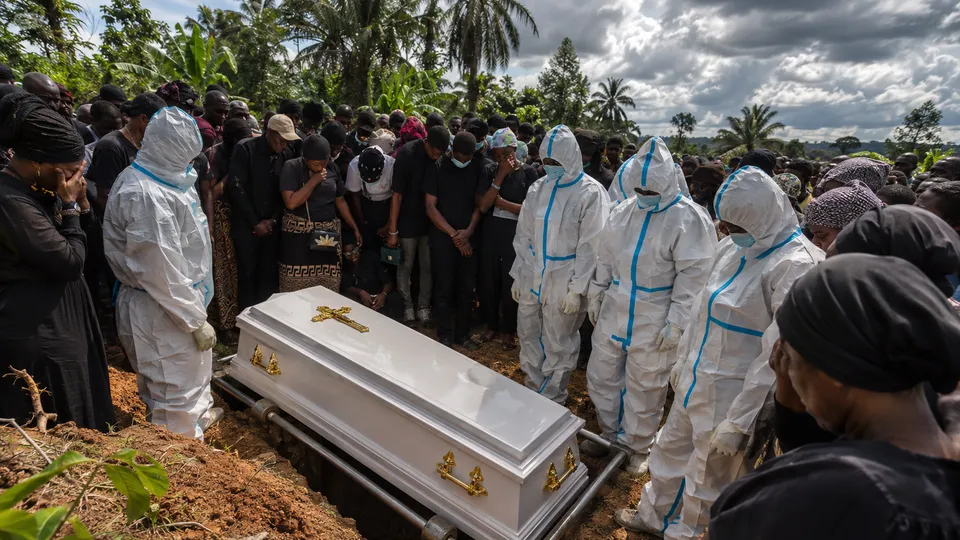
On Monday, 2 November, the Africa Centres for Disease Control and Prevention gave the French news agency AFP a number: 5,376. That is how many people the latest Ebola outbreak has killed, according to Euronews. Of those, 5,372 died in the Democratic Republic of the Congo. Two died in Kenya. Two died in Uganda.
The disease has crossed borders and turned up in capitals far from where it started. Death has barely followed it. Almost all of the dying has happened in one country.
Congo declared this outbreak, its 17th and its largest, in the middle of May, Al Jazeera reported, drawing on AFP and Reuters. In the five and a half months since, the toll passed 5,000 and kept rising. Congo’s own data, current to 31 October, show more than 10,000 people infected and a fatality rate above 50 percent. By that count it is the fastest-growing and most widespread Ebola epidemic ever recorded. The AFP report, as carried by Medical Xpress, gives 10,444 confirmed cases.
More than one in two. Behind that fraction are thousands of households, and there is no way of knowing from a fraction how many of them have nobody left.
The rare cousin
The virus is Bundibugyo, a rare species of Ebola. It spreads through contact with bodily fluids and causes haemorrhagic fever. No vaccine has been approved against it, and no treatment.
A vaccine called Ervebo does exist, and it has worked against Zaire, the more common strain. Clinical trials testing it against this outbreak began in recent weeks. Researchers are also testing a pill meant to block infection after exposure. The trials will take time to give answers, and the dying goes on while they run.
One reflection, offered as nothing more than that: medicine prepares for the enemy it has met before. The common strain has a vaccine. The rare one, the one doing the killing in Congo now, has trials.
Roads out of the forest
The cases abroad are each traceable to a route. Uganda, Congo’s neighbour, recorded 20 cases. Almost all of them were people who had travelled from Congo. Two died, and the country was declared free of Ebola in August.
In October Kenya recorded nine infections, the first time it had ever reported an Ebola case. Earlier reporting found that Kenya’s chain of infection traced back to a single traveller.
Nigeria, Africa’s most populous country, reported a case the same month. The patient was a 42-year-old Swiss woman whose husband works at Switzerland’s embassy in Abuja. The couple had travelled to Uganda before coming home. Al Jazeera now reports that two further tests in Nigeria came back negative, and the Africa CDC breakdown lists no Ebola deaths in Nigeria.
For the people who carried the virus abroad, the record is detailed: a nationality, a husband’s job, a trip, a date. Inside Congo, where 5,372 people have died, the record mostly comes down to the totals.
Meanwhile, on the Semuliki
Congo is facing a second disease at the same time. Over the past four weeks, the carcasses of hippopotamuses have been found in the Semuliki River, west of Virunga National Park, the oldest national park in Africa. Al Jazeera, reporting from Vitshumbi, attributes the deaths to anthrax and says they have worried the communities living along the riverbanks. Drought and armed conflict are adding to the danger for wildlife across the east of the country.
The east is where Congo has long absorbed one blow after another: war, drought, fever. Now the hippos in its river are dying too. The people along the Semuliki are going through both outbreaks at once, the one killing animals in the water beside them and the one that, since May, has killed 5,372 of their compatriots.