
On 18 November, in Beijing, China’s National Cultural Heritage Administration held one of its “Archaeology China” progress meetings and presented four new finds on the origins of civilisation along the Yangtze. One was Fanshan, where Liangzhu’s rulers may have kept a hall beside their graves. Another, Xinhua reported, was a cemetery called Laohudun in Yunmeng County, Hubei Province. It is the county’s next large find of written slips after the Shuihudi Qin slips and the Zhengjiahu wooden tablet.
The numbers come first. Leman Altuntaş reported for Arkeonews that the dig has produced 113 tombs, 622 inscribed bamboo and wooden slips, more than 1,200 grave goods and lacquerware in remarkable condition, all about 2,200 years old. Among them is a stores list from the military administration of the Qin, the first dynasty to rule a unified China (221–206 BC). The empire it served lasted fifteen years.
What the water kept
The cemetery lies in Chengguan Town, about 2.8 kilometres east of Shuihudi and about 400 metres south of Zhengjiahu. Shuihudi’s name has carried weight since late 1975, when 1,155 bamboo slips were taken from the tomb of a minor Qin official. With the administration’s approval, the Hubei Provincial Institute of Cultural Relics and Archaeology and the Yunmeng County Museum began digging at Laohudun in April 2026. The tombs run from the late Warring States period into the early Western Han.
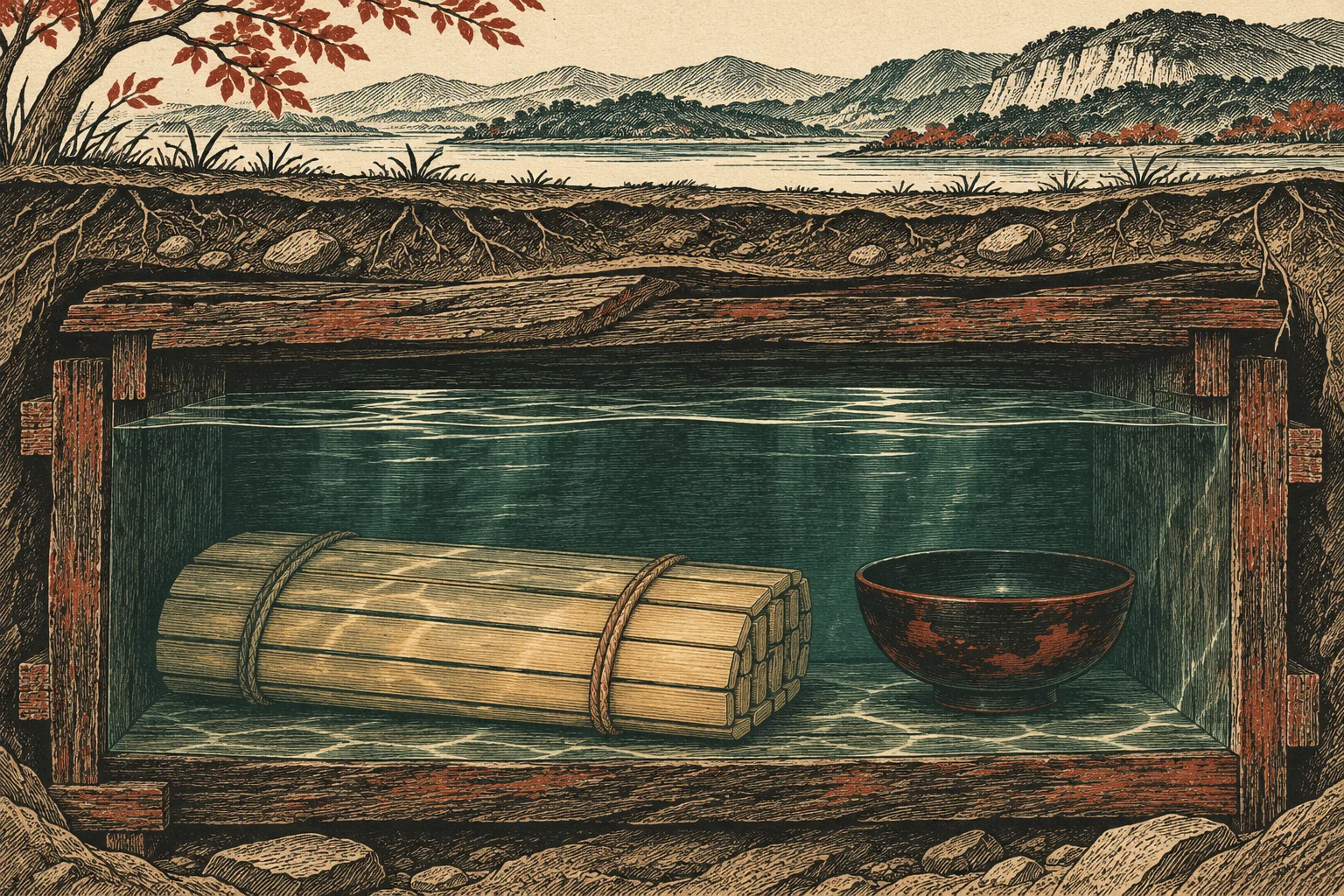
Forty of the burials stayed waterlogged for a long time, and the lack of oxygen spared wood, bamboo and silk, which normally rot away. More than 600 of the grave goods are lacquered wood: drinking vessels, round boxes, flasks, measuring cups. There are jade objects too, and scraps of silk. About half the tombs face west. Most of the dead were laid on their backs with their legs straight. Some lie in one coffin, others in an inner and outer pair, so the cemetery lets researchers compare burial customs side by side.
It is an odd mercy. The water that should have destroyed everything kept it.
The garrison’s stores list
The slips came from tombs M64, M74 and M116. In Chinese reports of the announcement, including those in Guangming Daily and The Paper, project leader Zhao Jun is cited as saying that three Qin tombs produced 622 slips once fragments are counted. He said they are well preserved and clearly written, covering literature, political writing, medicine and folk custom.
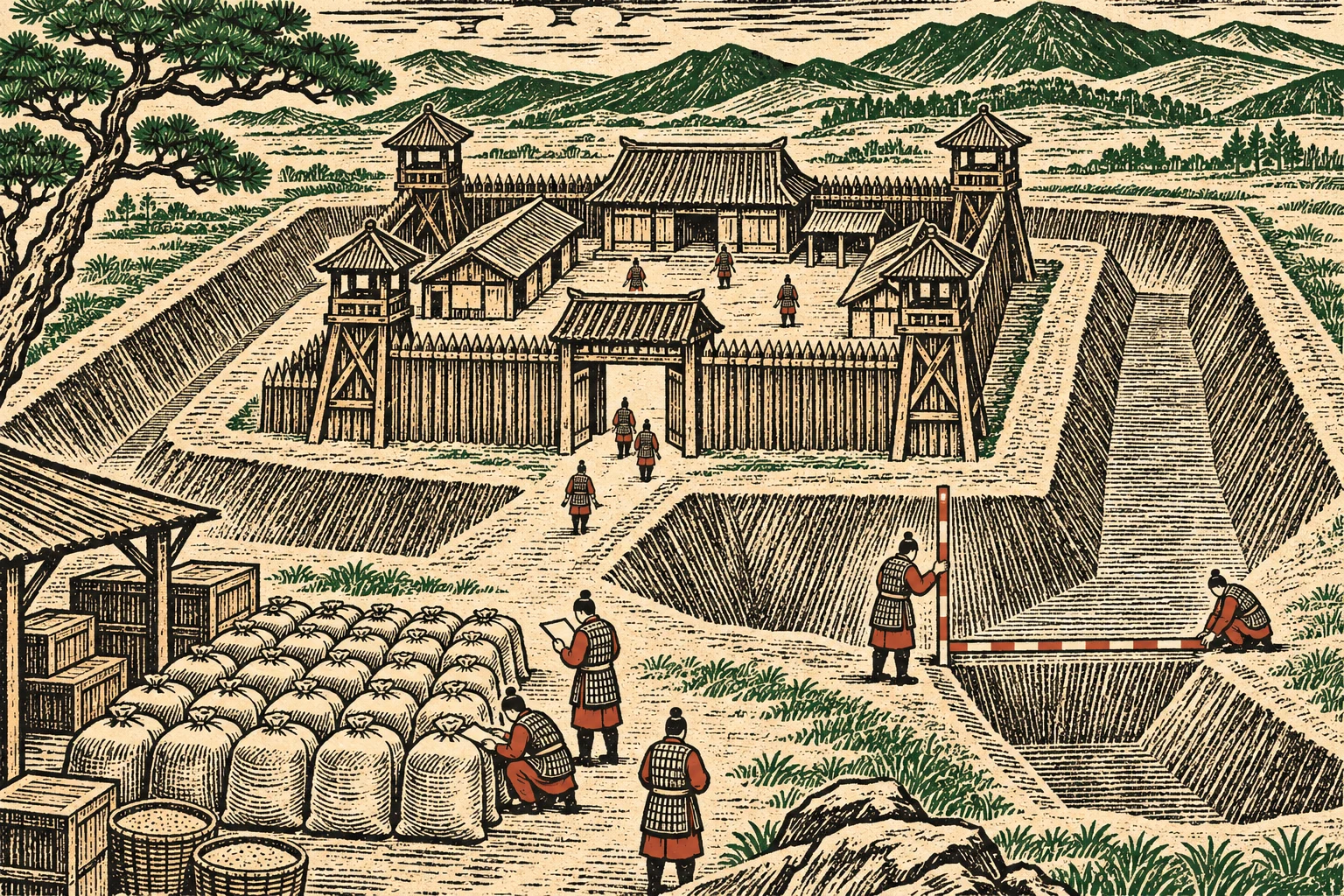
The most valuable text is a military inventory on 50 slips. It names more than ten local defence posts in the Sha Xian area under Qin rule. For two of them, Chiqiu and Budong, it lists the grain, fodder and copper in store, the size of the defensive ditches, the number of soldiers, and their tools and weapons. Researchers count these among the oldest known records of what Qin local defence units were equipped with. The Chinese reports add that the slips give the first complete account of a Qin ting, a local administrative post, at Chiqiu: its area, staff, buildings, moats and wells.
A calendar among the slips is dated to the 35th year of Qin Shi Huang’s reign, 212 BC. The first emperor still had two years to live.
A reflection, then, and only that: empires are remembered through their emperors and their wars, but they are run by people measuring ditches and counting sacks of fodder. Here, for once, the people doing the counting have left a record.
Rules for women, prayers for the sick
Twenty-three slips carry a text researchers have named “Exhortations to Women”. It judges women’s appearance, speech and conduct against moral standards, mostly in four-character phrases and sometimes in rhyme. According to the Chinese reports, these slips came from M74 and are the first writings on women’s moral education ever recovered in a scientific excavation in China. They can be read against a version among the Qin slips held by Peking University.
Another 547 numbered slips deal with choosing lucky days, divination and ritual. There are prayers and remedies for silkworm-raising, childbirth, malaria and toothache. These were the fears of ordinary households: that the silkworms would fail, that a birth would go wrong, that the fever would come back. People met them with whatever rites they had.
A spoon, a painted coffin, an unknown phrase
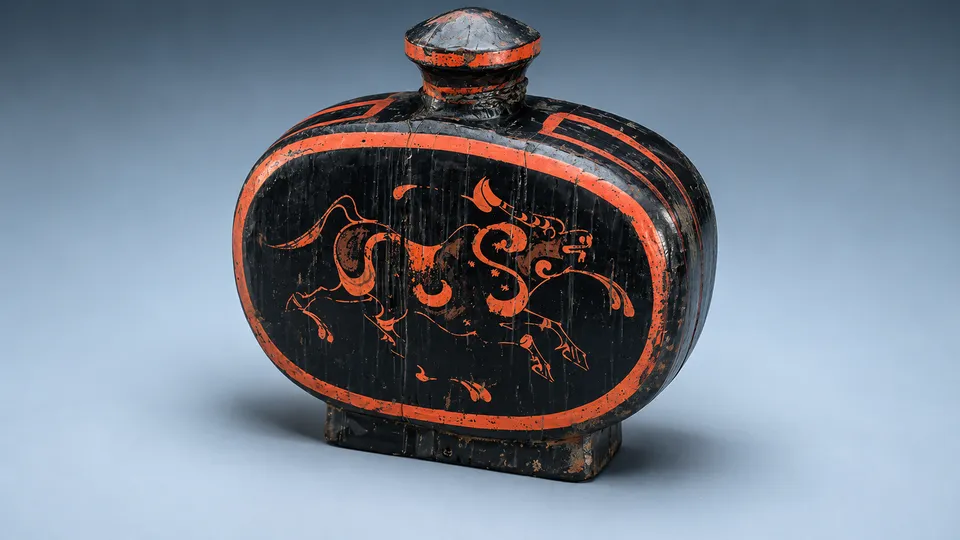
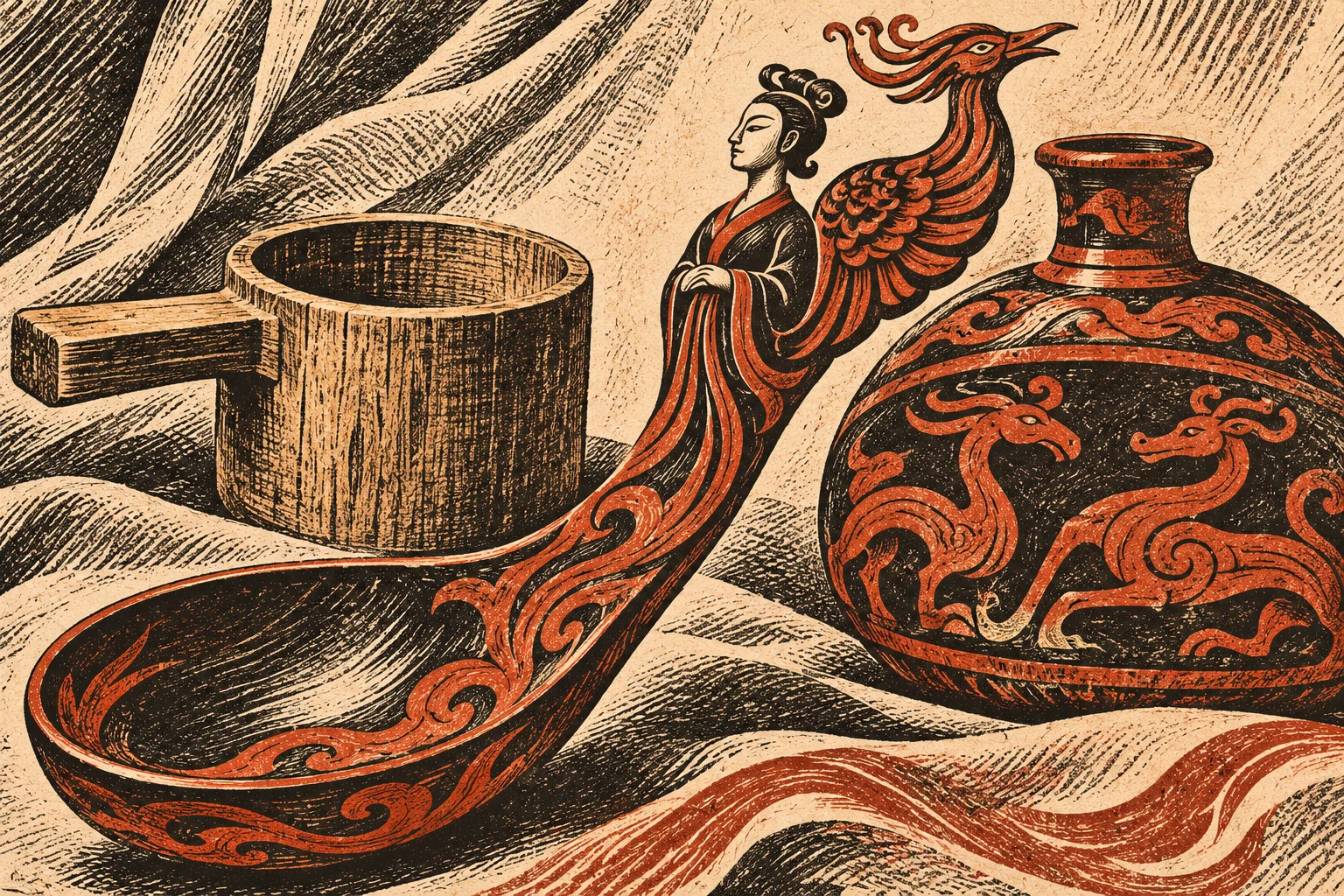
Tomb M105 held a lacquer spoon that combines a standing human figure with a phoenix. Xinhua lists it with a flat flask decorated with auspicious beasts as designs never found before. Wooden measuring cups from the same tomb bear on how the Qin and Han standardised their measures. Lacquer from other tombs still shows its red, black and other colours.
In M91, painted surfaces linked to a wooden coffin were recorded. Under infrared imaging they show human figures in tall headdresses, with eyes that appear to be set one above the other. Researchers think the paintings matter for Qin and Han funerary art, but they have not settled who the figures are or what they mean.
Under one lacquer piece was the inscription “Guang Qin Zhe”, a phrase unknown in the historical texts. Specialists suggest it may relate to the Qin’s spread into the region. The Hubei Daily account calls it new physical evidence from a key point in China’s unification. What the phrase means is still an open question.
What remains of the dead
The rest of the finds are biological and metallurgical. Researchers extracted DNA from embryo remnants in ancient rice husks and identified the rice subspecies. Metal analysis found one of the earliest known examples of processed steel in southern China.
In one tomb, the same oxygen-poor water that saved the slips kept part of a human brain from fully decaying. Researchers say such tissue may give them material to study beyond bone. They have not yet said publicly which tomb it came from or what the analysis found.