
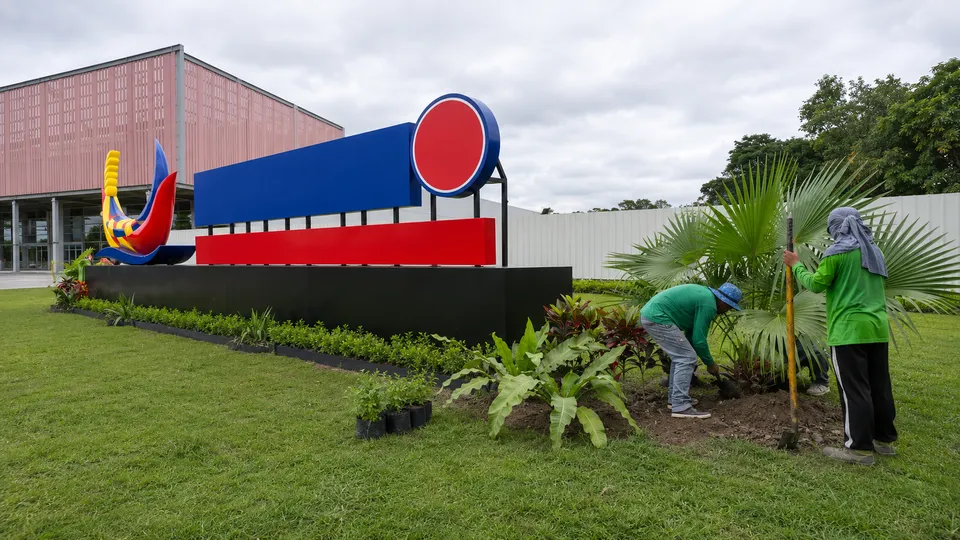
The leaders of the ten-odd capitals of Southeast Asia are coming together in Manila for the 49th summit of the Association of Southeast Asian Nations, a run of multilateral and bilateral meetings lasting from Sunday to Tuesday. The venue is the Philippine International Convention Center in Pasay City. It is the last summit of the Philippines’ year in the chair, and before it ends President Ferdinand Marcos Jr. is to close the proceedings and pass the chairmanship to Singapore, according to The Philippine Star.
The region’s flagship gathering is taking place in the shadow of a visitor who will stay only briefly. As John Power reported for Al Jazeera from Kuala Lumpur, US President Donald Trump is setting out on an Asia Pacific tour that will put his upending of trade and of old alliances at the centre of attention. On Tuesday he will make a short stop in Manila to meet Marcos.
The last day, the last event
Protocol has its own way of showing who matters. On November 11 the Philippine Department of Foreign Affairs confirmed that Trump will attend the ASEAN-US Special Summit on November 17, the final event of the meeting. The same day Marcos is to chair the 29th ASEAN Plus Three Summit with China, Japan and South Korea, as well as the 21st East Asia Summit. The dates have shifted before. An October report citing the New York Post said the White House had put Trump in Manila on November 16. The ministry’s later confirmation points to the 17th. To keep traffic moving and delegates safe, the government has declared November 16 to 18 special non-working days in Metro Manila, so a city of millions will close its offices for a few days of meetings at the convention centre.

Malacañang confirmed Trump’s attendance in mid-October. His last visit to the Philippines was in November 2017, for the 31st ASEAN summit, during his first term, nine years ago. This will be his second trip to Southeast Asia since he returned to office. The first was the 2025 ASEAN summit in Malaysia.
From Manila he flies on to the APEC summit in Shenzhen. There he is to meet Xi Jinping in person for the fourth time in just over a year, and the White House has confirmed the first-ever three-way talks between Trump, Xi and Vladimir Putin. Philippine reports also expect him to sit down in Manila with the other leaders of the Quad, Australia, Japan and India, for the first time in his second term. Foreign Policy described the whole journey as a president answering a final midterm drubbing by heading abroad, and quoted experts who doubted that his presence in Manila would amount to much more than ticking a box. The Shenzhen leg carries its own unasked questions.
The walls and the water
This year Washington has kept rebuilding its tariff wall. In February the US Supreme Court struck down Trump’s higher “reciprocal” tariffs. In July the administration announced new duties of 10 to 12.5 percent on 60 trading partners, most of Southeast Asia’s economies among them. The Office of the US Trade Representative justified them by their alleged failure to curb forced labour. Further investigations, into national security and into “excess” manufacturing, could bring more.
So far the region has come through largely unharmed, and part of the reason is that billions of dollars of Chinese trade have been rerouted through it. US imports from ASEAN rose by more than 29 percent in 2025, to $453.6bn. According to USTR data, the American trade deficit with the bloc widened to $327.4bn.
A reflection, not a finding: when a great power puts up a wall, the goods rarely stop. They go around it, and the way around runs through the smaller countries in between, which take a cut of the traffic and hope nobody in the capital that built the wall looks too closely.
Deborah Elms of the Hinrich Foundation in Singapore called the results mixed. Export growth, she said, is “primarily driven by shipments of electronics which are largely exempt from tariffs”, and those shipments are tied to the artificial intelligence buildout. “If that falters, ASEAN will feel it.”
Jayant Menon of the ISEAS-Yusof Ishak Institute, also in Singapore, said the region’s leaders are worried about “what comes next”. Future sectoral tariffs or export controls could erode their competitiveness. Republicans lost both houses of Congress in the November 3 midterms, but Menon warned that Trump “could double down rather than back off”.

To muddle through
What the bloc lacks is a market of its own large enough to fall back on. Phar Kim Beng of the International Islamic University of Malaysia noted that trade among ASEAN members “remains paltry at 23 percent”. In the European Union the figure is about 67 percent. He expects no major new measures from Manila. ASEAN, he said, “will continue to muddle through.”
The most concrete result in prospect is modest and technical: the likely signing of the Digital Economy Framework Agreement. Launched in 2023, it is meant to ease cross-border data flows and electronic payments, and it is presented as a step towards a $2 trillion ASEAN digital economy by 2030.
Beyond trade, the agenda includes a code of conduct for the South China Sea, which has been negotiated for years. Türkiye Today lists other items as well: the crisis in Myanmar, whose coup leader the bloc welcomed back in Kuala Lumpur only last month, energy security, critical minerals and the wider contest between great powers. Asked whether the US-led Pax Silica initiative would be signed during Trump’s visit, Palace press officer Claire Castro declined to say.