
In September, when Malaysia invited Min Aung Hlaing to visit, it was careful to say the invitation did not mean recognition. An official said the purpose was the “longstanding issue” of refugees and migrants from Myanmar living in Malaysia. Last week the man himself arrived in Kuala Lumpur. He is the general whose seizure of power in 2021 set off a devastating civil war, and he now calls himself president. As Al Jazeera’s Cape Diamond and Zaheena Rasheed report, he was met with a red carpet and an honour guard.
Governments can deny recognition in a press statement and grant it on the tarmac. People tend to believe the tarmac.
He landed on the afternoon of Wednesday, 7 October, and was greeted by Malaysia’s trade minister, Johari Abdul Ghani, Al Jazeera reported at the time. The next day in Putrajaya, the administrative capital, he spent half an hour alone with Prime Minister Anwar Ibrahim before ministers and officials from both sides joined them. After a luncheon, Anwar announced that Myanmar would take back its nationals at its own expense. Min Aung Hlaing explained how it would be done.
Because the weather is favourable, I will dispatch Navy ships to repatriate them.
The weather at sea
About 193,000 Myanmar nationals live in Malaysia, most of them Rohingya, and hostility towards refugees there is growing. By UNHCR’s count, Malaysia hosts about 215,600 registered refugees and asylum seekers, around 126,000 of them Rohingya, according to an earlier Al Jazeera report. Anwar says roughly 10,000 people have been sent back to Myanmar since January. Under a deal to return about 5,000 people held in Malaysian immigration detention centres, the first ship left on 29 September carrying 1,476 people. The UN refugee agency says its staff were not allowed to meet the returnees to check whether their decisions to go home “were genuinely free and informed”.
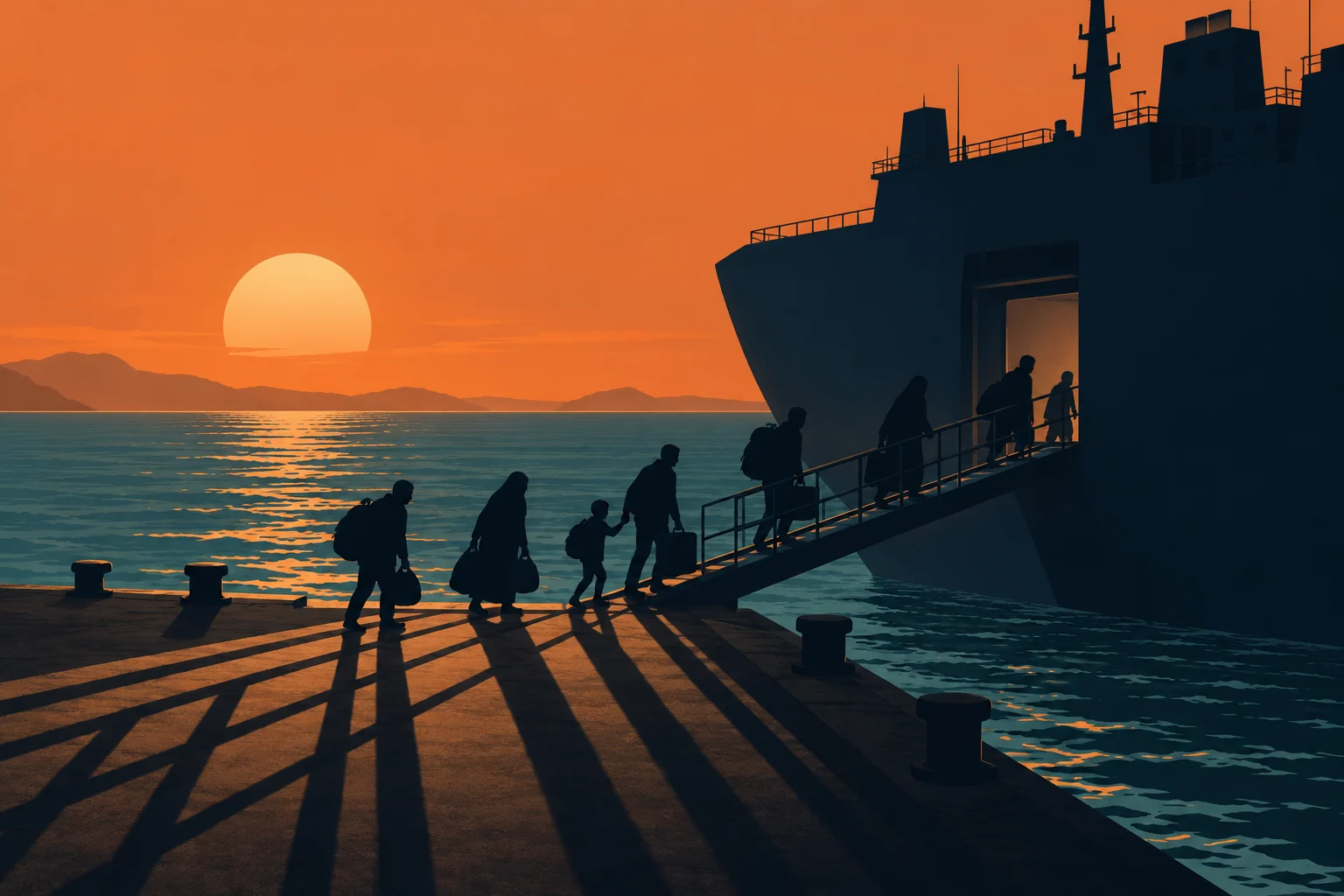
Elaine Pearson, Asia director at Human Rights Watch, said Anwar’s invitation to coordinate “the forced return of people who fled military atrocities in Myanmar is an invitation for further abuse,” the organisation said. Rights groups and UNHCR warn that people sent back to an active war zone could be persecuted or forced into the army.
The general had a lot to say about the sea. About the land there was much less. The Rohingya are still denied citizenship, and the Arakan Army controls much of Rakhine state, so it is not clear where the returnees are supposed to go. Laetitia van den Assum, a former Dutch diplomat, said she found it “quite surprising” that ASEAN would seek Rohingya repatriation from the man accused of crimes against them. “It is the blind speaking to the blind,” she said.
The dam breaks
For years the 11-member Association of Southeast Asian Nations kept Min Aung Hlaing out of its high-level meetings because he had not carried out the Five Point Consensus. That plan called for an end to violence and for “constructive dialogue”, and Malaysia was one of its strongest supporters. In Putrajaya, Anwar promised to help bring Myanmar back in and to work to “take Myanmar as part of our community of nations, without prejudice.”
Malaysia was the fifth ASEAN country to host him, after Thailand, Vietnam, Cambodia and Laos. His spokesperson has suggested that Indonesia and Brunei could come next. Since April, when he made himself president after a December–January election from which the main opposition parties were barred, he has also visited India, China, Russia and Belarus. On these trips he has described his government as stable and “on the path to democracy” and offered trade and infrastructure deals.

Bridget Welsh of the University of Nottingham’s Asia Research Institute said Malaysia’s change of course “has broken a dam of opposition to the junta.” She called it “a step back for ASEAN as an organisation, and for Myanmar,” and said it gives the military a legitimacy “it does not have in Myanmar itself.” Khin Zaw Win of the Tampadipa Institute in Yangon said China, India and Thailand are coordinating a push for recognition because they “have the biggest stakes in how Myanmar pans out.” Russia and Belarus supply much of the army’s weaponry, and Naypyidaw supports Russia’s invasion of Ukraine. “Convenience plays a part for all of them,” he said.
Washington is moving the same way. Reuters reported that the United States has opened direct talks with his government about the scam centres that have cost Americans billions. This comes even though the US still sanctions him over abuses that include the 2017 crackdown on the Rohingya, which Washington calls genocide and which drove more than 700,000 people into Bangladesh. The US has also lifted sanctions on the daughter of a military-linked tycoon. The prosecutor of the International Criminal Court, meanwhile, has asked for an arrest warrant against Min Aung Hlaing for alleged crimes against humanity.
Meanwhile, the air force
The war is in its fifth year. Monitors say it has killed up to 100,000 people and driven at least 3.5 million from their homes. Min Aung Hlaing has invited armed groups to peace talks, but his forces are attacking in Rakhine, Chin, Kachin and Karen states and in the Sagaing region. Heavier airstrikes, a recruitment drive that has added tens of thousands of soldiers, and ceasefires brokered by China along its border have all helped them. Van den Assum doubts the army can retake the whole country, because that would take “a huge occupation army” rather than a garrison force. In her view he uses temporary ceasefires to move troops from one front to another.
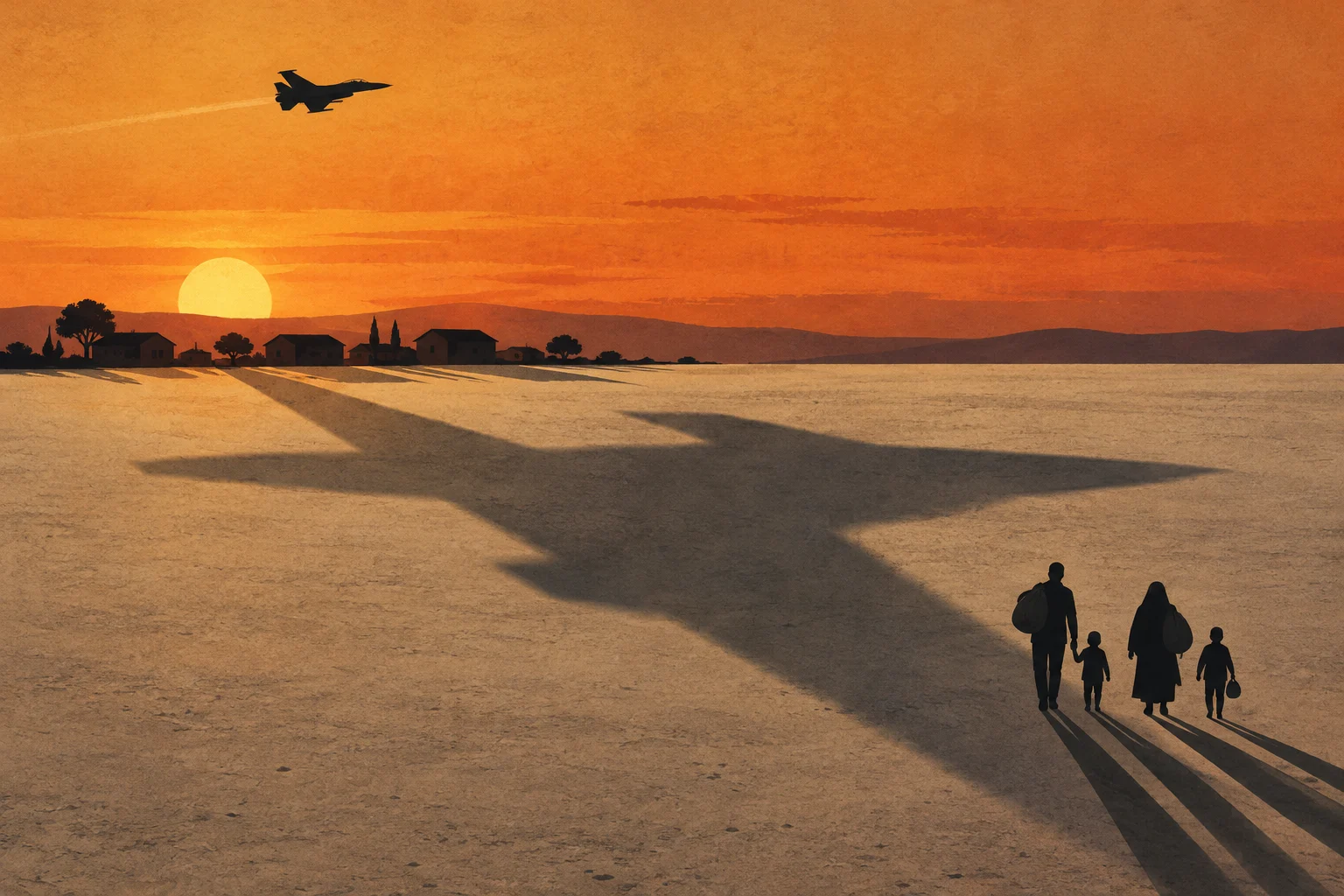
There have been gestures. Before his trip to Thailand in August, he let the International Committee of the Red Cross visit Aung San Suu Kyi, now 81, on 3 August, and the visit produced the first photographs of her in years. Sai Kyi Zin Soe of the University of Sydney called it a “low-cost, high-optics gesture rather than a real political opening” that proved only that she is alive. He pointed to an airstrike on a market in Rakhine on 28 September, which killed about 50 people, as the “strongest evidence that soft diplomacy hasn’t produced any deterrent effect.” The military, he said, “has every structural incentive to keep escalating”, above all in Sagaing and Rakhine.
The next decisions belong to the Philippines, which chairs ASEAN this year, and Singapore, which takes over next. Phil Robertson of Asia Human Rights and Labor Advocates has urged both not to let “Myanmar fully back into the fold.” He also wants the United States, Britain, Canada, Australia and the European Union to impose targeted sanctions such as a ban on aviation fuel, the fuel the bombers burn, and he wants the generals pursued in court through universal jurisdiction cases or a referral to the ICC. “International accountability is now more urgent than ever,” he said.