
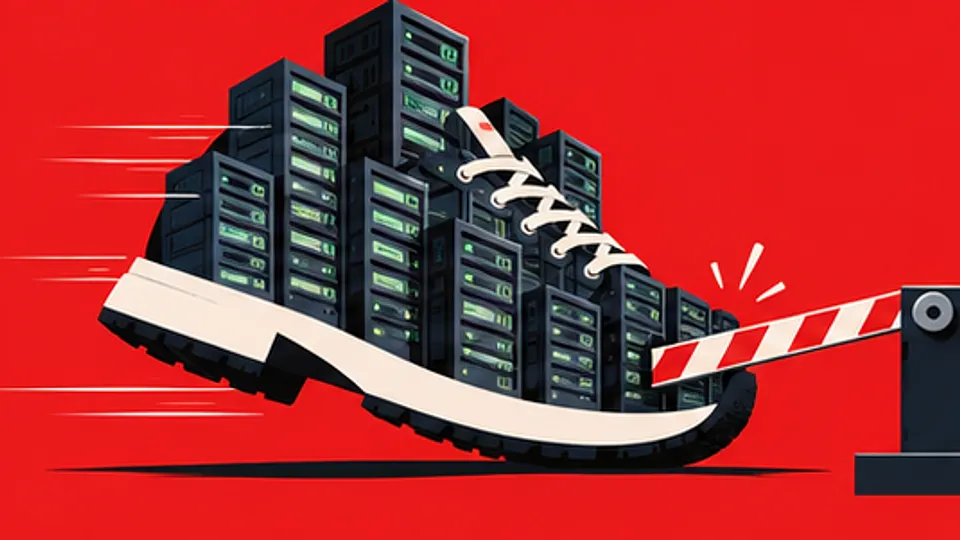
Amazon pledged more than $1 billion over the next five years to the communities that host its data centers on Friday, as the head of its cloud division warned that the more than 100 local construction moratoriums now under consideration could cost the United States the A.I. race.
Matt Garman, the chief executive of Amazon Web Services, made the argument in a blog post of more than 3,000 words. “There is urgency to this data center buildout because we aren’t the only country that sees the benefits of AI for the economy and national security,” he wrote. “The choices we make today will determine that outcome, and a lapse in our nation’s focus or resolve could put us behind, and potentially irreparably so.”
Mr. Garman cast the building boom as the equal of the highway system the United States constructed after World War II. “Seventy years later, we’re in the midst of the largest infrastructure buildout since the highways — our digital infrastructure,” he wrote. And he suggested the local opposition is not entirely homegrown, writing that the buildout is so geopolitically important that there are “widespread reports of various countries intentionally seeding misinformation in the US about data centers to trick us into slowing down.” He did not name any country.
The pledges are meant to answer that opposition. Communities will direct the donations themselves across “education, job training, energy affordability, water, and energy preservation, and local priorities,” Mr. Garman said in a press release. Amazon also promised its data centers would not raise local power bills or deplete local water supplies, and committed to being “water positive” by 2030, a goal it says 75 percent of its projects already meet. “This is not Amazon deciding what communities need — it is Amazon providing resources and letting communities decide,” Mr. Garman said.
The opposition he is arguing against has teeth. At least 120 data center proposals worth an estimated $198 billion were delayed or blocked in the first six months of 2026, according to Data Center Watch, a research project that tracks the industry. Environment America, a network of environmental groups, counts at least 45 developments stopped across 27 states, valued at $68 billion, and says the number of data centers in the country nearly doubled from 2021 to 2024. A recent CBS News poll found more Americans oppose than favor data centers near them, echoing a September survey that found 65 percent of voters opposed to construction in their communities.
Much of the resistance comes down to electricity and water. Schneider Electric, an energy management company, projects that U.S. electricity demand will rise 16 percent by 2029, largely because of data centers, and an A.I. search uses 10 times the electricity of a standard internet search, according to the Electric Power Research Institute. Amazon itself withdrew plans for a 2.4-million-square-foot facility in Calvert County, Md., in August after local opposition; two weeks later, county commissioners approved a six-month moratorium on new data centers. In Washington on Wednesday, the Senate blocked a bill that would have made data centers cover the grid costs they create.
Friday’s announcements persuaded no one at Stand.Earth, an environmental nonprofit that works with communities hosting data centers. The group told Ars Technica that Amazon was being “misleading” and spreading “corporate propaganda,” and called the donations “a flailing attempt at damage control for the harm its data center build-out has already caused.” The group also pointed to Amazon’s backing of a power plant that experts expect to become the largest source of climate pollution in the United States; Amazon’s new commitments do not mention the plant and address pollution only through a promise to use the lowest-emission backup generators available.
Amazon has more riding on the argument than most companies. It invested $276 billion in data centers from 2011 to 2025, according to Reuters, and has said it plans to spend about $220 billion on capital expenditures this year, much of it tied to A.I. infrastructure.