
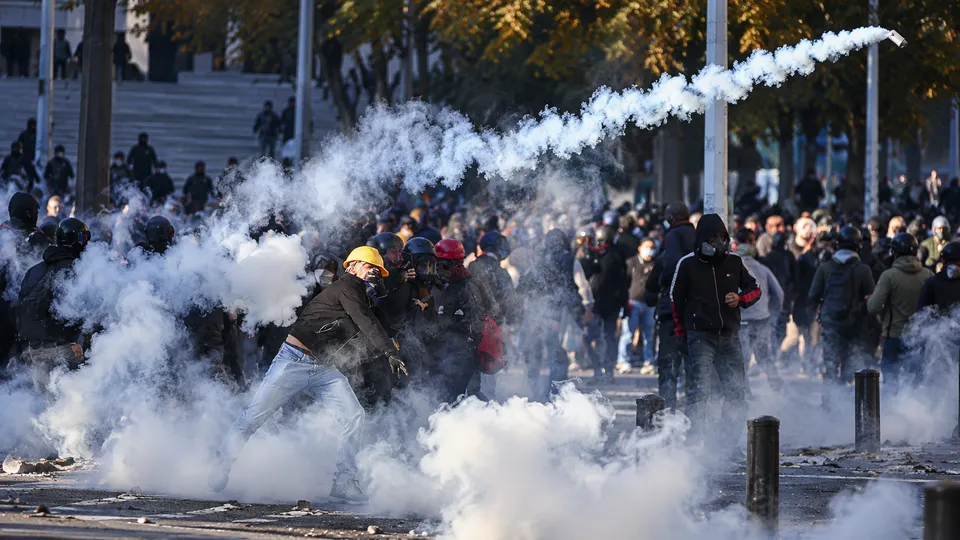
On Sunday, for the sixth day running, several hundred people gathered outside Albania’s Ministry of Education in Tirana and chanted “Rama, resign.” Prime Minister Edi Rama, now in his fourth term, said no again. Later in the day police pushed the crowd back with rubber bullets, water cannons and tear gas, as Al Jazeera’s Muamer Tanovic reported. Shops in central Tirana had pulled down metal shutters. City workers had dug up paving stones so nobody could throw them.
The Health Ministry’s figures from Sunday morning are grim. Over the previous day it counted 65 people injured, 37 of them police officers, and 12 were taken to hospital. Since Tuesday the total stands at 272 injured, of whom 169 are police. That means 103 of the injured were not police, and that police make up a large majority of the casualties. That fits what local media have described: crowds going after government buildings and officers, the Education Ministry and the streets around Rama’s office in particular. Earlier in the week, Reuters reported, protesters set fire to several buildings, among them the prime minister’s office, ministry buildings and a number of bank branches.
What the students want
The demands are not hard to follow. Students want an education they can afford, jobs when they finish, an end to the corruption they say runs through government, and a new prime minister. They are angry about high tuition fees and poor conditions at universities, Al Jazeera explained when the movement spread to boycotts in smaller cities. High school students have since joined university students, and on Saturday thousands of young people massed outside the Education Ministry as police fired rubber bullets for the first time.
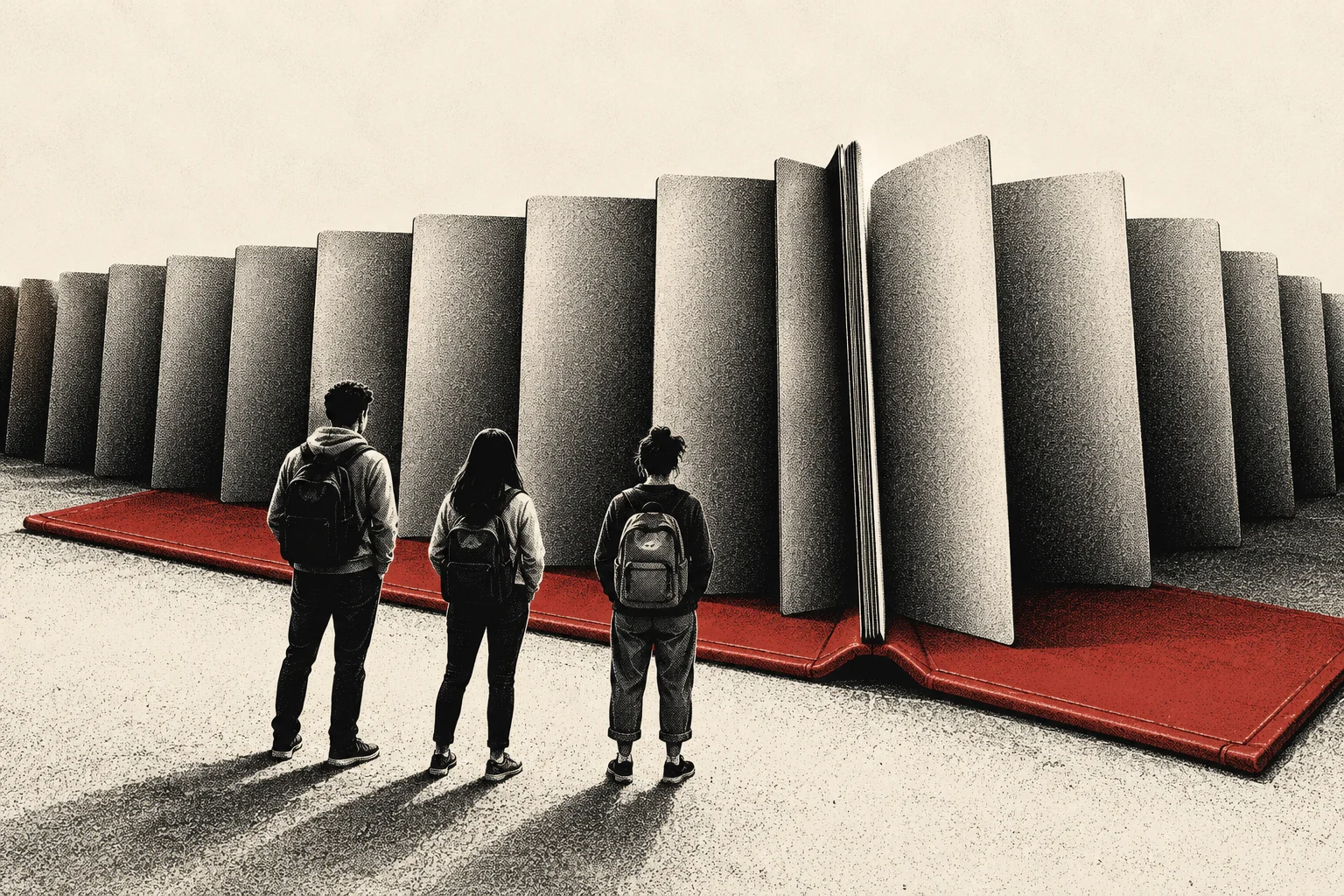
Little of this started last week. In May there was the so-called Flamingo Revolution, mostly peaceful protests against a planned luxury resort on Albania’s southern coast connected to Jared Kushner, Donald Trump’s son-in-law. Before that, from November 2025 to May 2026, the opposition ran its own campaign to get rid of Rama, driven by corruption allegations against Deputy Prime Minister Belinda Balluku and by claims of fraud in the 2025 election. Those protests turned into clashes at times and achieved nothing politically. What has changed is who is in the street. A party-run protest can be written off as the opposition doing what oppositions do. Teenagers protesting tuition fees are much harder to write off.
The contract argument
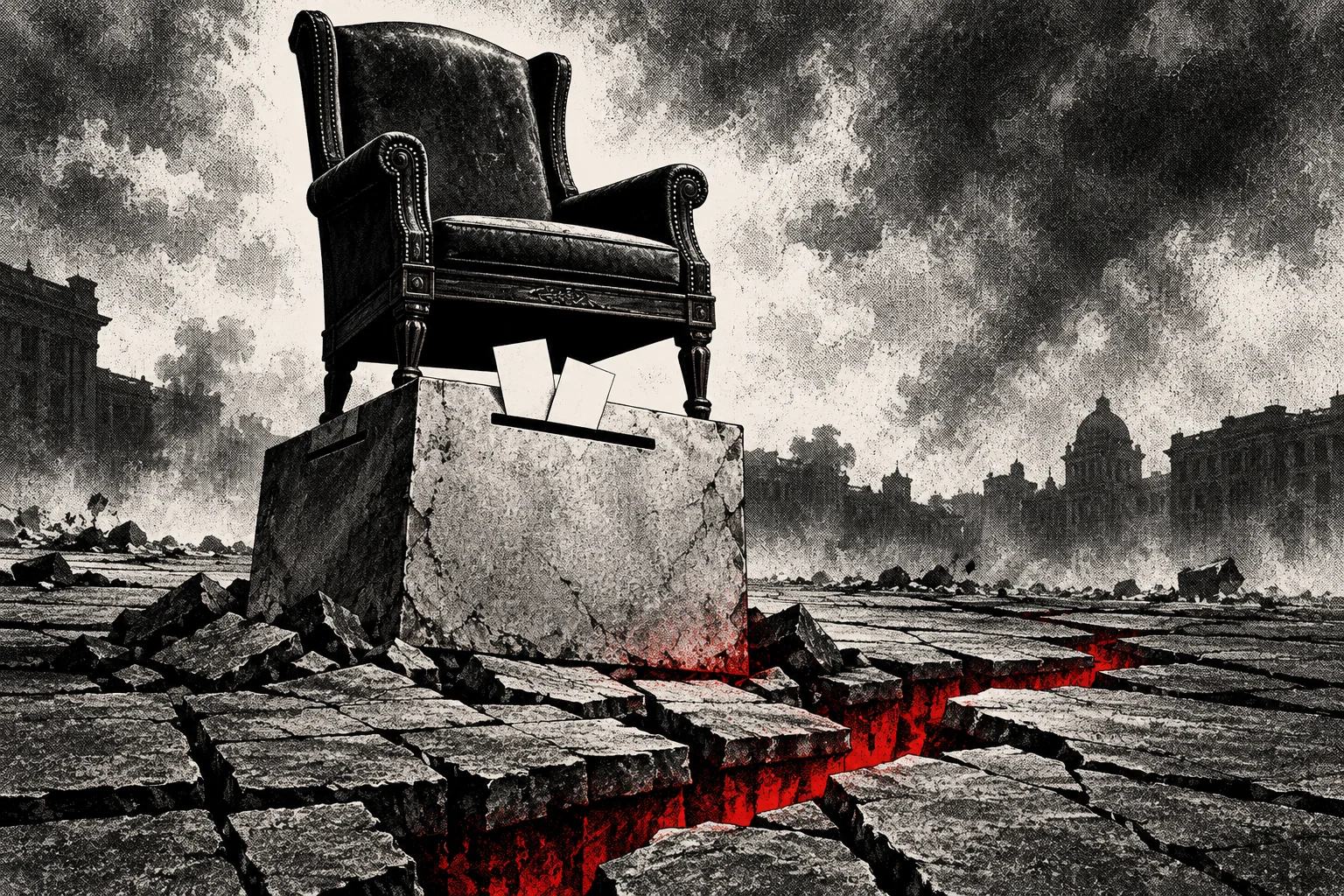
Rama’s answer amounts to a contract argument, and it goes like this. “As for calls for my resignation, governments are changed through democratic elections,” he told Reuters. “We had elections last year, not a revolution.” His Socialist Party has governed since 2013, and he won his fourth term last year on a promise to take Albania into the European Union. As he sees it, voters signed the contract and the term has years left to run. During a live stream on social media on Sunday he put it more briefly: “the government is not being challenged.”
Fair enough as constitutional theory. As a description of the situation it is a bit odd, since the Health Ministry is counting injuries daily and police are firing rubber bullets in the capital.
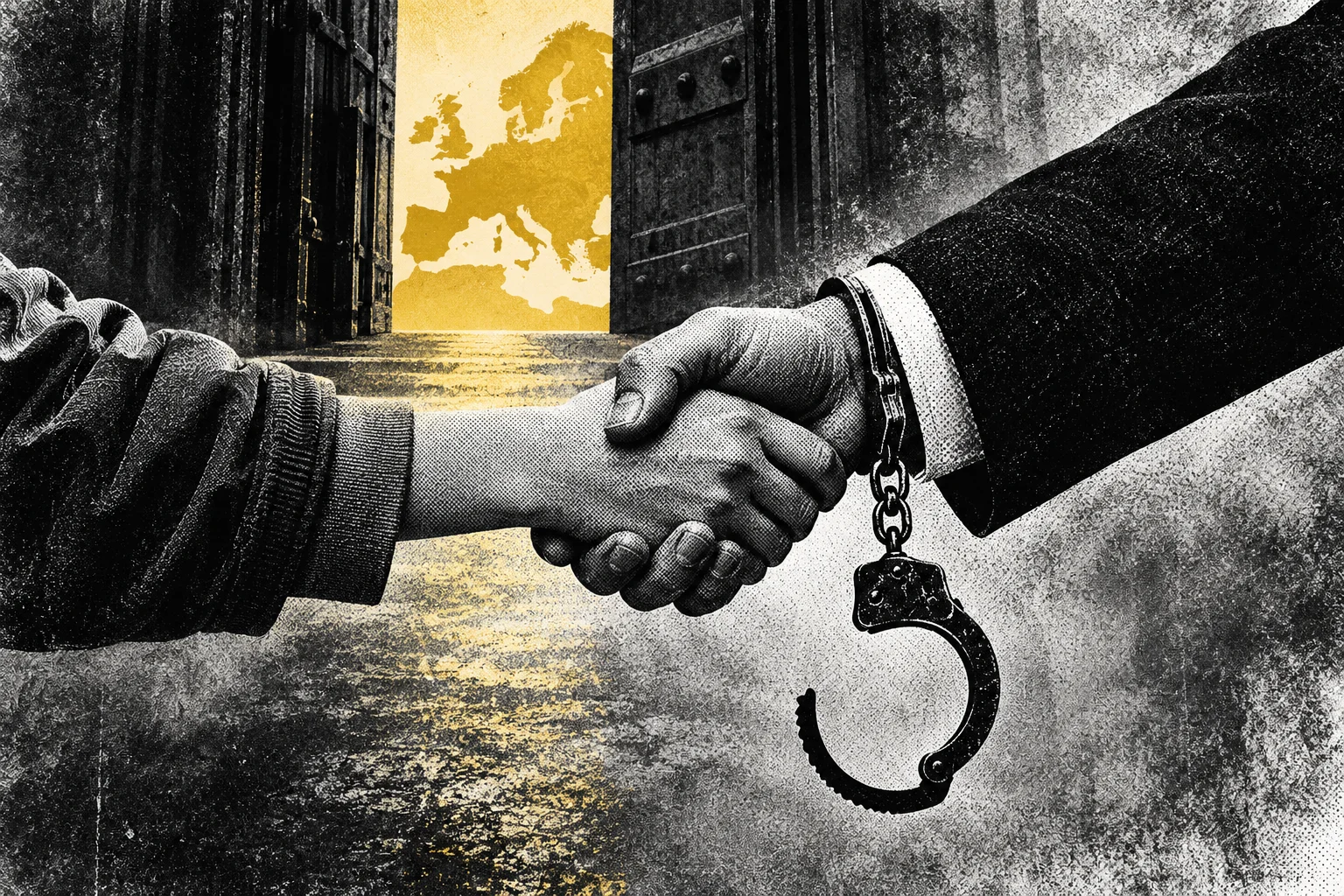
The more interesting part is the threat attached to it. The government’s target is EU membership by 2030, and Rama has started describing the unrest as a danger to that goal. “Albanians need to think very clearly,” he said. “Do they want this, or do they want the EU?” That reframes the dispute. The students are arguing about fees, jobs and graft. Rama answers that the real choice is between the protests and Brussels, and that he holds the ticket to Brussels. It is a sharp move, because EU accession is popular and slow and very hard for voters to price, so it serves well as the thing everyone stands to lose. But it also sets him up to be blamed for any delay, by himself.
He has also, as he did earlier in the week, blamed a “foreign hand” for the protests. He has said his government is working on corruption, that he will listen to students’ justified demands and is ready to talk about the cost of education, and that people who destroyed property will be held to account. To Reuters he warned that “everyone who has had a hand in this chaos will certainly pay.” Put together, the offer is talks with the students and punishment for the people who threw the bricks, even though in many cases those are the same people.
Who blinks
Mentor Nazarko, a political analyst in Tirana, told Al Jazeera that Rama does not understand “the depth of the problem” and that “his legitimacy has melted away.” In his view, the only thing between the prime minister and the public now is a police force that has not been trained for protests, is badly paid, and is partly bound up with crime and corruption. That is not reassuring when the same force accounts for 169 of the injured.
Lindita Karadaku, a journalist at TV Klan, put the deadlock simply. Rama is “determined” and “has made it very clear that he will not resign,” she said, while the young protesters “will not give up so easily.” On how long it will last, she would not guess: “At this moment, no one is clear what tomorrow will bring.”
Neither side has an obvious way out. Rama’s case depends on an election that is over, and the students’ case depends on staying in the street, which sooner or later ends with the state deciding how much force it will use. In the meantime the city of Tirana has taken the cautious step of digging up its own pavement.