

Eight Muslim Americans won election races in the United States on Tuesday night, as Al Jazeera reported, with Democrats taking what the outlet described as commanding control of both chambers of Congress. One of the eight will arrive in the House of Representatives with a credential no other member carries: Adam Hamawy, a 56-year-old reconstructive surgeon and US Army veteran, worked inside Gaza’s hospitals in 2024 and 2025 while the enclave was under bombardment. He is set to become New Jersey’s first Muslim congressman, representing the 12th Congressional District, and he ran on four words: “healthcare not bombs.”
Hamawy’s route to politics runs through twenty years of trauma surgery. Born in Egypt and raised in Old Bridge, New Jersey, he studied at Rutgers and earned his medical degree from New Jersey Medical School, then joined the New Jersey National Guard. As an Army combat surgeon he deployed to Baghdad for nine months in 2004. In November of that year he treated Tammy Duckworth, then an Army helicopter pilot whose aircraft was shot down by Iraqi fighters; she lost both legs. “He is the doctor who not only saved my life, but was able to prevent me from becoming a triple amputee by employing a vascular procedure that he’d just learned in medical school,” Duckworth, now an Illinois senator, said. In January she became the first sitting member of Congress to endorse him.
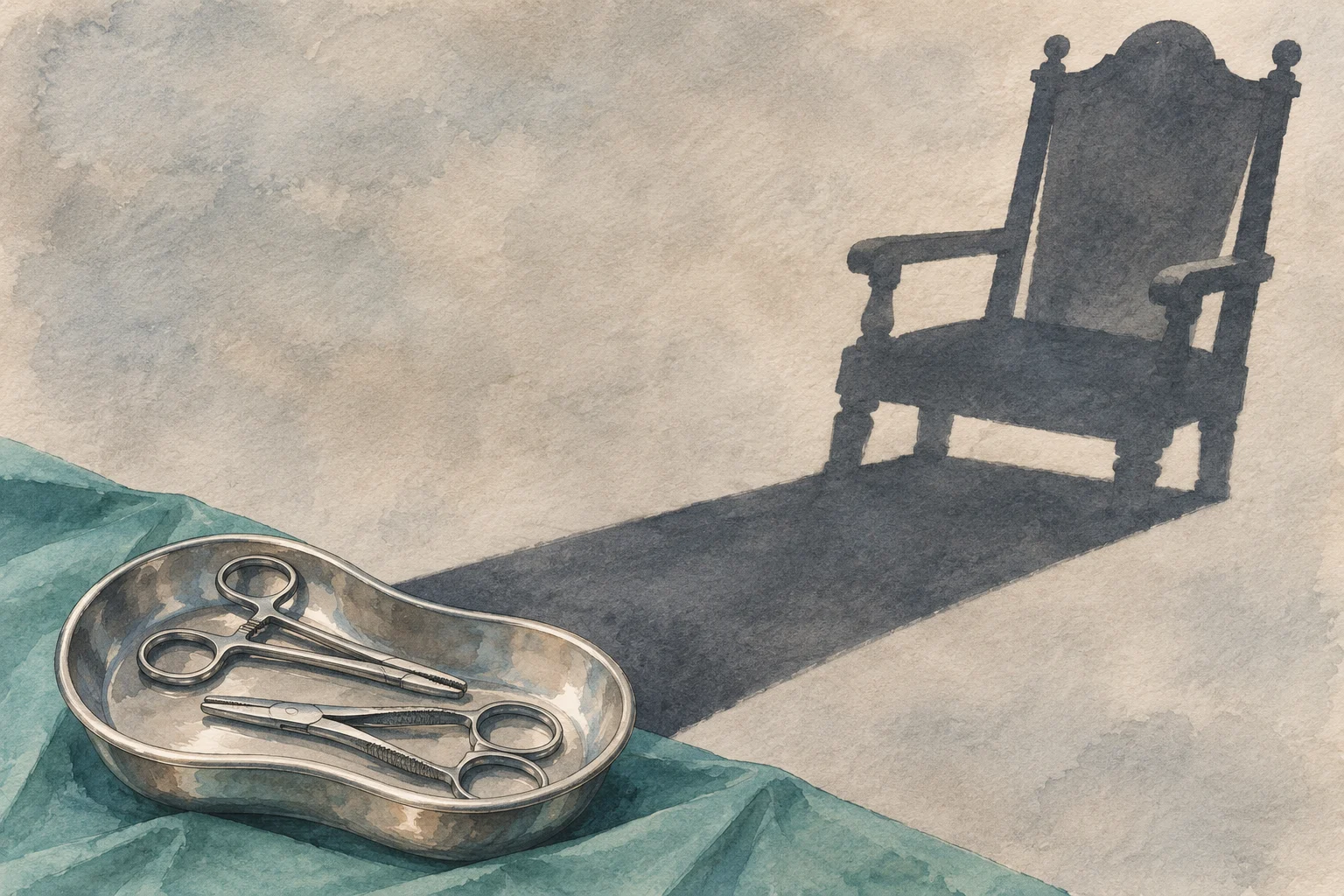
Hamawy retired in 2011 as a lieutenant colonel after eight years as an Army officer, and spent the following years on humanitarian missions in Haiti, Jordan, Lebanon and Gaza. It was the 2024 Gaza mission, at the European Hospital, that ended his civilian life. “This is not like a war. This is just like complete, utter destruction,” he said in an interview from the enclave, adding he could only define what he saw “as a genocide”. While he was there, Israel seized the Rafah crossing, temporarily trapping his team; he refused evacuation until non-American colleagues were assured exit too. “When the hospital shakes and I see the bodies come in, I’m paying for it with my tax dollars,” he later told The Guardian. “I don’t want my tax dollars doing that.”
The campaign against him
Hamawy declared his candidacy in January after Representative Bonnie Watson Coleman announced her retirement. His Democratic primary opponent Adrian Mapp called him a “radical extremist”, and critics raised his association, in his early twenties, with Omar Abdel Rahman — the “Blind Sheikh” later convicted of seditious conspiracy and other charges, including in connection with the 1993 World Trade Center bombing. Hamawy had travelled to a conference with Abdel Rahman and was later called as a defence witness at his trial. Hamawy has condemned Abdel Rahman’s “violent rhetoric and actions” and says he testified out of “civic duty”; Abdel Rahman died in 2017. His campaign called the scrutiny “gross and bigoted”. “I have never seen anti-Muslim hate as open and as loud and as accepted as it is today,” Hamawy said, adding that the attacks were also “targeted against my family, my coworkers, my friends” and questioned his “loyalty” and “patriotism”. He won the June primary anyway, and the general election on Tuesday.
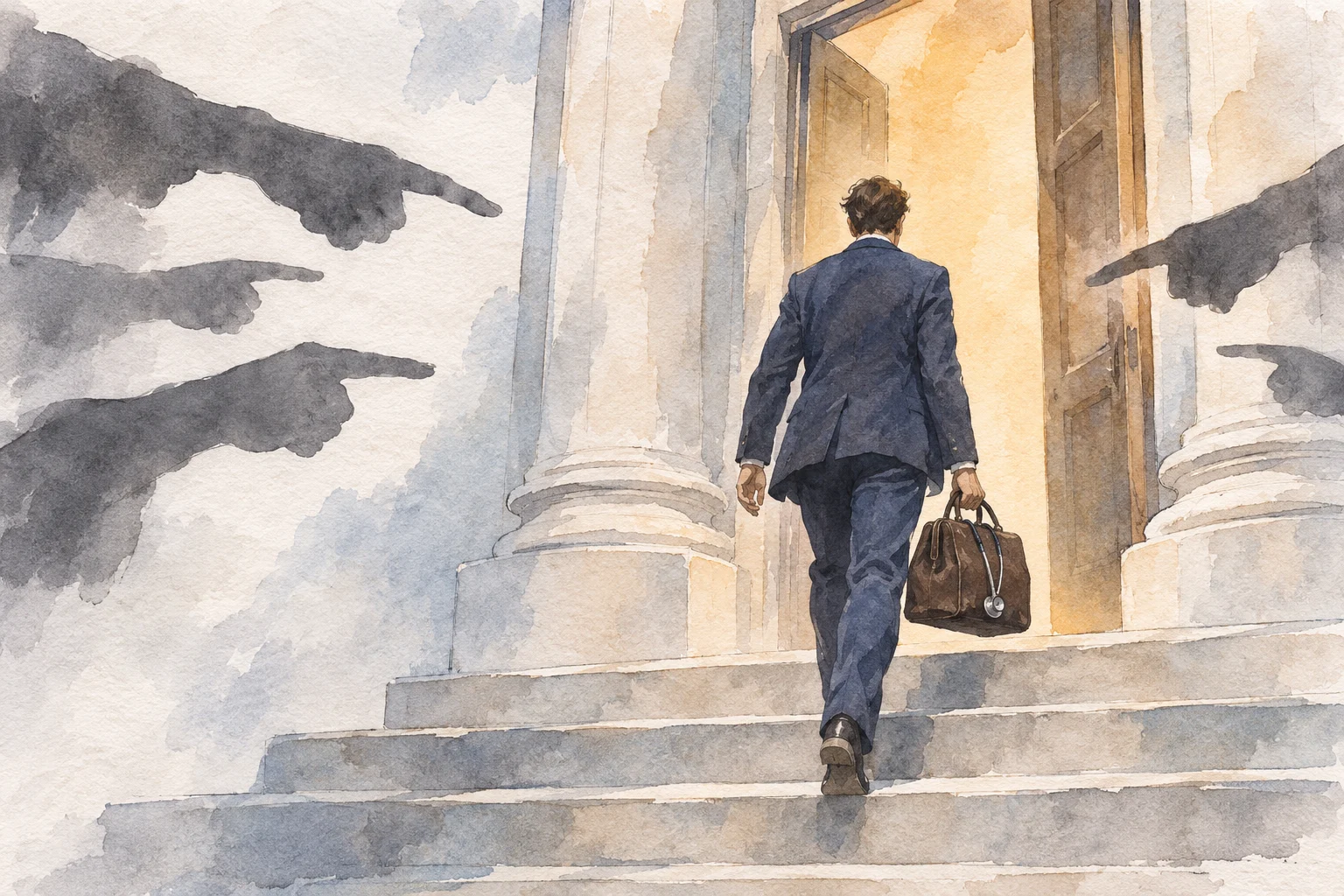
His platform joins the two halves of his biography: universal healthcare and an end to medical and student debt at home — as a physician, he says, he sees “firsthand how insurance companies and the rest of our absurd system fail patients and providers alike” — and, abroad, opposition to the war on Iran, which he calls “illegal and immoral”, an end to US military aid to Israel, and support for “the Palestinian right of return under international law”. He has also pledged to abolish Immigration and Customs Enforcement, an agency he describes as “full of neo-Nazis”. The package, he said after the primary, addresses “a crisis that was born out of a broken and rigged political and economical system… A system that floods money overseas to bomb children’s schools while at the same time [saying] that childcare here in America [is a] pie-in-the-sky idea.”
The American-Arab Anti-Discrimination Committee framed the result bluntly: “Hamawy witnessed the horrors of Israel’s genocide in Gaza firsthand. Now, he will take his place in the very Congress that funded and enabled those atrocities.” Selaedin Maksut of the New Jersey chapter of the Council on American-Islamic Relations said the “Islamophobic rhetoric employed by so many candidates miserably backfired this election season.”
200,000 tents, and a wall made of cooking pots
The conditions Hamawy says changed him are, this week, arithmetic. Gaza’s Winter Emergency Committee counts about 200,000 dilapidated tents sheltering hundreds of thousands of displaced people, as Al Jazeera detailed in a separate report from the coast near Khan Younis. Of those tents, 7,800 sit in places the committee classifies as extremely hazardous — dry riverbeds, rainwater collection ponds, wave-exposed beaches — and need urgent relocation. About 2,000 cracked buildings shelter families and risk collapse. Israeli forces have destroyed about 70 percent of municipalities’ essential operational equipment and 90 percent of civil defence rescue equipment, the committee reports, and the fuel shortage means the remaining machinery and generators will soon stop, cutting the capacity to respond to floods, run rescues and clear roads. Israeli authorities continue to block the entry of tents, caravans, construction materials and fuel.
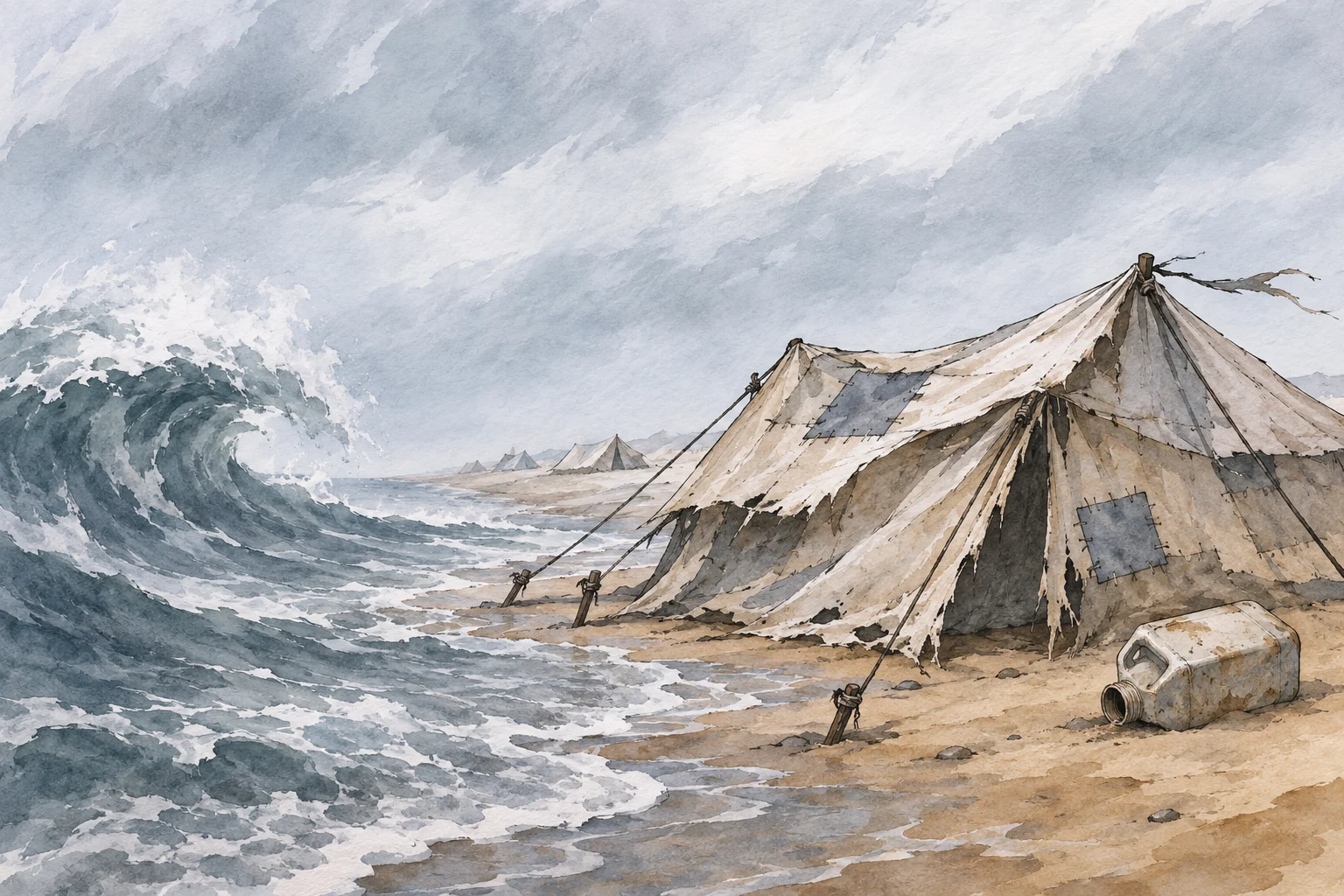
The denominators behind those percentages are people like Anas al-Shami, 33, displaced with his family of six from Bani Suheila, east of Khan Younis, when it fell inside the “Yellow Zone” Israel bars Palestinians from entering — the same expanding line rews tracked pushing families in Shujayea westward. Priced out of rental land in the crowded displacement areas, al-Shami pitched a tent metres from the sea near al-Qarara port. Last winter, seawater and rain flooded it while the family slept; he woke to find his children lying in water, and the repeated exposure “caused serious illness which threatened their lives”. A year of searching has produced no alternative. Ibrahim Abu Tair, 47, shares a tent on the same shoreline with seven children. “What hurts me most is feeling helpless in front of my children,” he said. “I cannot provide winter clothes to protect them from the cold or even a dry mattress for them to sleep on.”
The improvised engineering on that beach is worth stating precisely, because it measures the shortage. Families fill flame-damaged, corroded cooking pots — donated by World Central Kitchen, unusable for cooking — with soil and stack three of them into a column roughly 150 centimetres high, a barrier against the waves. The Mayasem Association, working with World Central Kitchen, now produces these pot-walls for tents along the coastal strip, an idea it first built to protect its own education space, according to its emergency response coordinator Khalil Abu Lahia. It is, as the reporting makes clear, a stopgap: a 1.5-metre earthwork against a winter sea, in place of the caravans and building materials sitting outside the crossings.
Hamawy will be sworn into a Congress that votes on the military aid he says paid for the destruction he treated, and can do so while the committee’s 7,800 most exposed tents go unrelocated. The next numbers to watch are not in Washington: whether tents, caravans and fuel cross into Gaza before the winter rains, and what the flood and collapse toll is if they do not.