
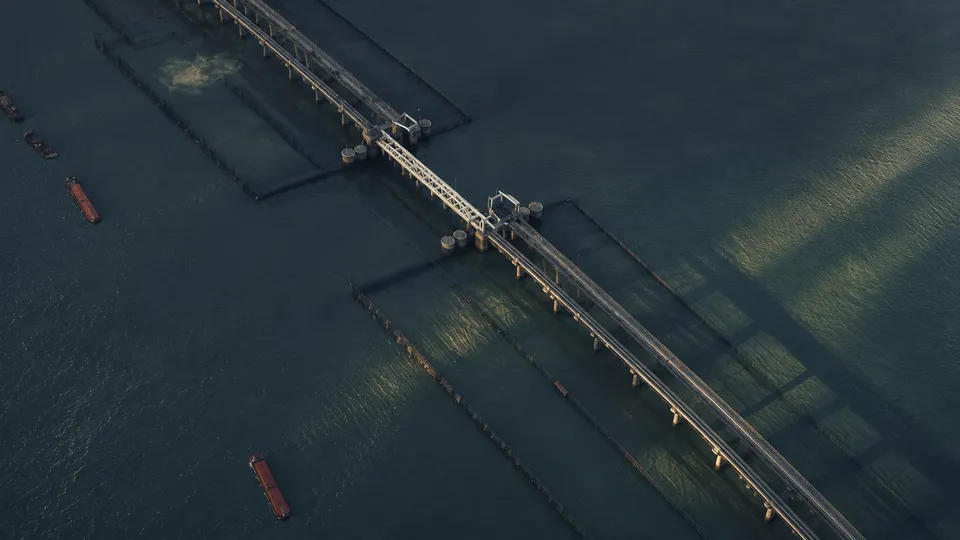
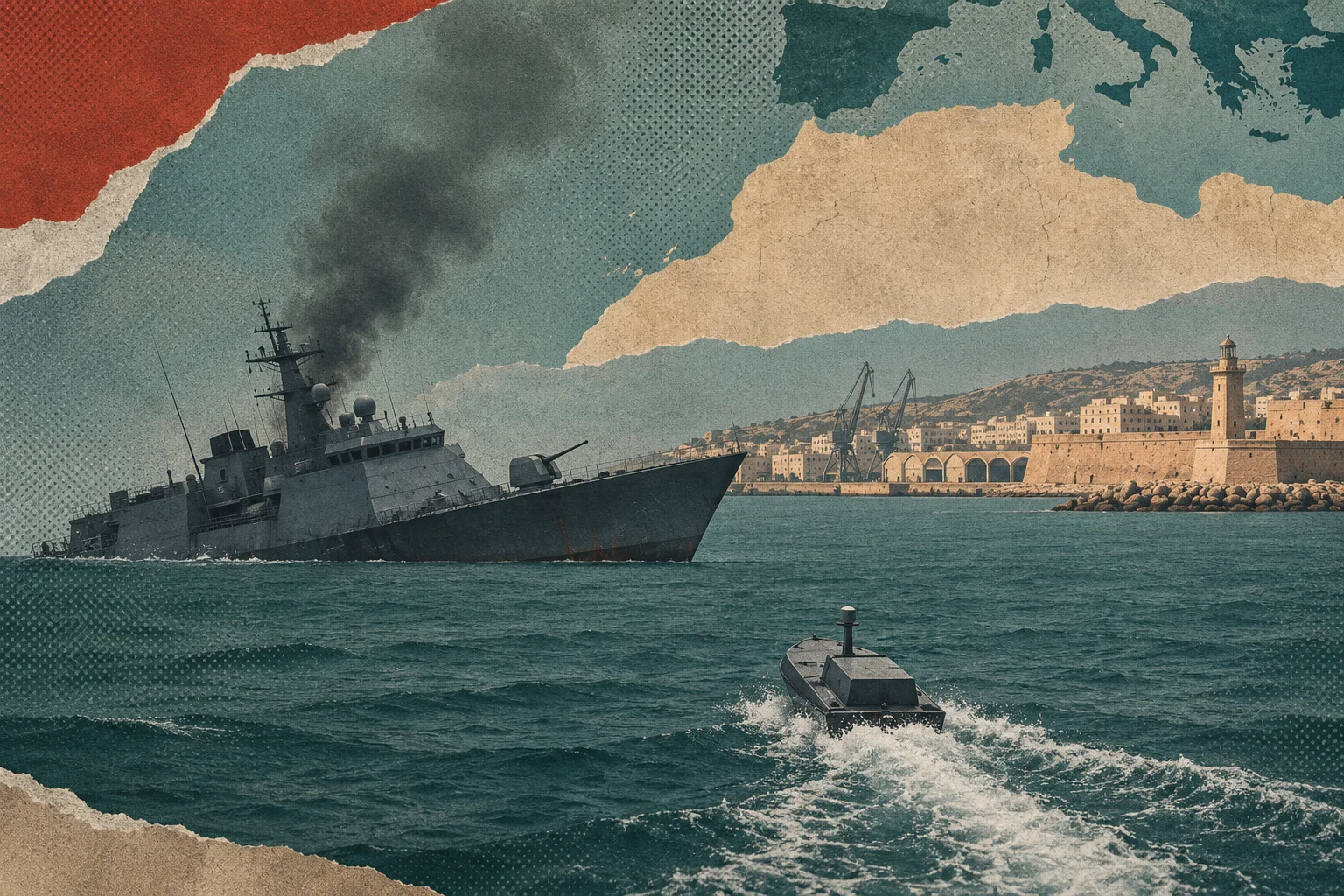
Benghazi sits on the Libyan shore, about as far from the front lines of Ukraine as a Russian warship can get without leaving the Mediterranean. On November 22, 2026, the missile corvette Merkury went down at its berth there. As Jeremy Hsu reported for Ars Technica, citing The Associated Press, Ukrainian explosive drone boats hit the ship at least twice. A Planet Labs satellite image from the same day shows it burning.
Ukraine’s Security Service, the SBU, said it sent seven naval drones against the corvette, launched from a mother ship. In its statement, reported by the Kyiv Post, the agency named its targets as “the sanctioned dry-cargo vessel MV Angara, used to transport Russian military equipment, and the multi-purpose corvette Merkury, which regularly escorted hostile naval convoys—including the MV Angara.” The paper put the straight sea distance from Ukraine’s Black Sea coast to Benghazi at more than 1,500 km. President Volodymyr Zelenskyy released footage of the drone boats closing in and exploding against the burning warship and the cargo vessel. He said a Ka-27 combat helicopter on board the Merkury was destroyed as well, and called the attack “an exemplary Ukrainian operation.”
Zelenskyy said the Angara was carrying weapons. Benghazi is held by the Libyan National Army, which Russia supplies in its war against the internationally recognised government in Tripoli. A port in one man’s civil war became the target in another country’s war of survival.
Officials of the Libyan National Army told the AP that the strikes killed or wounded at least 10 people, among them Libyan and Russian nationals, and that some injured crew members from the corvette were taken to local hospitals. The UN mission in Libya called for an independent investigation and warned against drawing Libya into foreign conflicts.
A ship that never reached its sea
The Merkury was a Project 20380 corvette of the Steregushchiy class, armed with anti-ship and air-defence missiles, torpedoes for hunting submarines, and a gun on its deck. Corvettes usually rank below the frigates and destroyers that do most of a navy’s work, but NATO counts Russian missile corvettes like this one as frigates.
It was built for the Black Sea Fleet and never got there. After Russia launched its full-scale invasion in 2022, Turkey used the 1936 Montreux Convention to stop warships entering or leaving the Black Sea. The naval analyst HI Sutton says the Merkury spent most of its service at Northern Fleet bases in the Arctic. A treaty signed between the wars kept it out of the sea it was made for. It ended up sinking off Africa.
On paper, Russia’s navy is still one of the world’s strongest by number of ships and by firepower. That reputation is wearing thin.
The bridge and the strait
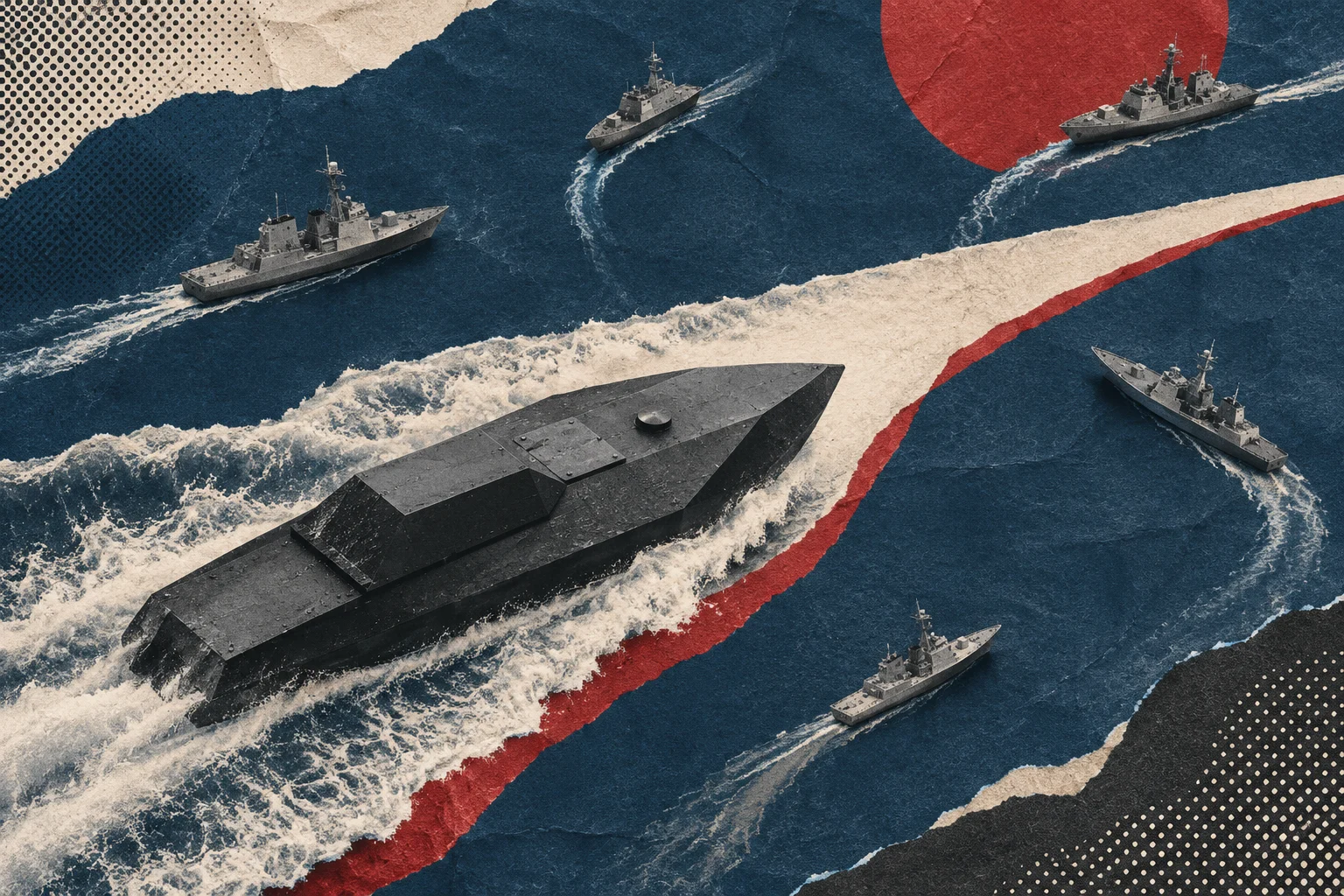
Over the past four years, the Black Sea and the Sea of Azov have become a testing ground for the drone boat: a low hull that sits close to the water, carrying machine guns, missiles, or simply explosives meant to ram a target. Combined with flying drones and missiles, these boats have taken away much of Russia’s control of the shipping lanes both countries rely on. In June, according to Naval News, Ukrainian aerial drones badly damaged another missile corvette, the Boikiy, while it was moored in St. Petersburg.
The stakes are highest in Crimea, which Russia seized in 2014. In July 2026, Ukrainian drones hit dozens of Russian-linked tankers and cargo ships in the Sea of Azov, and Russia had to cut back hard on resupply by sea. All year, Ukraine has also been hitting the roads and railways along the few land corridors that link Russia to the peninsula.
On the nights of November 15 and 16, waves of Ukrainian drones and missiles brought down one of the two steel arches holding up the Kerch Strait Bridge, which Vladimir Putin’s government built as a physical link to Crimea and as a symbol of its claim. Only the bridge’s railway still carries supplies, and Ukraine keeps attacking what remains. Wreckage from the arch and the roadway now blocks the only deep-water channel through the Kerch Strait between the Sea of Azov and the Black Sea.
Russia has hit back at Ukrainian ports and at foreign ships sailing to and from them. Since October, Russian aerial and sea drones have also been sinking merchant ships off Bulgaria and Romania, both NATO members.
From the Mediterranean to the Gulf of Finland
The Benghazi strike was not Ukraine’s first in the Mediterranean. On March 3, the liquefied natural gas tanker Arctic Metagaz, a shadow-fleet ship under sanctions for carrying Russian oil, was wrecked by huge explosions while heading for the same port. According to The Guardian, Russia said Ukrainian sea drones were to blame, while Ukraine did not claim the attack.
The war has reached the Baltic too. On November 11, Finnish authorities confirmed that a Russian Navy corvette of the Buyan-M class, the Naro-Fominsk, had been hit in the Gulf of Finland. BBC News reported that the SBU later claimed the attack. The damaged ship limped back to St. Petersburg.
On November 21, Estonia’s ERR News reported, drones struck the Russian dry cargo ship Sparta II in the same waters, at least twice. The ship is under United States sanctions, and Ukraine describes it as a vessel that has carried weapons and military equipment. Finland led the rescue, joined by Russian and Estonian ships. Al Jazeera reported that the ship was bound for Kaliningrad, that its crew was evacuated, and that the fire kept burning. By the next day, according to Al Jazeera, it had left Finnish territorial waters. Reuters reported that a Russian vessel towed it back to St. Petersburg.
Finland has a long border with Russia, and its governments have usually chosen their words with care. Prime Minister Petteri Orpo wrote on social media:
Ukraine has the right to fight back against the aggressor.
In one week, three damaged or wrecked Russian ships have been sent back to St. Petersburg, the city where the Boikiy was hit in June. The Merkury will not be one of them. It is lying in the harbour at Benghazi.