
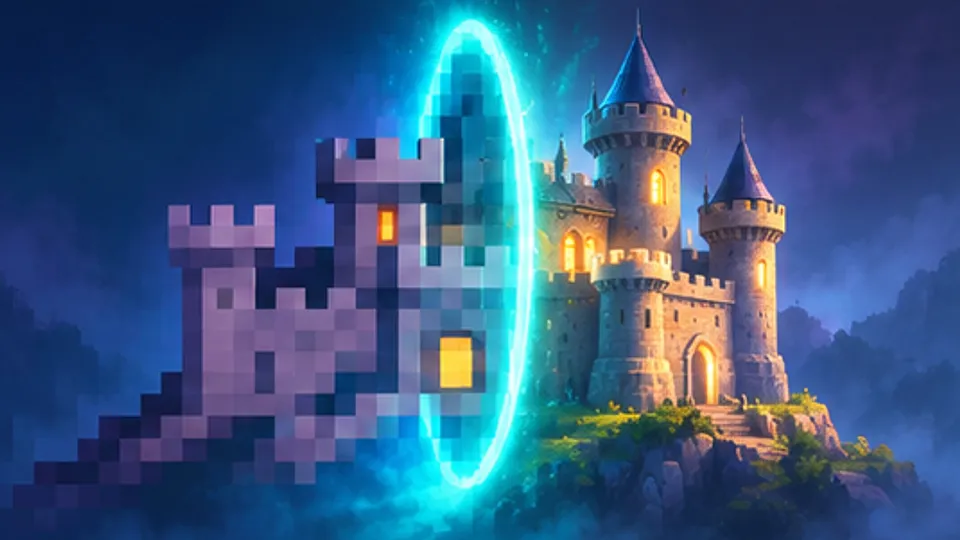
The Elder Scrolls Travels: Shadowkey shipped on 11 November 2004 for the Nokia N-Gage, a phone-shaped game console that sold a reported 3 million units worldwide against Nokia’s own original target of 6 million, and that most people have never used to play anything. The game rendered at 176 by 208 pixels, ran its logic at 25 frames per second, and got the kind of mixed reviews obscure platform exclusives get: GameSpot called it a game where “technological hurdles cripple the gameplay,” while Neoseeker scored it 8.7 out of 10 and All About Symbian gave it 79 out of 100. Twenty-two years later, almost to the day, it has a free PC, Mac and Android port built by one developer with the help of AI tools for coding, engine construction, debugging and most of the new artwork.
The port is called Shadowkey Reforged, built by developer Dan Whelan and released on 11 November 2026 at 6pm Irish time, as PC Gamer reported. It runs on a completely rewritten graphics engine but keeps the original game’s files and scripts, the data that defines quests, dialogue, stats and level geometry, meaning players still need to supply their own legally obtained copy of the N-Gage release to play it; Whelan’s download has never bundled Bethesda’s assets. As Ars Technica wrote, the new engine expands the game’s cramped portrait N-Gage frame to 16:9 and renders at up to 120 fps, though the underlying game logic still ticks at the original 25 fps the N-Gage hardware ran it at in 2004 — the frame rate changed, the simulation didn’t.
What AI actually did here
Whelan’s own account of the build, relayed by XDA Developers, splits the AI’s role into two jobs. First, code: “I used AI to assist with coding and building the engine, and with debugging.” That covers the rendering pipeline, the input and widescreen handling, and presumably a fair share of the glue code needed to read 2004-era asset formats into a modern engine without Bethesda’s original source. Second, art: “I used AI image generation combined with Photoshop and some manual sprite editing to create most of the modern, higher resolution artwork,” upscaling character and environment models that originally had to fit on a 176x208 screen with a handful of kilobytes to spare per texture. Neither Whelan’s statement nor any reporting discloses which model did the coding or image generation, which matters for anyone trying to judge how much of the engine is auditable versus generated and unreviewed — a gap in disclosure that’s becoming routine in small AI-assisted projects and routinely goes unquestioned.
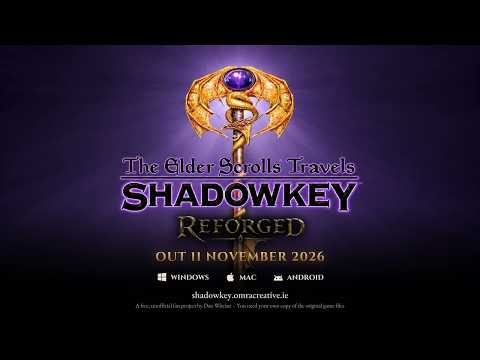
The new engine adds features the N-Gage hardware and its D-pad-and-two-buttons control scheme never supported: four save slots instead of the original’s more limited setup, quicksave and quickload, autosave, adjustable brightness, screenshots, longer draw and interaction distances, a compass marker for nearby enemies, and the ability to lower a drawn bow without firing. Players choose between a Classic mode, which keeps the original’s rules, and a Modern mode, which adds smarter enemy AI, fall damage, searchable containers, fast travel, controller rumble and a reworked interface; the choice is locked per save file. A set of toggleable bug fixes addresses specific flaws in the 2004 release, and Whelan has said online co-op is planned for a later update.
A second team solved the same problem without any AI-disclosed art shortcuts
Shadowkey Reforged isn’t the only attempt to drag this game off a dead phone platform. A separate, independent project called Shadowkey Remastered, built by a developer using the handle Zeggoro and documented under the GitHub username samioan, takes a different approach: it reads the original N-Gage ARM binary and rebuilds its logic piece by piece, a reverse-engineering method rather than a new engine fed by the original scripts. The project’s itch.io page describes a Windows-only, portable build — “no installer, no registry keys, nothing in AppData” — currently at version 0.115.0, that lets players scale the original 176x208 image by 2x, 3x or 4x rather than rebuilding it at native widescreen resolutions. The page states plainly that the game “is playable, and it is not finished,” and it discloses its own AI-assisted coding on the listing. Both projects require buyers of the 2004 original to supply their own files; neither includes Bethesda’s assets or Nokia’s system font, which the page notes is separately copyrighted.
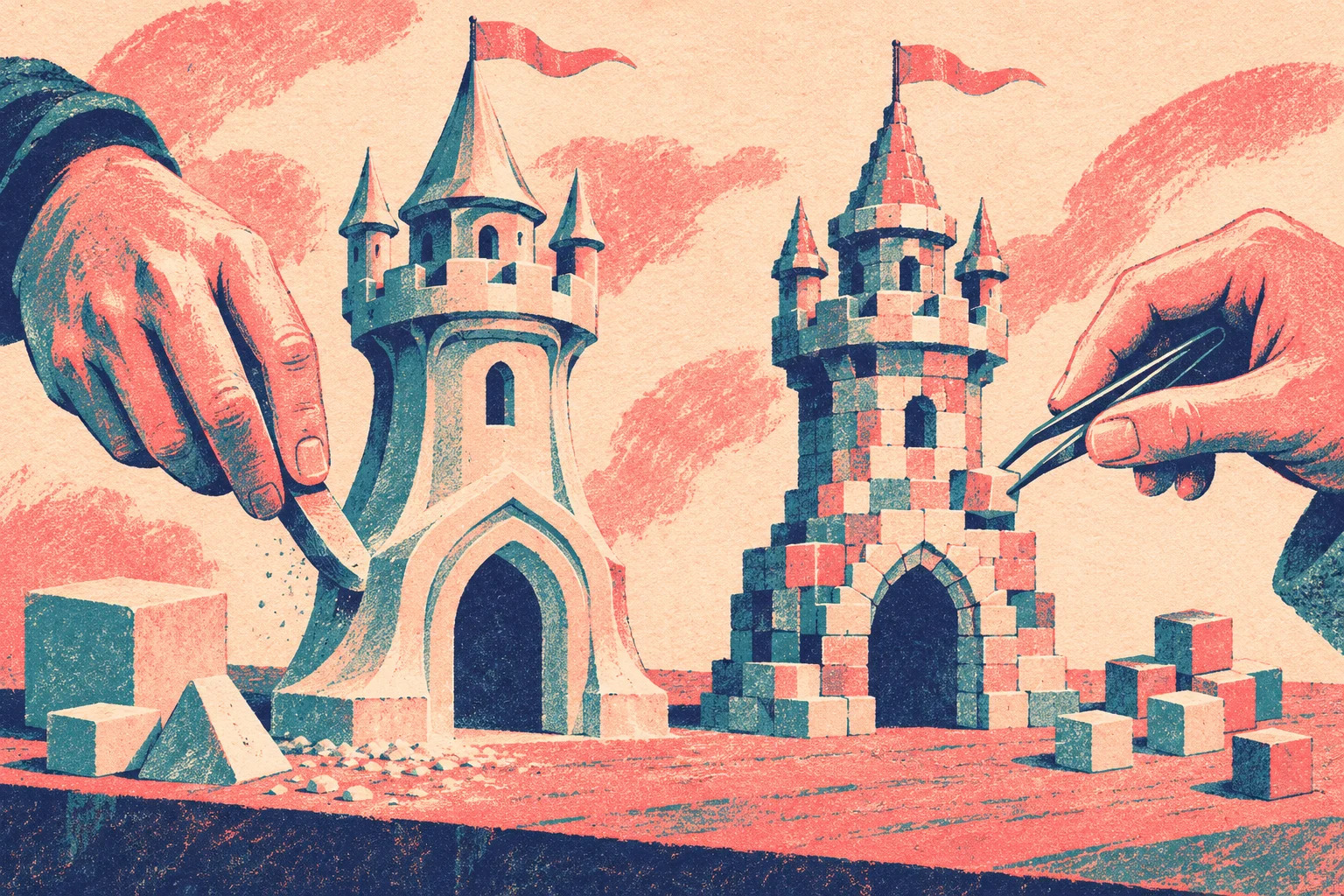
The table above lays out where the two efforts diverge: one trades fidelity to the original binary for a wider platform list and a full visual overhaul, the other trades platform reach for a native reimplementation of the exact logic the N-Gage ran. Both lean on AI for parts of the coding, which is the more interesting data point here than either project individually — two unrelated hobbyists, working on the same 22-year-old 176x208 game, independently reached for AI coding assistance as a baseline tool rather than a novelty, the same pattern already visible in Rockstar’s leaked PC build of GTA VI racing an AI agent through its own launcher and in Epic’s recently vibe-coded launcher update.
What’s missing from both projects’ disclosures is the thing an engineer would want to check first: which models, what prompts, how much of the output shipped unreviewed. Whelan’s two-sentence account of AI’s role, quoted above, is more candid than most game-adjacent AI disclosures get, but it stops well short of a changelog or a commit history that would let anyone verify how much of the rewritten engine is AI-generated code running unaudited inside a project that, by design, has no original source to check it against. Shadowkey was obscure enough in 2004 that a failed benchmark wouldn’t have mattered much to anyone. Whether that stays true as more of this kind of archival porting work runs through AI-assisted pipelines, on games people still care about, is the open question.