
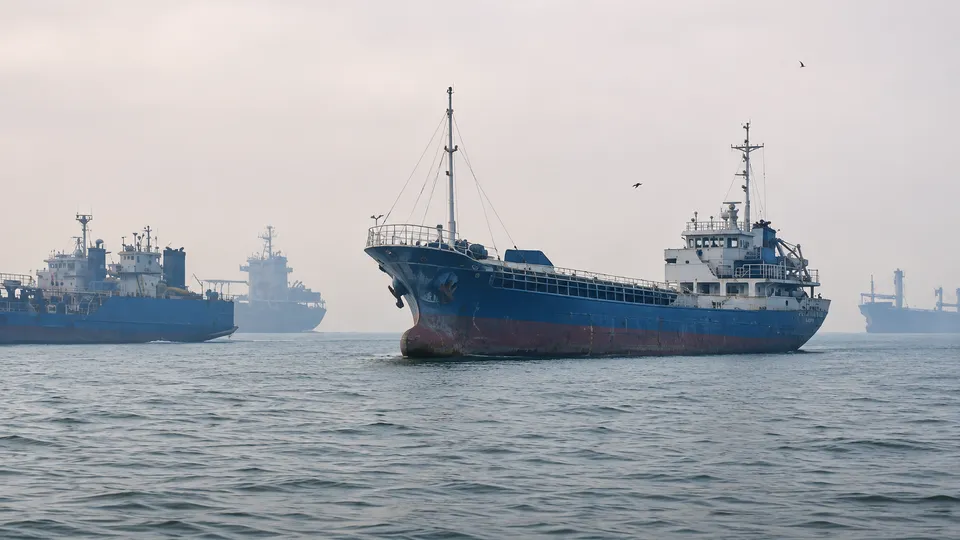
The International Maritime Organization counted at least 25 seafarers killed and 130 attacks on commercial vessels in and around the Strait of Hormuz as of November 6, 2026, the day its 40-member Council wrapped a five-day session on the war. The war itself started on February 28, when the US and Israel began bombing Iran. Nine months in, the death count has not slowed: 20 dead after six months of fighting (68 incidents, 35 wounded, one missing), 22 by mid-September, 24 by October 28 (121 incidents), 25 now. That is roughly two more dead seafarers added every month since August, as Al Jazeera reported.
Before the war, the strait carried an average 20.9 million barrels of oil a day in the first half of 2025, about 20% of global oil consumption and more than a quarter of all seaborne-traded oil, according to the US Energy Information Administration. Roughly a fifth of global LNG trade moved through it too, and 89% of the crude and condensate that passed through in the first half of 2025 went to Asia, with China, India, Japan and South Korea taking 74% of it between them. Only Saudi Arabia and the UAE have pipelines big enough to move meaningful volumes around the strait instead of through it.
That baseline is now theoretical. Straits.live, which tracks the strait using IMF PortWatch vessel-transit data, recorded one transit on November 1 against a pre-war average of 85 transits a day: roughly 1% of normal. As of November 8, 97 AIS-visible vessels were holding position in the Hormuz watch box, excluding ships already near a port — the backlog of tankers waiting for a passage that, by the numbers, is not happening.
How the blockade works
Iran’s Revolutionary Guard Corps frames its strikes as hitting “rogue oil tankers travelling an unauthorised route,” meaning any vessel that uses the strait itself rather than the alternate route Iran and Oman have designated. The US has answered with its own naval blockade on Iranian ports. The result is two overlapping exclusion zones layered onto one shipping lane, enforced with missiles, projectiles and naval mines rather than inspection.

The casualty list from the past few months: on November 5, the Marshall Islands-flagged tanker Velos Sapphire exploded north of Qatar, killing one crew member — the most recent of the 25 IMO-recorded deaths. In September, two Filipino crew died when the Saudi tanker Sidr was hit near the strait. In October, the Panamanian-flagged tanker On Peace was struck near Oman, injuring 12 crew, 11 of them Indian. Earlier, the cargo vessel MSV Al Jusufi was struck off Oman; Indian seafarer Gandhar Nahim Ajij died and 13 other Indian crew were rescued. In June, US strikes near Oman killed three Indian sailors, a death toll attributed to the American side of the war rather than Iran’s, which led New Delhi to summon a US diplomat.
Who is dying
Indian nationals account for at least 16 of the IMO’s 25 recorded deaths, by far the largest single group, reflecting how much of the Gulf’s merchant crewing runs through Indian labour. That IMO figure sits alongside a separate count from Iran’s own merchant marine union, which reported at least 44 Iranian seafarers killed and 29 injured as of May — a different source using a different method, and it is not clear how much, if any, of that tally overlaps with the IMO’s international figure.
Rights on paper
Crews are not without contractual protection. On March 2 and again on March 5, the International Transport Workers’ Federation and the shipowners’ Joint Negotiating Group, acting as the social partners of the International Bargaining Forum, designated the strait and the surrounding Gulf of Oman and Persian Gulf first a High Risk Area and then a Warlike Operations Area, the top tier. Under that designation, covered seafarers can refuse to sail into the zone, with repatriation at the owner’s cost and compensation equal to two months’ basic pay; those who do sail get a war bonus equal to 100% of basic wage for a minimum of five days, plus extra for each additional day in the zone, and double compensation if they are killed or disabled. “Today’s designation ensures that seafarers on vessels covered by IBF agreements have critical protections if they operate in this dangerous region,” said ITF General Secretary Stephen Cotton in the joint ITF-JNG statement.
Those terms cover seafarers on IBF-governed contracts, not the entire workforce in the Gulf, and even where they apply, having a right does not guarantee it is honoured. Maritime law scholar Abdul Khalique has argued that enforcement, not the underlying law, is “the weak link.” The International Chamber of Shipping has said shipowners are working to get affected crews access to mental health support and has urged vessels to keep following the latest maritime security guidance — language that describes an industry managing risk after the fact rather than preventing it.

The scale of the stranding has moved in both directions. Dominguez put the number of seafarers trapped in the Persian Gulf at around 20,000 as early as March, plus another 15,000 on passenger ships. The IMO evacuated roughly 11,000 of them in June under cover of a US-Iran memorandum of understanding, then paused the operation on June 25 when strikes resumed; the truce collapsed entirely on July 8, when Iran struck multiple commercial ships again. By late August, the IMO put the remaining stranded count at about 6,000 — a large drop even as the attack count kept climbing, which is consistent with completed rotations and fewer new arrivals rather than any improvement in safety.
Where the diplomacy stands
As of this week the strait is, by the IMF PortWatch numbers above, effectively closed. Iran’s Foreign Ministry says its two-day plan to reopen it is still on the table: a proposal, scaled down from an original seven-day version floated in September, conditioned on Washington recognising the alternate shipping route Iran and Oman have designated, lifting sanctions imposed after the collapse of an earlier Islamabad agreement, reducing the US military footprint in the region, reinstating oil waivers granted in June and releasing frozen Iranian funds, including money held in Qatar — terms Tehran set out in response to a letter from Vice President Vance. An Iranian army spokesman has since hardened the public line, saying the strait stays shut until Washington gives in. President Trump told CNN that further strikes are “highly unlikely” to be necessary, conditional on Iran signing what he called a very strong agreement, even as CENTCOM keeps strike options current.
None of that has moved the transit count off its floor. The next numbers to watch are the ones that have moved every few weeks since February: the IMO’s death toll, last at 25 and rising by roughly two a month, and PortWatch’s daily transit count, last at one ship against a pre-war 85.