
The war is eight months old. The Strait of Hormuz, the narrow water every tanker from the Gulf has to pass, is still shut. Into this stalemate, at the end of October, came a letter signed by the Vice President of the United States, JD Vance.
Tehran did not throw it away. It read it, and it read it at the top. Speaking to Al Jazeera on Saturday, 31 October, Iran’s Foreign Minister, Abbas Araghchi, said the letter had been studied in high-level meetings, and that Washington’s effort to open a dialogue was “a positive step.” He then said there were no plans to meet American officials about the war.
Both statements were sincere, and in this war they do not contradict each other.
A change of tone
According to The Tribune’s account, the letter was addressed to Mohsen Rezaee, Iran’s national security chief. The letter reportedly proposed talks between Vance and senior Iranian officials, with Qatar or Turkey named as possible venues. Rezaee said he had read it and that Washington’s “tone has changed completely”, a change he called a “very positive sign”, as Al Jazeera’s live coverage on 1 November recorded.
Araghchi added a warning to the welcome. If the letter’s purpose was “to stir up discord, it would be yet another mistake to add to its previous ones,” he said. Old regimes read every letter from an adversary twice, first for what it offers and then for whom it is meant to divide. Here the letter went to the security chief, not the foreign minister, and that alone was a reason for the second reading.

The road through Doha
The diplomacy now runs through Qatar. A day after Qatari mediators had been in Tehran, apparently to revive the collapsed US-Iran ceasefire, an Iranian delegation flew to Doha. Rews had followed the more than twelve hours of talks in Tehran that came before. One of Araghchi’s aides stayed in Qatar to keep the consultations going. Reports of imminent meetings with the Americans were “merely media speculation,” the minister said. “We see no need to meet with the Americans at this stage.”
Not everyone describes the meeting rooms that way. The Indian news agency ANI reported that an American delegation was expected to join Iranian officials in Doha. Araghchi’s line is that whether any talks are direct or indirect will be settled only once Washington accepts Iran’s conditions. Until then, Qatari and Pakistani mediators carry those conditions back and forth. Proposals on the nuclear file, he said, are being reviewed “as part of the second phase.”
The bargaining so far has been about days. Qatar proposed shortening the timetable of Iran’s plan to reopen the strait to five days. Iran answered with two.
Two days is a fast reopening. It depends on Washington meeting Tehran’s conditions first.
The price list
Araghchi set the conditions out in plain terms. Washington must lift the sanctions it imposed after the Islamabad memorandum, the June ceasefire agreement that later fell apart, and it must reduce its forces in the region. Iran wants its oil waivers restored and all of its frozen funds released, including $6bn held in Qatar. It also wants recognition of the shipping routes it has discussed with Oman, and the other routes closed.
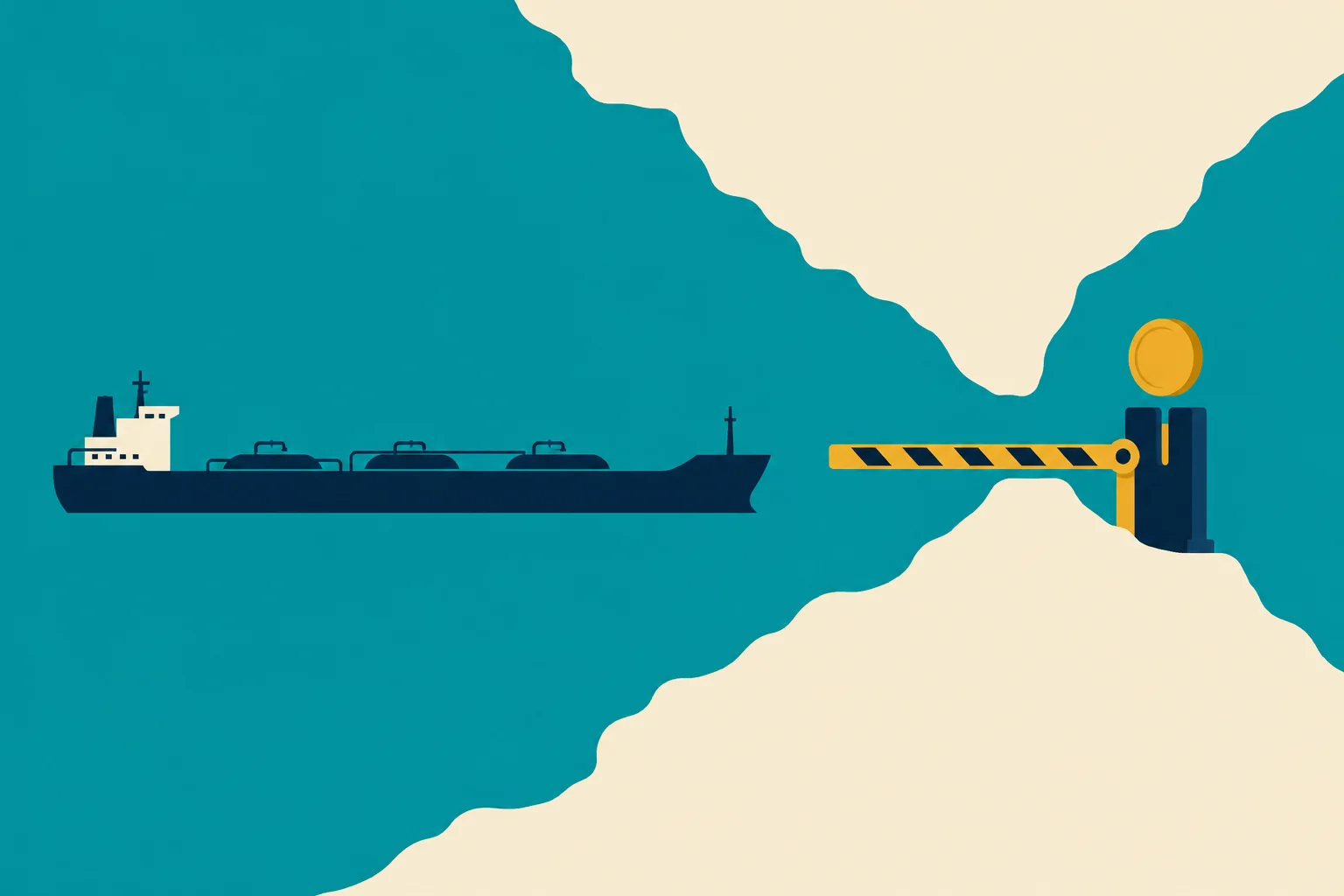
Al Jazeera’s correspondent Resul Serdar Atas explained the history behind the list. The June memorandum had guaranteed the oil waivers, and the United States cancelled them when the deal collapsed. Tehran now wants two layers of sanctions removed: the energy and nuclear measures, and those added after the collapse. Atas saw “no remarkable flexibility in Iran’s position.” Washington, for its part, wants the strait open. Neither side, he noted, will settle for gains that exist only on paper.
The list has been tried before in another form. Last month, according to a report in The Spokesman-Review, Araghchi offered to reopen the waterway within a week if the United States lifted its blockade of Iranian ports, released frozen assets and waived sanctions on Iranian oil sales, among other terms. That offer was rejected. The deadline has shrunk since then. The demands have not.
Both hands
Araghchi said Iran was not ruling out an attack and was “prepared for all scenarios.” He said it had upgraded its weapons, repaired its vulnerabilities and tested new arms. The armed forces chief, Maj-Gen Ali Abdollahi, said he was acting on the orders of Supreme Leader Mojtaba Khamenei when he threatened a response of “immense force” without geographic limits. Iran, he said, would decide when any new war ends.

The American side was holding its own weapons in view. The Wall Street Journal reported that the United States had told Gulf states to prepare for renewed strikes on Iran after Tuesday’s midterm elections, and Fox reported that Central Command briefed President Donald Trump on military options on Thursday. Rews had already reported on those strike options being readied. Secretary of State Marco Rubio said Trump had not decided whether to resume military action, and that he did not know of any timeframe for the Qatar-led talks.
So each government offers a hand and keeps a fist ready, and neither tries to hide the fist.
The calendar
Rouzbeh Parsi, an analyst at Lund University, said Friday’s progress was probably about the order of the first steps, an effort to build “the barest of trust.” Abbas Khamayar, a former Iranian diplomat, expects things to stay as they are until next week’s US midterm vote.
The strait’s fate may therefore depend on an American election as well as on the Gulf states. For governments, a closed sea is a bargaining chip that can be counted in days, frozen billions and warships. The crews waiting at anchor and the people who depend on the shipping have no seat in Doha and no say in any of it. Tehran has held the strait before, with its memory of broken talks, and it is holding it now while it waits for the vote.