
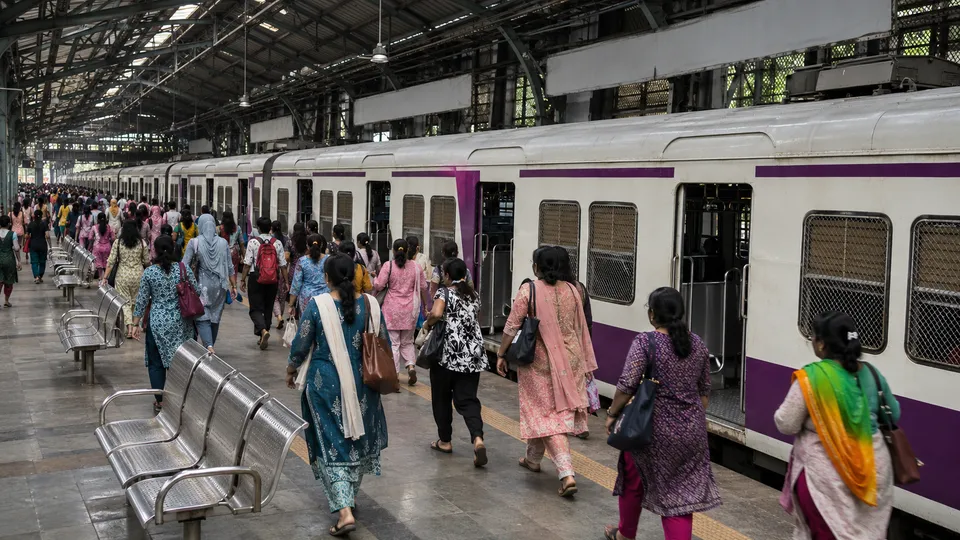
The World Bank has a new report on India, and its headline number is very large. Priyanka Shankar reports for Al Jazeera that India’s extreme poverty rate fell from 27.1 percent in 2011 to 2.6 percent in 2023, and that nearly 500 million people got out of poverty over that period. The only comparison anyone reaches for is China, which lifted more than 800 million people out of extreme poverty according to a 2022 report by the World Bank and China’s Finance Ministry. China took 40 years. India’s numbers cover 12.
Prime Minister Narendra Modi wrote on Instagram: “A historic fall in poverty. A generational rise in opportunity.” The Bank itself said “remarkable progress” and called it “one of the fastest poverty declines in the world.” This is a good-news story, and I want to take it seriously as one. I also want to look at how the number gets built, because a poverty count is a strange object.
Two lines
Here is how it works. You pick a daily spending figure, adjust it for what money actually buys in each country (the Bank uses 2021 purchasing-power prices), and count the people who spend less than that. The Bank’s October Poverty and Equity Brief for India uses two lines. Extreme poverty means living on less than $3 a day, and that is the line where the rate went from 27.1 percent to 2.6 percent. The second line, $4.20 a day, is the threshold for lower-middle-income countries, which is the group India belongs to. Below that line, the share fell from 57.7 percent to 16.1 percent. The 496 million figure is the $4.20 count.
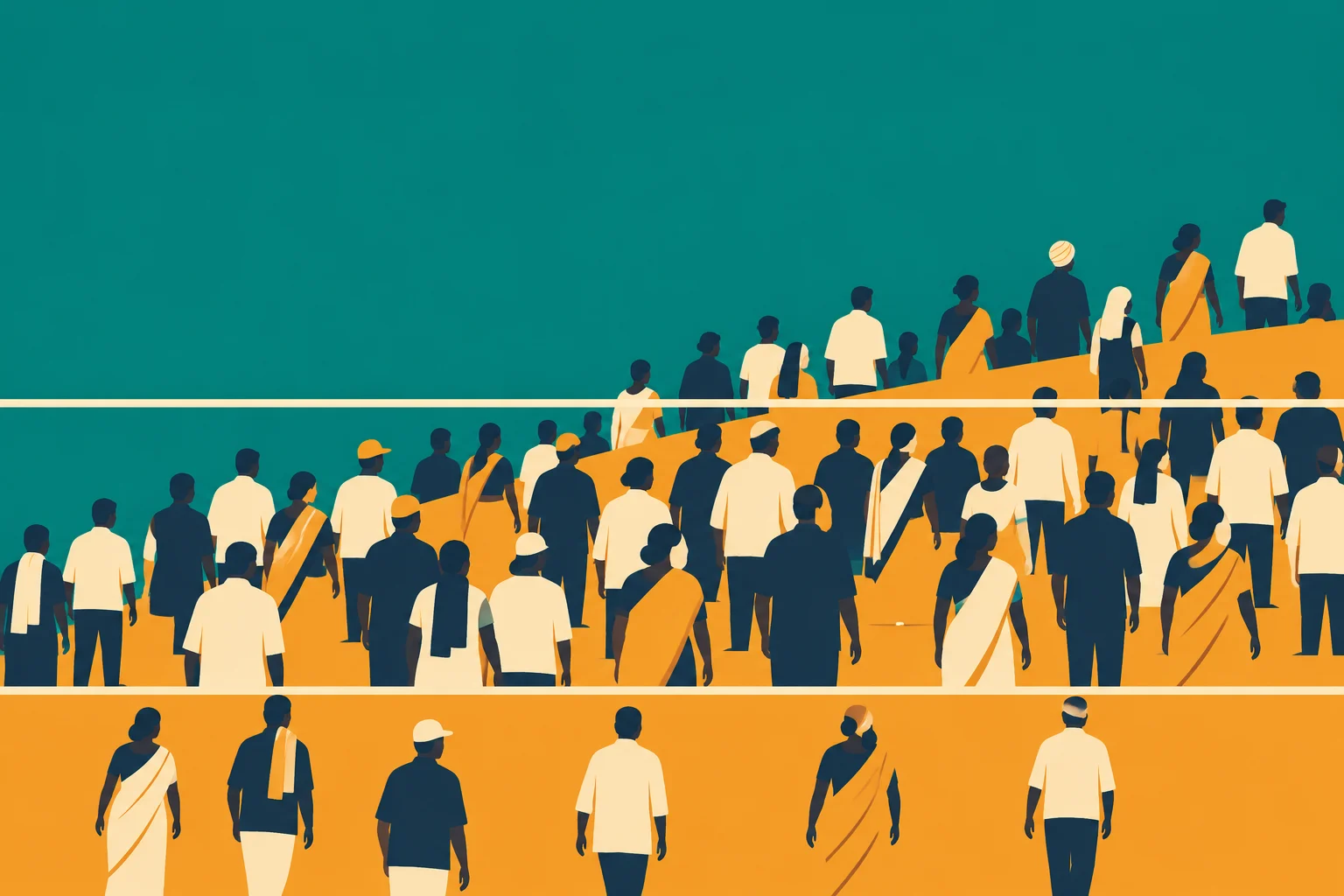
That matters because the $4.20 line is where most of the people still are. Nitin Kumar Bharti, of the University of Western Australia, points out that “233 million people still live below” it. Some rough arithmetic: if 233 million is 16.1 percent, India’s population is about 1.45 billion, which puts about 38 million people under the $3 line. That is the same country seen through two different lines, and which one you quote depends on what you’re trying to say.
The number has also moved recently. In June 2025 the Bank put India’s extreme poverty at 5.3 percent in 2022-23, measured from the same 27.1 percent starting point. The new brief, which uses newer data for 2023, gets it down to 2.6 percent. The Bank warns, to its credit, that some of the recent improvement may come from changes in measurement methods rather than real gains in household welfare.
There is a stranger detail. According to the economist Santosh Mehrotra, the Indian government has not produced its own poverty estimates since 2014. “We are a strange country in having adopted an international organisation’s poverty line as our own,” he said. He argues that what households need to buy changes over time, and gives phones as his example. The former IMF official Surjit Bhalla takes the other side. He calls World Bank data the “gold standard”, says countries vet the estimates, and says “there is no ideological basis for questioning this data.” Neither of them gets the whole of it, because the Bank’s figures are built on Household Consumption Expenditure Surveys run by the National Sample Survey Organisation, which is an Indian government body. So the government doesn’t publish a poverty line of its own. It collects the data and then celebrates a line drawn in Washington.

What did it
The report’s authors, led by the South Asia poverty economist Ayago Wambile, say the decline was “mainly driven by strong consumption growth, rising employment, especially among women, and expanded social transfers,” including food subsidies. The Bank says employment rose by about 134 million between 2017 and 2023, nearly twice as fast as the working-age population grew. Free grain now goes to about 800 million people. In rural households, access to piped water went from under 17 percent in August 2019 to about 82 percent. Last November, Keralam became the first state to officially declare itself free of extreme poverty.
The welfare picture is not all expansion, though. The rural jobs guarantee that dates from Manmohan Singh’s government has been significantly diluted under Modi. Nobody knows yet whether free food can be kept up forever, or whether it is hiding real economic distress. Bhalla and his co-author Bhasin wrote in 2025 that the grain covers only calorie needs and that “more balanced food subsidies that are better targeted to the genuine poor will improve nutritional outcomes.”
The other half
The same report also says this: “Median earnings among the top 10 percent of workers were about 13 times those of the bottom 10 percent in 2023.” Real wages have stayed broadly flat, and a lot of the new jobs were in low-productivity work. Youth unemployment rose from 13.8 percent in April 2025 to 15.2 percent in March 2026. Azim Premji University’s State of Working India 2026 finds that nearly 40 percent of graduates aged 15 to 25 don’t have jobs. The 2026 World Inequality Report says the top 10 percent of earners take about 58 percent of national income and the bottom 50 percent take 15 percent. In per-person terms, the average top-decile earner gets almost 20 times the national income share of the average person in the bottom half.
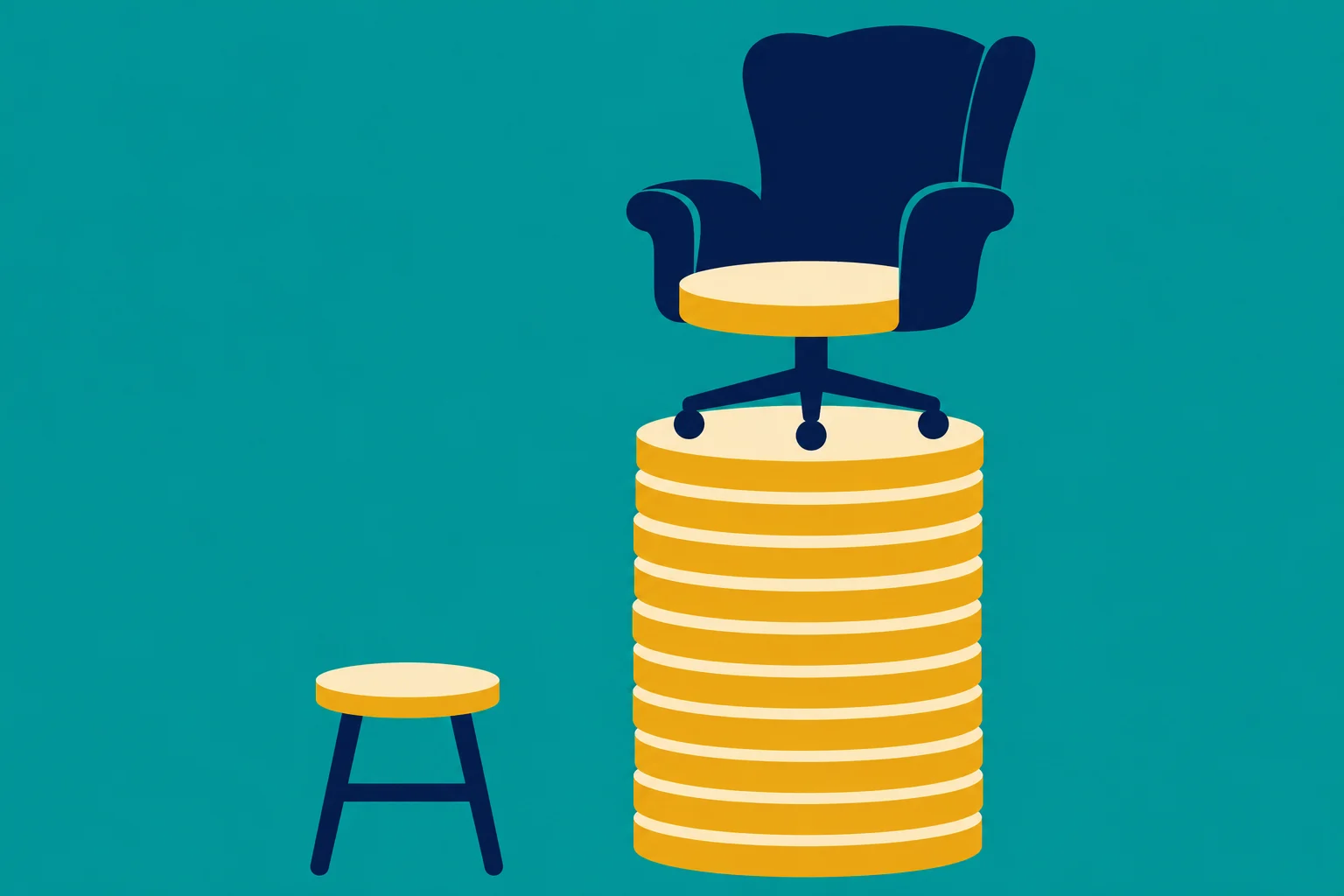
The economist Jayati Ghosh notes that public health spending is just over 1 percent of GDP, so out-of-pocket medical bills push millions into poverty, and that real wages have stagnated. “These are not signs of a dynamic economy with falling poverty,” she said. Mehrotra adds that India is still the only lower-middle-income country in the G20 and still has more poor people than any other country.
Bharti makes the point about how the count works: “For a given level of average income, a more equal distribution generally leaves fewer people below a poverty line.” Here is a hypothetical. Picture two countries with the same average spending. In one, the extra money mostly goes to people already well above the line. In the other, it goes to people just below it. The second country’s poverty count falls faster, even though its GDP growth looks exactly the same. Bharti says India’s policy focus on infrastructure is “often addressing the needs of the top 10 percent rather than the bottom 90 percent,” and he points to caste, unequal asset ownership and thin investment in education and health. Dipa Sinha, also of Azim Premji University, says “India talks about poverty eradication only,” and calls for “a more progressive taxation policy that actually tackles inequality head-on,” along with universal health and education.
The Bank expects poverty at the $4.20 line to keep falling, from 14.2 percent in 2026 to 12.1 percent by 2028, “albeit more gradually.” Last month it raised its forecast for India’s growth to 7.1 percent. The easy part of counting is moving people from just under a line to just over it. The harder part is the people far below the line, and that is where the gains slow down.