
In the Doğubayazıt district of Ağrı Province, in Türkiye’s far east, near a village called Üzengili and a few miles from the Iranian border, there is a long shape in the ground that looks like the hull of a boat. People have been arguing over it for decades. Some come wanting to find something there, others come to check, and the ground has given neither group much. On November 22, 2026, it gave them a number.
The number is about 4,300 years. As Leman Altuntaş reported for Arkeonews, drawing on the İhlas News Agency, Professor Cenker Atilla of Sivas Cumhuriyet University said that a laboratory in the United States had dated wood samples from the Durupınar Formation to between 2400 and 2200 BC, in the third millennium before Christ. These are the first radiocarbon results ever announced from the site. Samples also went to a laboratory in Switzerland and to laboratories connected with TÜBİTAK, Türkiye’s Scientific and Technological Research Council. Neither has reported yet.

A summer of digging
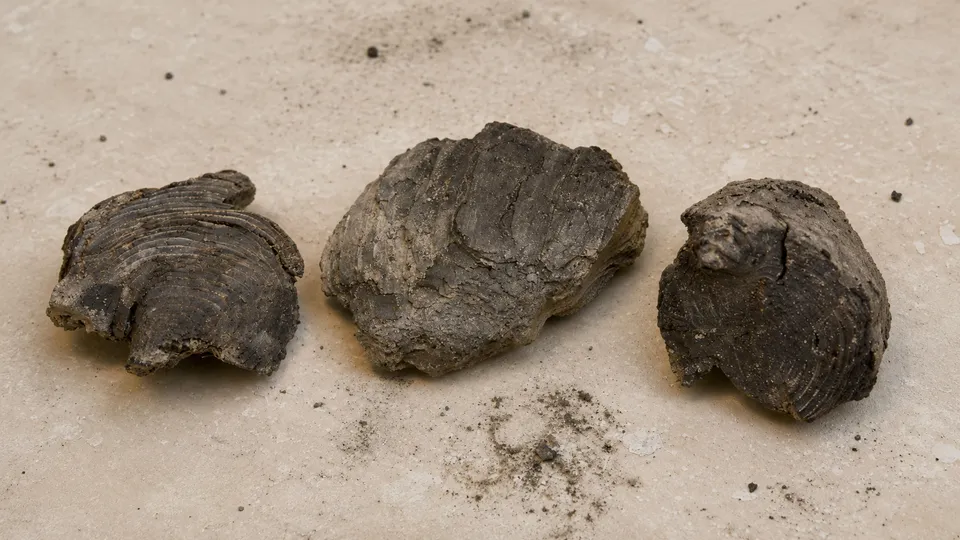
The fieldwork ran from June 28 to September 30, 2026. About 20 researchers from five countries took part, using geology, geophysics and archaeology together. They recovered material they describe as wood and carbonized matter and divided it among the three countries’ laboratories. Earlier in the season the project had already drawn attention when ground-penetrating radar picked up right-angled anomalies beneath the formation. Straight lines and right angles are the kind of feature people take as a sign of human work. In folded and fractured rock they are also common.
The project’s deputy leader, Andrew Jones, said two of the wood samples came out at roughly 4,300 years old. He pointed out that this matches some of the proposed dates for the biblical flood, and he also said plainly that the dates alone do not show that the Durupınar Formation is Noah’s Ark. Atilla went further. According to an English-language report from Haberler, he told the Turkish press that the holy books place the flood at around 2300 BC.
What carbon can tell
Here is a reflection, and only that. When a date lands right where believers hoped it would, it gets heard as a verdict, even when the people who announced it call it a clue.

Radiocarbon dating measures how much carbon-14 is left in organic material. That gives an estimate of when the organism died, and for wood that means roughly when the tree stopped growing. It says nothing about whether anyone cut or shaped the wood, what it was used for, or how it came to rest in a hillside in Ağrı. To answer those questions you have to look at the samples themselves and at the layers of earth they came out of. A fact-check by Ancient Origins, published weeks before any results arrived, made the same point: a carbon date shows only when a tree died. It also listed questions the public record had not yet answered, including exactly where in the formation the wood was found, at what depth, and whether it is charred or petrified.
Those questions are still open. The team has not published a detailed scientific report with the full laboratory measurements, the calibration data or the archaeological context of the specimens. The American laboratory has not been named in the coverage. The announcement gives a date range and two samples. It gives no error margins.

An older verdict
This is not the first time the formation has been examined. In 1996 the geologist Lorence G. Collins and the explorer David Fasold published a peer-reviewed paper in the Journal of Geoscience Education arguing that the formation is natural. Fasold had once been one of the site’s best-known champions. As the record of the site summarises it, the two men identified the boat shape as a syncline, rock layers folded downward and worn into shape by erosion, and found no fossilized timber or structural remains of a vessel. Features that had been taken as man-made turned out to be concentrations of iron minerals such as limonite and magnetite. A scholar of early Christianity, writing in The Conversation, has tried to explain why people keep searching a natural rock formation for a ship anyway.
The earlier geological work concluded that the shape formed through natural processes, and the new dates do not overturn that. Two pieces of wood that are about 4,300 years old are two pieces of wood that are about 4,300 years old. There is nothing yet to connect them to a hull, a deck or a keel.
Waiting on Switzerland and Ankara
The method itself is sensible. The team plans to compare the American dates with the independent results from Switzerland and the TÜBİTAK-linked laboratories, and a fuller scientific assessment will be possible only once those analyses and their documentation are available. Atilla and his colleagues say they expect the later results to clarify both the age and the nature of the samples.
So far there is a range from one laboratory, two samples and two more sets of results to come.