
Christos Achniotis was sixteen in the summer of 1974, when Turkish troops came ashore on Cyprus. He still recites the dates from memory. Half a century later, the north of his island is still occupied, and he spoke to Nils Adler of Al Jazeera about a different kind of arrival, slower than the first and without landing craft. Israel, he said, is “trying to dominate as much as possible, land-wise, company-wise,” and politically and militarily as well.
He knows what foreign money looks like. Limassol has had a large Russian community for a long time, but that, he said, was a matter of property. He called Israel “a small area with big money and a big military”. Cyprus lies 35 minutes away by plane.
The figures support the first half of his sentence. According to the World Bank, Israel’s economy is about 15 times the size of Cyprus’s, and its military spending is roughly 73 times larger. The government in Nicosia presents the relationship as a security alliance against Turkiye. Many of its citizens wonder what an alliance between partners so unequal will turn into.
The water
Begin with water, because on an island everything begins there. In March the dams of Cyprus were only 21 percent full, according to the Water Development Department, and about 80 percent of the island’s drinking water now comes from the sea. In June the agriculture minister, Maria Panayiotou, said that by next year desalination would cover almost all household demand.
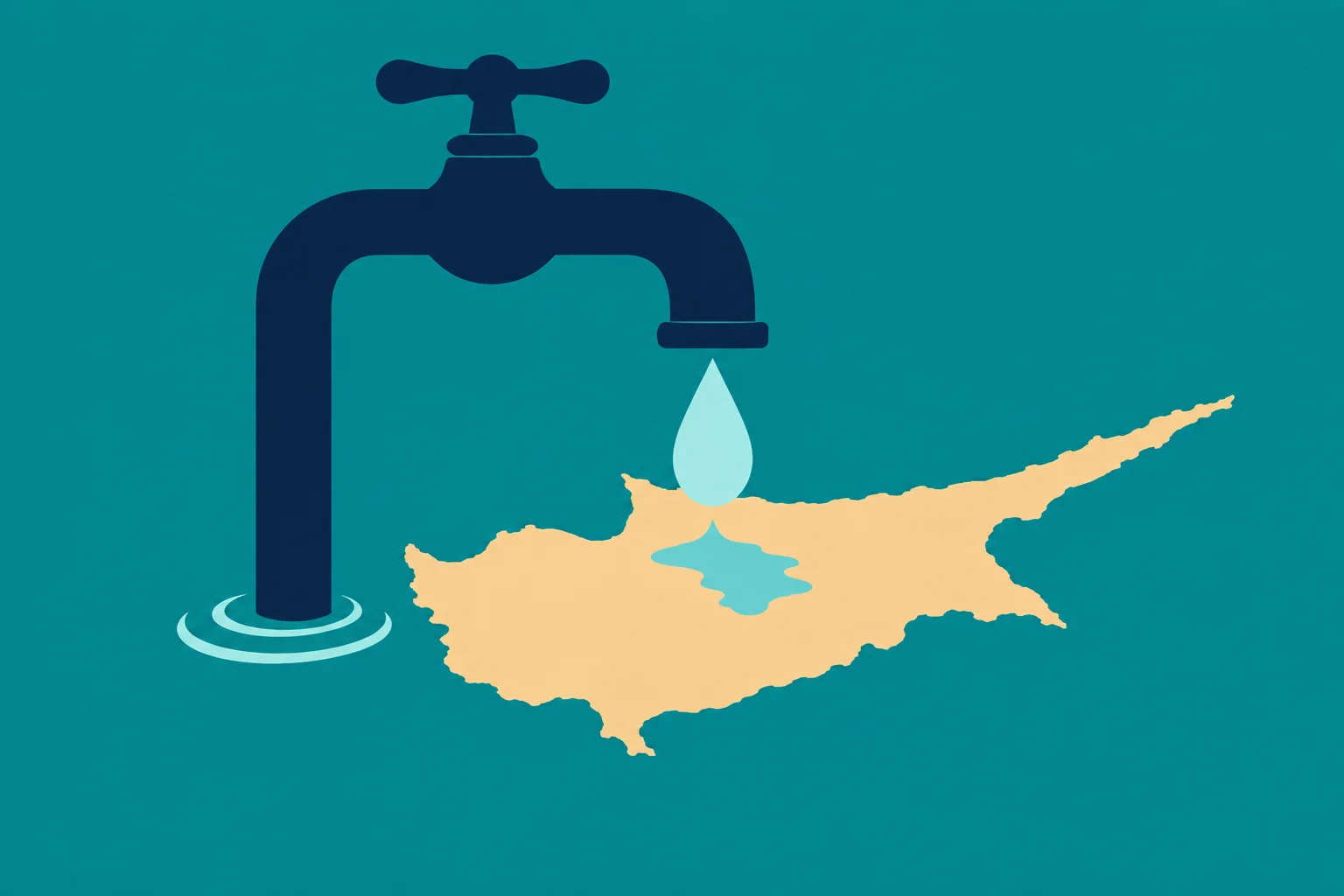
Mekorot, Israel’s state water company, runs two of the five permanent desalination plants, at Larnaca and Episkopi, through joint ventures with the Cypriot firm Netcom. In August it signed a memorandum with the Nicosia District Water Board on managing water and sewerage. The same company appears on the UN list of businesses linked to illegal settlements in the occupied West Bank, where springs such as a farmer’s spring at Fasayil have lately changed hands and names. Najla Abdellatif Vallander, founder of Zero Waste Palestine, likened Mekorot’s work there to “water theft”. Palestinians, she said, must buy back their own water and are mostly barred from digging wells. “This is water apartheid.” Mekorot had not responded to requests for comment.
Danae Laou, a hospitality worker in Limassol, sees in this the way control of resources props up the occupation of Palestine. “It’s terrifying to see, but at the same time, we have no power,” she said. “I can see the same thing happening here.”
Money, gas, medicine
The money arrived fast. According to the Central Bank of Cyprus, Israel-based investors held €5.1bn ($5.7bn) on the island at the end of 2024, more than six times the 2017 level. The true figure may be higher, because the data leaves out Israelis living abroad and ownership that is hard to trace. The Tel Aviv Stock Exchange is reportedly considering a bid for the Cyprus Stock Exchange, which is being privatised. A source close to the Finance Ministry said the Cypriot exchange’s EU licence would give Israel “greater access to the Eurozone market.”
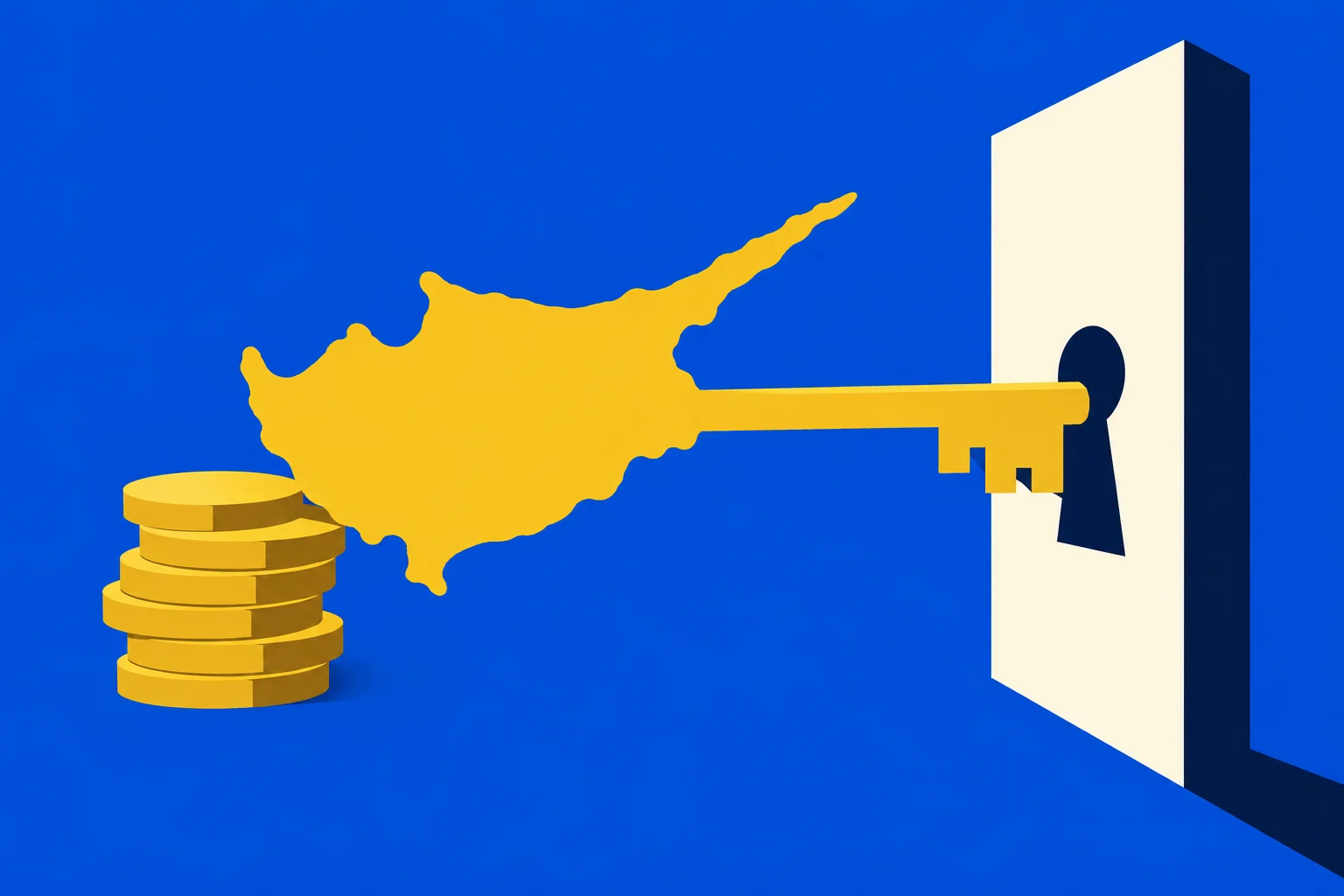
Under the sea, Israel’s NewMed Energy owns 30 percent of the Aphrodite gas field. The two governments are negotiating over it, because Israel says the field reaches into its waters. On land, Hadassah Medical Centre Limassol began seeing patients in July and formally opened on Thursday. It is the Israeli hospital group’s first centre in Europe, and its opening was ratified by Hadassah’s governing bodies, including the Hadassah Women’s Zionist Organization of America.
The soldiers
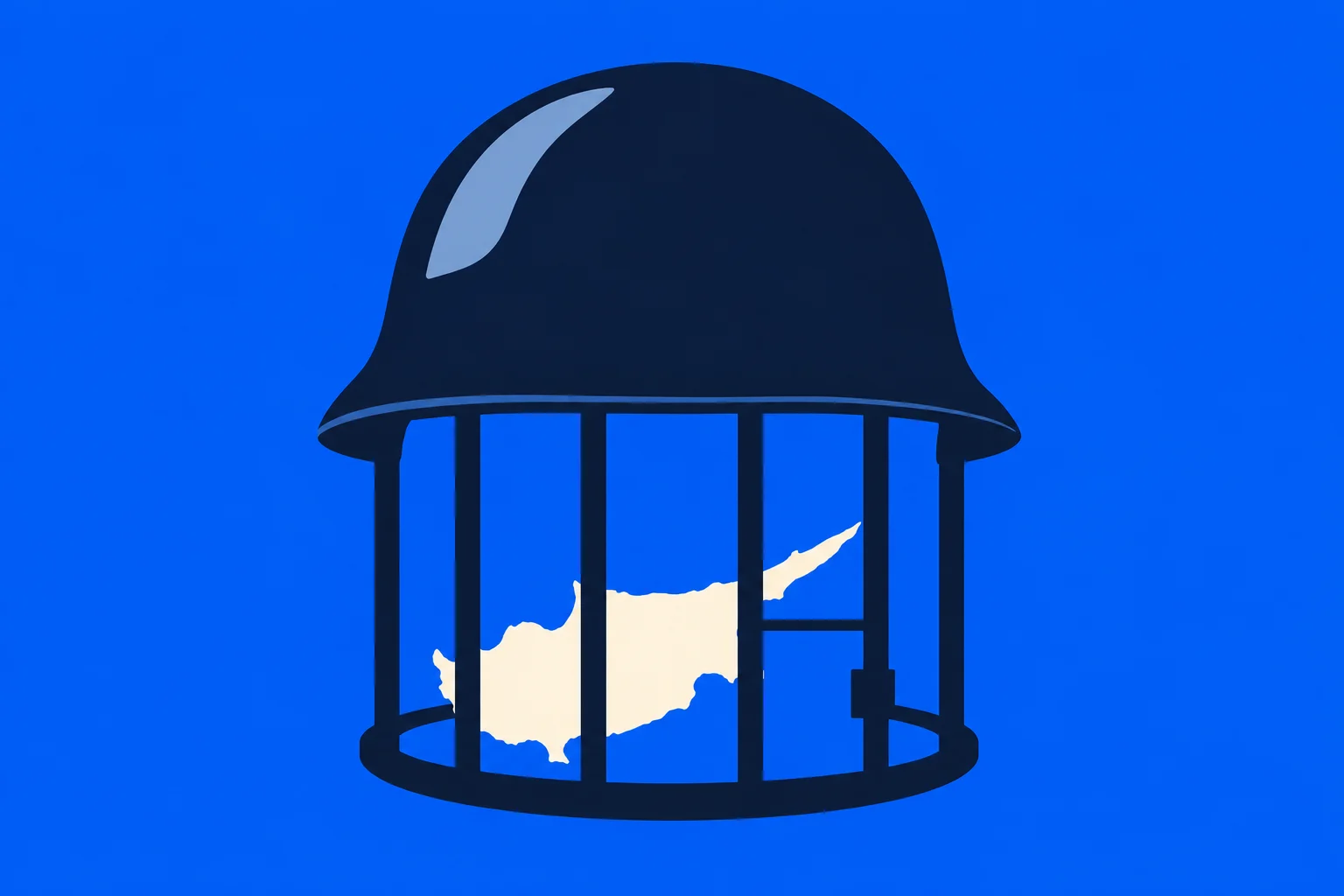
Then there is the army. Israeli special forces have trained in the Troodos mountains, whose terrain, according to Israel’s Institute for National Security Studies, resembles southern Lebanon. In 2022 the two armies held their largest joint exercise, a simulated war with Hezbollah. Cyprus is replacing its Russian-made air defences with Israel Aerospace Industries’ Barak MX, which began arriving in late 2024. In late December 2025 the two militaries signed a cooperation plan for 2026 covering exercises, training and “strategic military dialogue.” European money may follow. Cyprus can draw up to €1.18bn from the EU’s SAFE defence-financing programme, and in September Cyprus Mail reported that Israeli defence firms see the island as their way in.
Here, one might reflect, is the old arithmetic of small states with large wounds. A country that has lived for 52 years with a foreign army on its northern half will take protection wherever it is offered. Laou put the government’s view bluntly: “Cyprus can’t protect itself from anything.” Ceylan Hassan, a Turkish Cypriot researcher, describes the method more harshly and likens it to British colonial practice: “let’s create a problem and then be the solution to it and never let it go.”
A common adversary
The politicians followed the money and the soldiers. The Israel Allies Foundation launched a caucus of six Cypriot MPs from three parties, a group Cyprus Mail covered on 12 October. After meeting the Cypriot president, the foundation’s president, Josh Reinstein, called Turkiye a “common adversary”. Cyprus Mail’s headline put it as “a common enemy”. The opposition party AKEL called the caucus “extremely provocative” and asked how Cyprus could stay credible while backing “another occupying and settler state.”
At the UN General Assembly, Netanyahu said that Erdogan “illegally occupies northern Cyprus, an EU member.” The writer Ioanna Lamprou said Netanyahu “knows what he’s doing”. In her view, Cypriots who feel the world has forgotten them will warm to Israel without seeing that the West Bank is an illegal occupation too.
Herzl’s sentence
The idea has a long history. In 1902 Theodor Herzl proposed to a British parliamentary committee that Jews colonise Cyprus. The colonial secretary refused, citing the island’s Greek and Muslim inhabitants. Herzl had written that the Greeks would “gladly sell their lands at a good price and migrate to Athens or Crete.”
Achniotis, thinking of Gaza, made no prediction. “I think it can happen to anyone,” he said. “Why are they going to respect you?”