
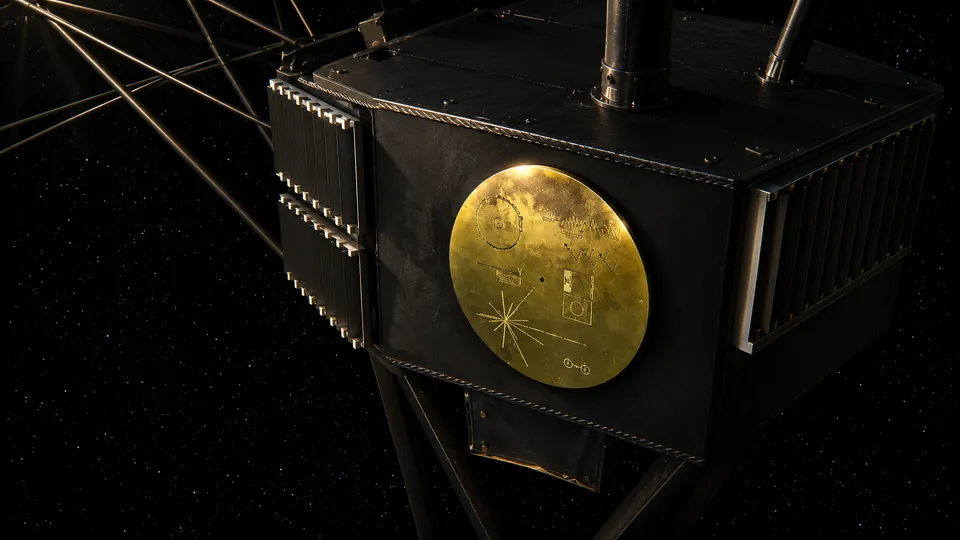
A historian has found long-overlooked backup instructions and tracked down surviving copies of Voyager’s Golden Record, as Voyager 1 reached one light-day from Earth on Wednesday.
Glen Swanson, a former chief historian at NASA’s Johnson Space Center and founding editor of Quest: The History of Spaceflight Quarterly, confirmed the second set of directions and verified the locations of original duplicates. His research with Jon Lomberg, the record’s design director, will appear in a forthcoming book.
Mr. Swanson described the findings in an interview with Robert Pearlman of Ars Technica. He said earlier writing had concentrated on the record’s contents, while he was interested in “the hardware, the bottle itself,” about which little was known and some published information conflicted.
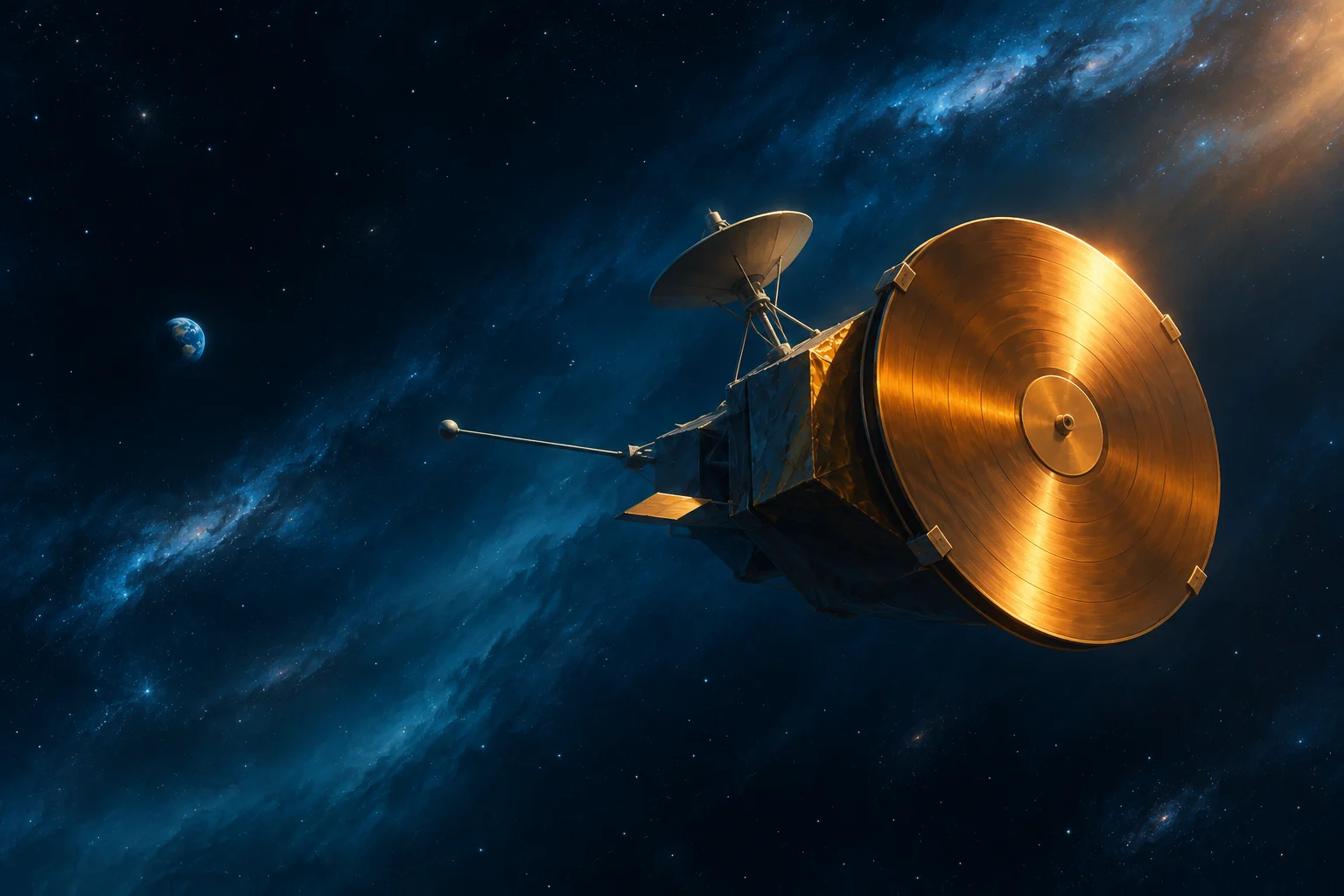
Voyager 1 launched in 1977 to fly past Jupiter, Saturn and Saturn’s moon Titan, and entered interstellar space in 2012. Now about 16 billion miles (25.9 billion kilometers) away, it remains in contact with Earth, as does Voyager 2. Each spacecraft carries a copper phonograph record, conceived partly to mark the recording medium’s 100th anniversary and partly as a message to any distant finder. Both probes are still traveling outward.
The record’s protective cover bears a pulsar map showing the Sun’s location, previously flown on Pioneer 10 and 11, and diagrams explaining how to play the disc and retrieve its images. The designers expected dust to erode the exterior inscriptions eventually, Mr. Swanson said. That posed a problem: instructions belonged outside, where a finder could see them, but erosion there could leave the record unplayable. Mr. Swanson said impact data nevertheless left the designers confident that the record itself would last “a long, long, long time.”
Prelaunch photographs had hinted at instructions inside the cover, but obscuring objects and poor image quality left the question open. The original blueprints settled it. Whether the designers consciously created a backup is unclear, although repetition also emphasized the directions’ importance. “What’s the best way to convey the importance of those instructions? You repeat them,” Mr. Swanson said. “You have them on the outside, and you have them on the inside.”
The original plan covered three records: one for each spacecraft and a flight spare. Correspondence from roughly a month after the launches indicates that NASA then authorized 10 copies beyond the two flown, with the spare included in that count, Mr. Swanson said. Earlier accounts have put the total as low as six or as high as 14 without explaining the discrepancies. The Jet Propulsion Laboratory in Pasadena, California, retains and displays the flight spare.
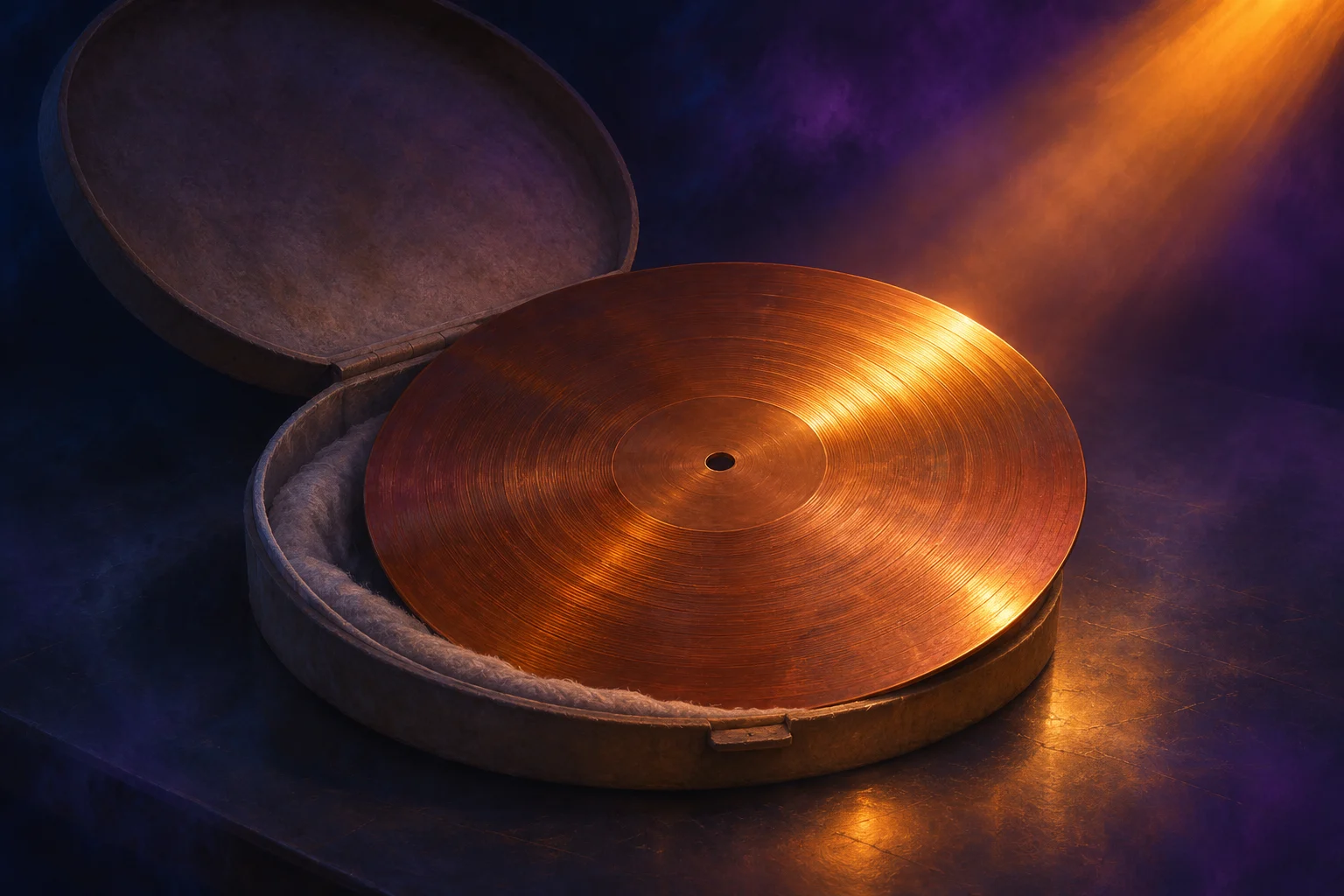
Other original duplicates are at the United Nations in New York; the Library of Congress, NASA Headquarters and Smithsonian National Air and Space Museum in Washington; Johnson Space Center in Texas; Kennedy Space Center in Florida; Langley Research Center in Virginia; Glenn Research Center in Ohio; and Goddard Space Flight Center in Maryland.
NASA Headquarters did not originally receive a copy, and how it acquired one remains uncertain. Records show that President Jimmy Carter had a record, while archivists at the Carter Presidential Library and Museum confirmed that they never received one. Mr. Swanson said Mr. Carter most likely returned his copy to NASA.
In 2024, Elon Musk responded to a social media post by saying, “I have one,” without providing details. He was believed to mean a replica rather than a NASA-produced duplicate. Rights issues and material challenges have prevented complete versions from being offered for sale, although the audio has appeared on vinyl, CD and playlists, the visuals on CD-ROM, and the cover in full-size and smaller replicas.
Mr. Swanson and Mr. Lomberg are preparing a full-size copper replica to accompany their book, but even that won’t be playable. University of Chicago Press is scheduled to release Voyager’s Golden Record: An Enduring Reflection in August 2027, the year of the probes’ 50th launch anniversaries.