

The exposure list at University of Utah Health’s Department of Pediatrics has lengthened. Over the summer, its pediatricians treated children struggling to breathe through wildfire smoke and managed behavior problems that worsened in extreme heat, and the department’s warning, published this week, is that the risks do not recede with the season. As smoke fades, dust from exposed lakebeds and the return of winter inversions take over the air children breathe.
The name for these cases, the department says, has changed from abstract to clinical. Environmental conditions are now visible in exam rooms, affecting how children feel, learn and live day to day.
The mechanism: lakebed dust plus trapped smog
Utah’s climate is shifting in ways that compound. Snowpack is shrinking and lake levels are dropping, which exposes lakebed that wind then carries into the air as dust. Winter inversions trap pollution along the Wasatch Front, layering smog on top of the dust. University teams, including the Wilkes Center for Climate Science & Policy and the Great Salt Lake Project, are studying the changes and what they mean for communities statewide.
Children bear a disproportionate share of that air. The department’s reasoning is developmental: a child’s health is shaped long before their first checkup, and early environmental exposures affect later health.

The department cites its own evidence base on what that exposure does. University of Utah research has linked air pollution to children’s performance in reading and math. The department does not describe that study in detail, but it matches a 2020 Utah study that examined third graders’ math and English language arts scores across all primary public schools in Salt Lake County during the 2016–2017 school year and compared underperformance with the year’s worst PM2.5 days. Those were the fine-particulate peaks associated with inversions.
A second Utah finding concerns a higher-risk group: childhood cancer survivors exposed to higher levels of air pollution faced increased risk of emergency care and hospitalization for respiratory problems. The department presents these results alongside what its pediatricians describe seeing in practice: heat, smog, wildfire smoke and other conditions affecting children’s health and daily lives.
The adaptation track, and its limits
The department describes its response as two-front: help families manage today’s conditions, and build the expertise and partnerships to address the drivers over the long term. The near-term work is clinician preparation — teaching providers to discuss bad air days and extreme heat with families and to translate research into steps usable at home.
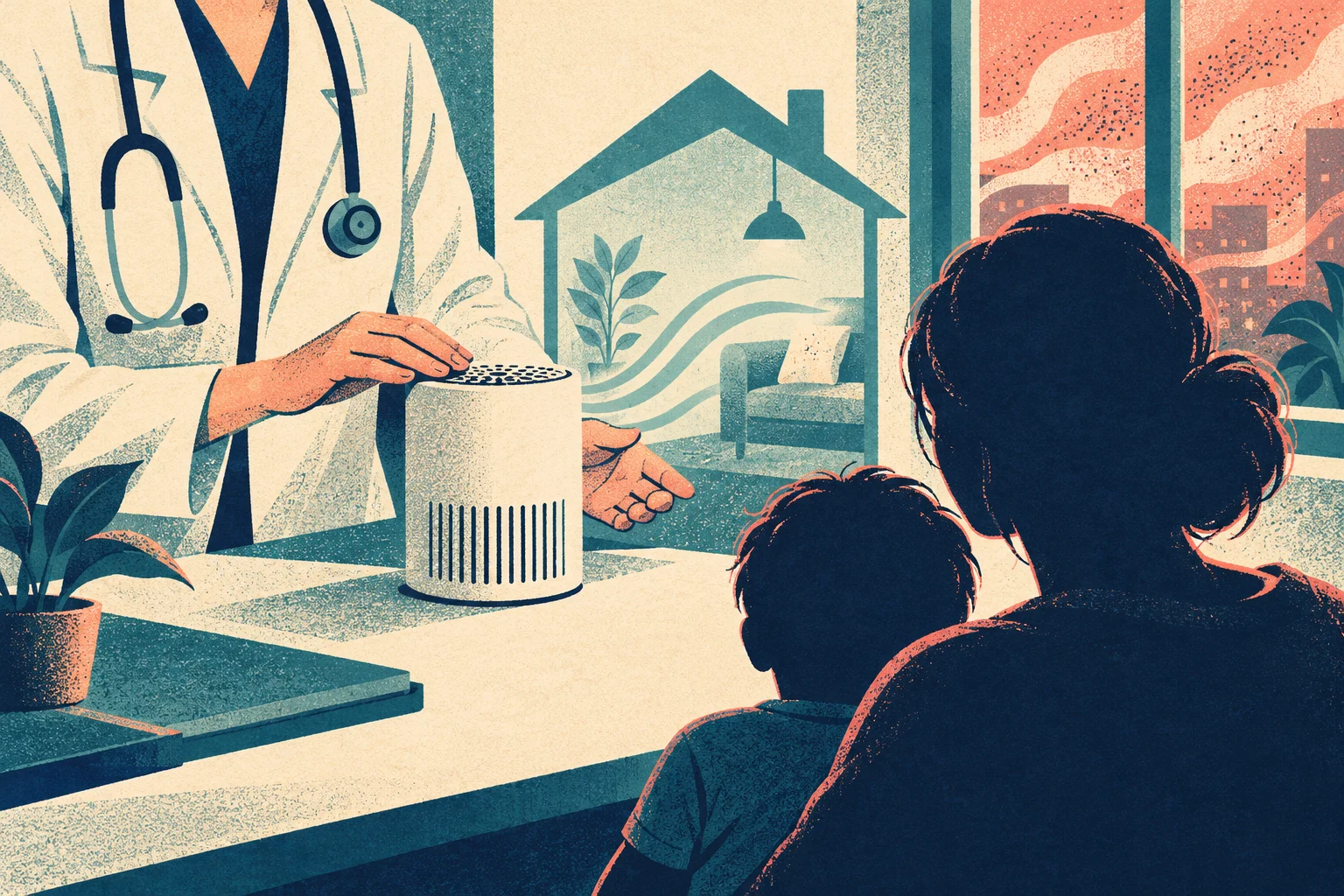
The constraint is economic. A family that cannot afford air conditioning on hot days or air filters on hazardous days cannot follow the same guidance as one that can. The department states the equity problem directly: those with the greatest exposure often have the fewest resources to adapt. Children with complex medical needs and families with high unmet social needs are hit hardest.
One existing program partially addresses that: the Primary Children’s Connector Service, an interdisciplinary team that works with families in their homes to create conditions that better support children’s health. Separately, pediatric residents in the Global, Rural, & Underserved Child Health Certificate Program are trained to recognize environment-linked health problems; the department’s stated goal is to make air-pollution and heat conversations routine across the entire pediatric residency program.
The policy track
The longer-term front is policy. The department is preparing clinicians to bring evidence-based expertise to policymakers, working with partners across the university — the Wilkes Center, the S.J. Quinney College of Law, the David Eccles School of Business — to connect clinical medicine, research and policy on air quality decisions made before children reach a clinic.
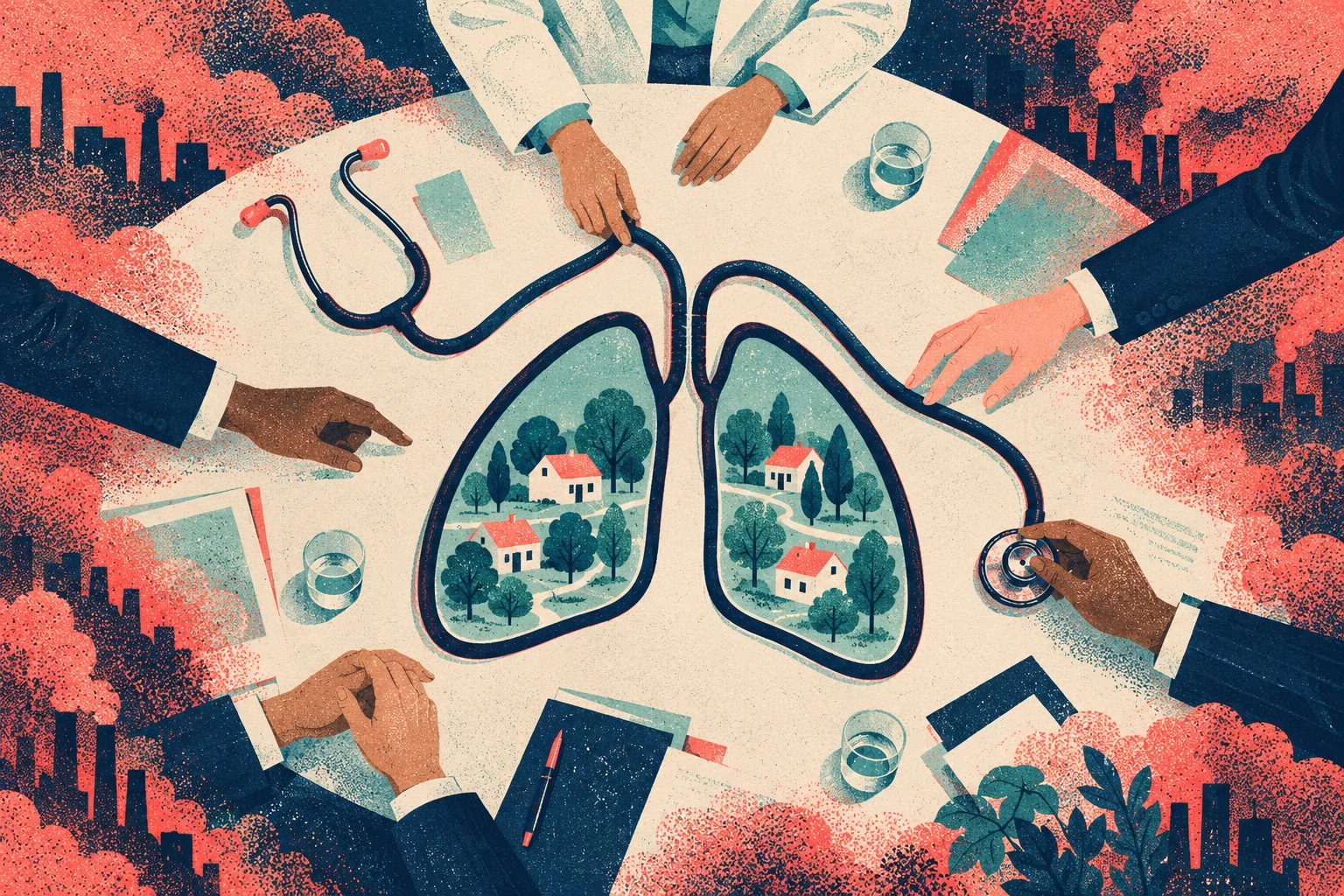
The institutional machinery is recent. In February 2025, the department’s annual Pediatric Health Equity Symposium partnered with the Wilkes Center for a one-day event on the health effects of environmental change, focused on children, people experiencing homelessness and other higher-risk groups. Sarah Schear completed a specialized fellowship in climate and health policy and helped develop the Planetary Health Report Card, a student-driven tool for evaluating how health professional schools address environmental health; she has adapted it for graduate medical education to surface training gaps. Quang-Tuyen Nguyen organizes an annual American Academy of Pediatrics-sanctioned symposium on extreme heat and wildfire, offered virtually at no cost to communities across the Mountain West, the western United States and Canada.
What the department cannot yet provide is a controlled estimate of effect size in its own clinics: how many respiratory cases are attributable to smoke versus inversion smog versus lakebed dust, or how many of the season’s behavior-problem visits the heat caused. The research cited links pollution to test scores and, for cancer survivors, to hospitalization; the exam-room accounts are observational. The number to watch is whether the training expansion and the policy partnerships produce measurable changes — in what clinicians ask, and in what the air does — before the next inversion season.