
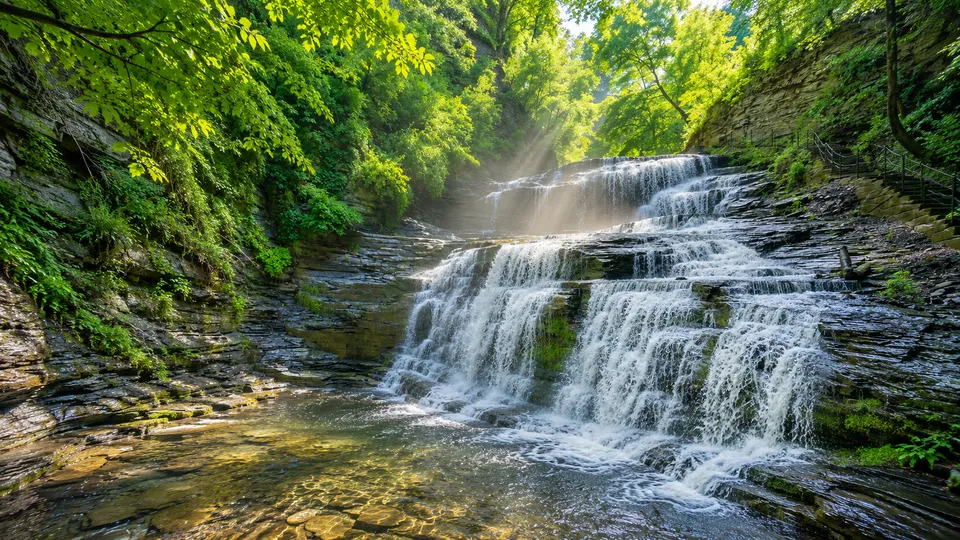
Here is a research design I admire. Say you want to know what nature does to the human brain. You don’t mean the questionnaire version (“on a scale of one to seven, how restored do you feel?”). You mean what the brain is actually doing. The ideal measurement would use electrodes placed deep inside someone’s head. You cannot ask volunteers to have brain surgery so you can show them a waterfall, for fairly obvious reasons. But some people already have those electrodes in place, for reasons that have nothing to do with waterfalls, and they are confined to a hospital bed for days or weeks.
That is the setup of a study at University of Utah Health, described by Rhiannon Cowan, PhD, of the Department of Neurosurgery, in a post for U of U Health’s Good Notes blog. The team says it is the first study to combine virtual-reality nature immersion with simultaneous recordings from electrodes implanted deep in the brain. Earlier work on nature exposure relied on self-reported questionnaires, scalp recordings or fMRI scanners measuring reactions to nature photos or time spent outdoors. Recordings from inside the brain should give a much finer picture.
The patients have drug-resistant epilepsy, meaning medication can’t reliably prevent their seizures. Some of them go through surgery in which neurosurgeons place several electrodes in the brain to monitor deep structures and work out where the seizures start, a procedure the hospital explains on its intracranial monitoring page. Afterwards they stay in an epilepsy monitoring unit. The electrodes are tethered to a device that records around the clock, so patients can’t get out of bed unaccompanied. Under a neurologist’s care, they wait for seizures to happen so the clinical team can see what their brains are doing. That can last days or weeks, with no access to nature at all.
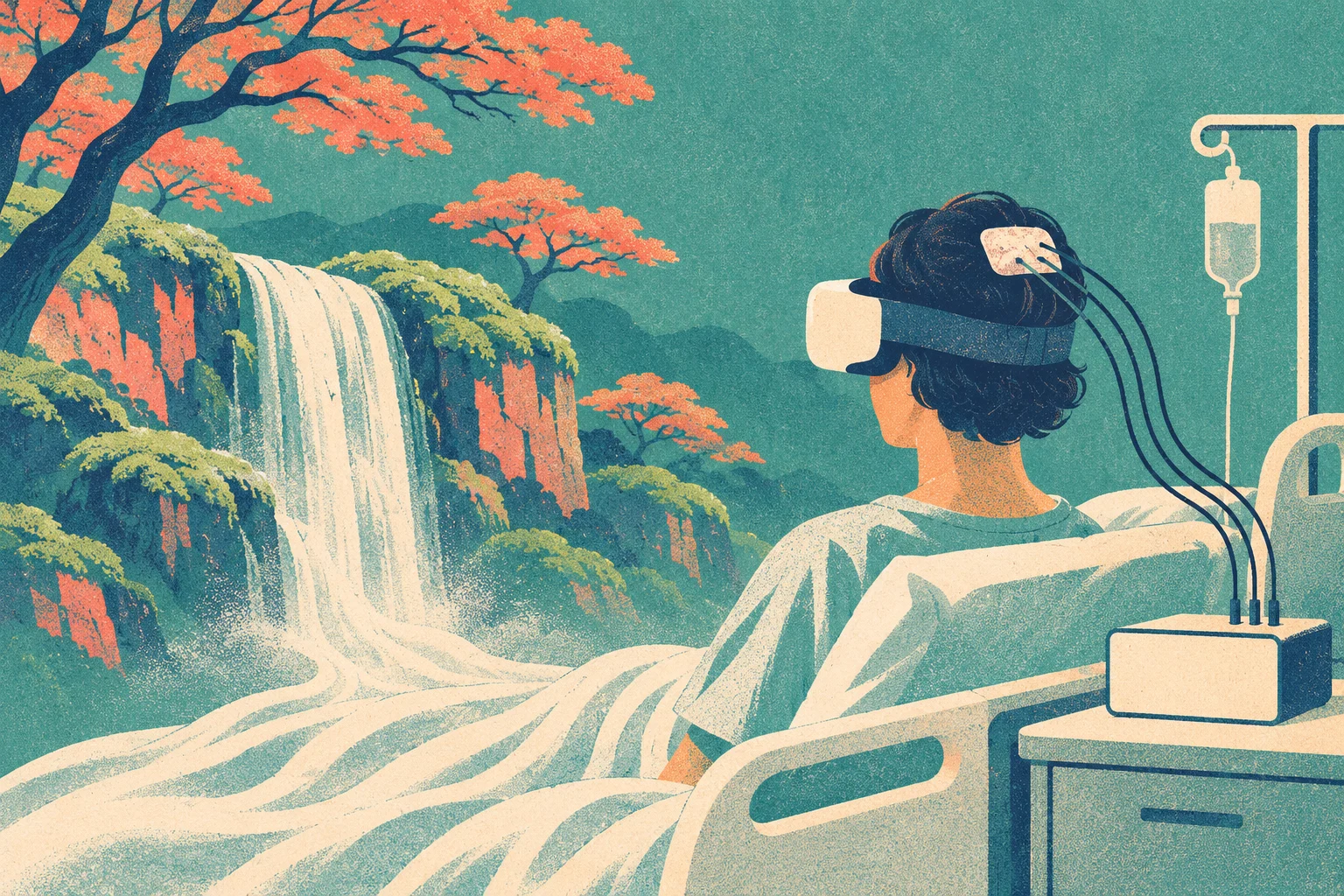
Anxiety and depression are already common among people with drug-resistant epilepsy. The researchers argue that long, monotonous, stressful stretches in bed make them worse. So the clinical arrangement creates two things at once: a group of people who might benefit from an intervention, and an unusually detailed window into whether it works.
The city is the clever part
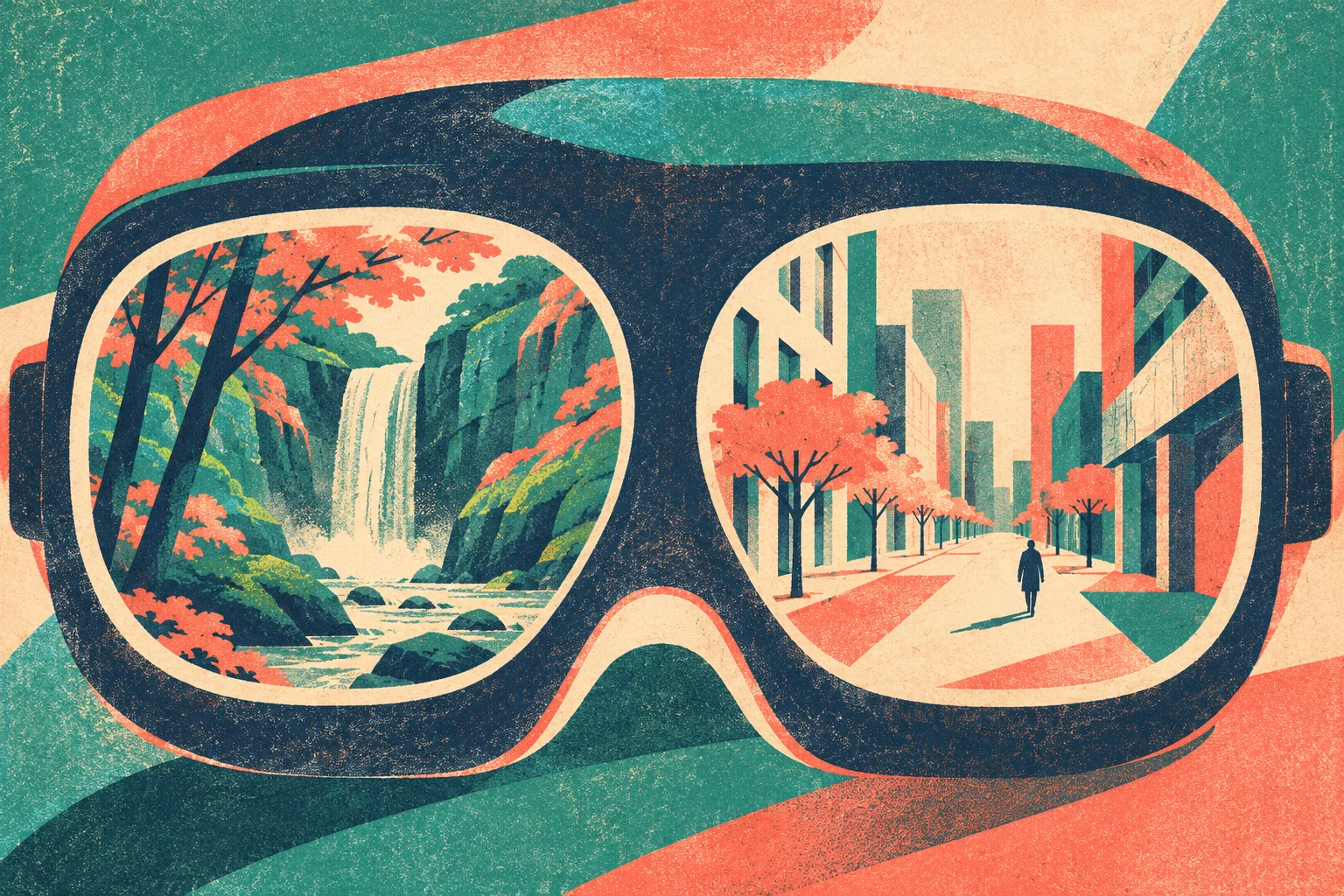
HabitatXR, a production company, made high-resolution 3D videos with immersive audio. One puts the patient in nature: a waterfall running through moss-covered cliffs, forest all around. The other puts them in a cityscape, with a pedestrian walking past and an avenue to look down. Patients sit upright in bed and turn their heads to look around, much as they might from a park bench or a busy street corner. In Cowan’s description, a nature session lasts 15 minutes, and then the headset comes off and the patient is back in the room they may be stuck in for weeks.
Each patient gets both environments. One comes a few days after admission and the other several days later. That comparison is the whole design. Imagine you only showed bored hospital patients a waterfall and they said they felt better. You would have learned that bored people in hospital beds like being shown things, and that is not a finding anyone needed a grant for. A VR city controls for the novelty of the headset, the break in routine and the 3D video, and leaves you closer to the question of whether nature specifically does something that an equally immersive street does not.
What they have so far
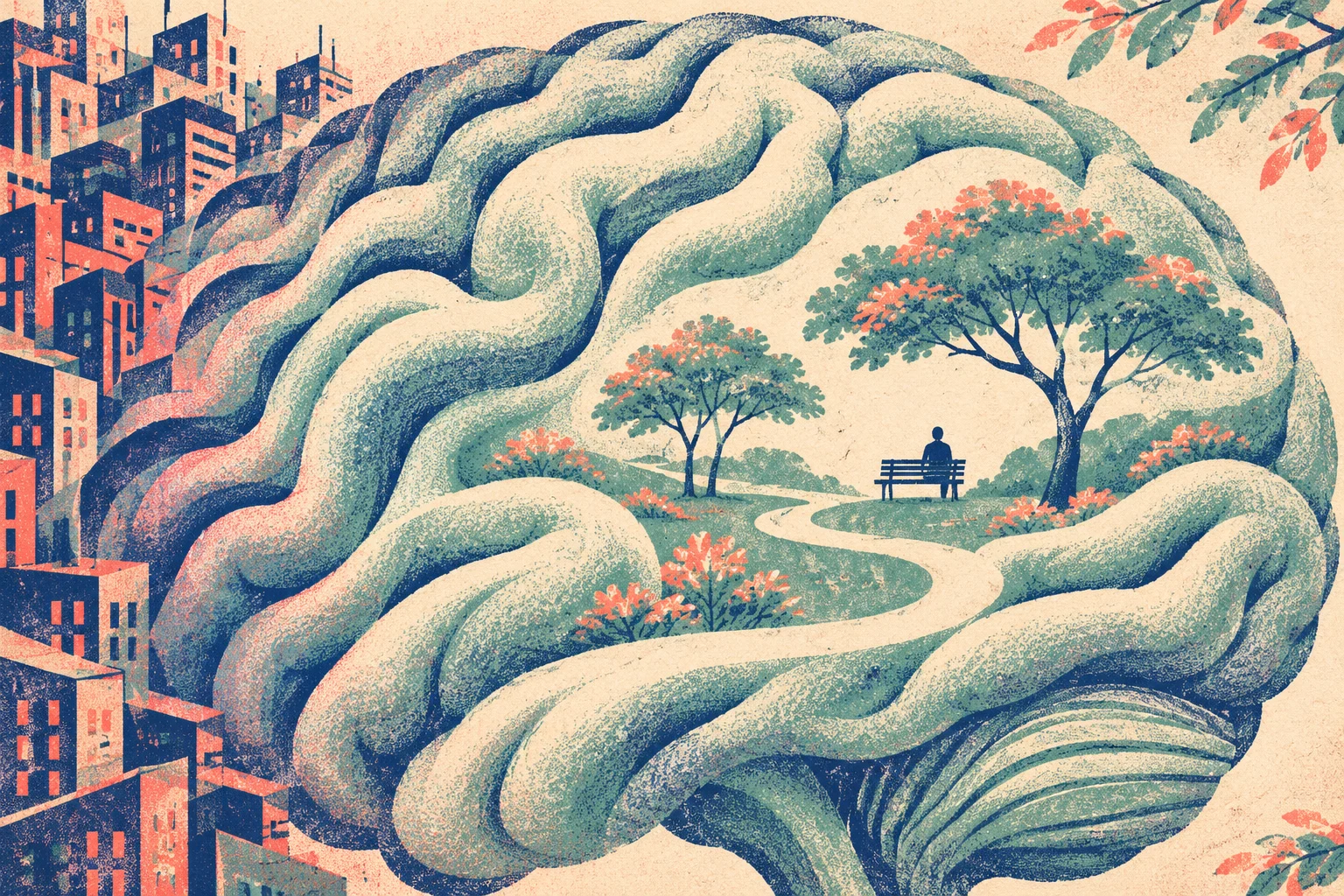
So far, not much, and the team says so. Cowan describes a “small preliminary sample” without giving a number. In that sample, patients reported lower stress and negative affect after the nature session than after the urban one. The team also saw changes in brain activity during nature immersion, plus signs that patients may cope better with distracting or conflicting information afterwards, based on cognitive tasks done before and after each session. In early observations, alpha brain wave activity rose throughout the nature session but not during the city one. The researchers note that alpha waves are associated with alertness and mood. Because the electrodes reach deep regions, the team can also compare signals from the anterior cingulate cortex, which is associated with depression severity, across the two conditions. The study is ongoing, and the researchers say they need data from more patients before drawing firm conclusions.
The theory they are testing is that nature is “softly fascinating.” Translated: it holds your attention without using all of it, which may give the brain’s attention system a chance to rest and reset. By implication, a busy intersection is the hard kind of fascinating, the kind that wants something from you. Most of what fills a hospital stay probably is too.
The interdisciplinary team includes Elliot Smith, PhD; David Strayer, PhD, whose Applied Cognition Lab has been studying nature and attention; Jeanine Stefanucci, PhD; and Amy McDonnell, PhD. They work with neurosurgeons Shervin Rahimpour, MD, and Ben Shofty, MD, PhD, who do the implant surgery. The work is funded through a pilot grant program from Nature and Human Health-Utah. The post is the second in a series on nature and human health.
The substitute good
The bigger pitch goes beyond epilepsy units. If VR nature turns out to work as therapy, the researchers think it could matter for anyone who spends long periods indoors without much choice: people in long-term care, in correctional facilities, in hospitals. Nature is free in the sense that nobody charges you for a tree. But access to it is rationed by things like institutional rules, mobility and whether someone will unlock the door. A headset is a substitute for people who can’t get to the real thing.
Cowan is careful about how far that goes:
But it is not a replacement for the real thing. If you can get outside and spend time in nature, you should. We believe access to nature is a necessity, not just a luxury.
It is unusual for people building a new intervention to end their pitch by recommending the competition, which is better and costs nothing. Then again, the competition doesn’t come to your bed in the epilepsy monitoring unit.