
People who manage poison have an old habit: they move it. Out of the river and into the filter, out of the filter and into the landfill or the furnace, and from the furnace’s chimney into the sky. Every move gets called a cleanup. The substances themselves rarely get destroyed. They change address.
Per- and polyfluoroalkyl substances, known as PFAS and nicknamed “forever chemicals,” have survived this kind of moving better than almost anything else. Now a group of engineers in Salt Lake City says it has found a way to end the journey at the filter. As the University of Utah’s news service reported on November 3, researchers at the John and Marcia Price College of Engineering have developed a method for breaking these chemicals down under relatively mild conditions once they have been pulled out of contaminated water. The study, titled “Nucleophilic Defluorination of PFAS under Mild Conditions”, appeared on October 28 in Communications Chemistry, a journal in the Nature family.
“The ultimate goal is to destroy and detoxify PFAS and reduce their hazards, so cleanup does not simply move contamination from water into another waste stream.”
Those are the words of Ling Zang, the distinguished professor of materials science and engineering who led the work. He is also the college’s associate dean for research. His earlier research was about capture: filtration, adsorption, and checking whether treatment works. This study tackles what comes after capture.
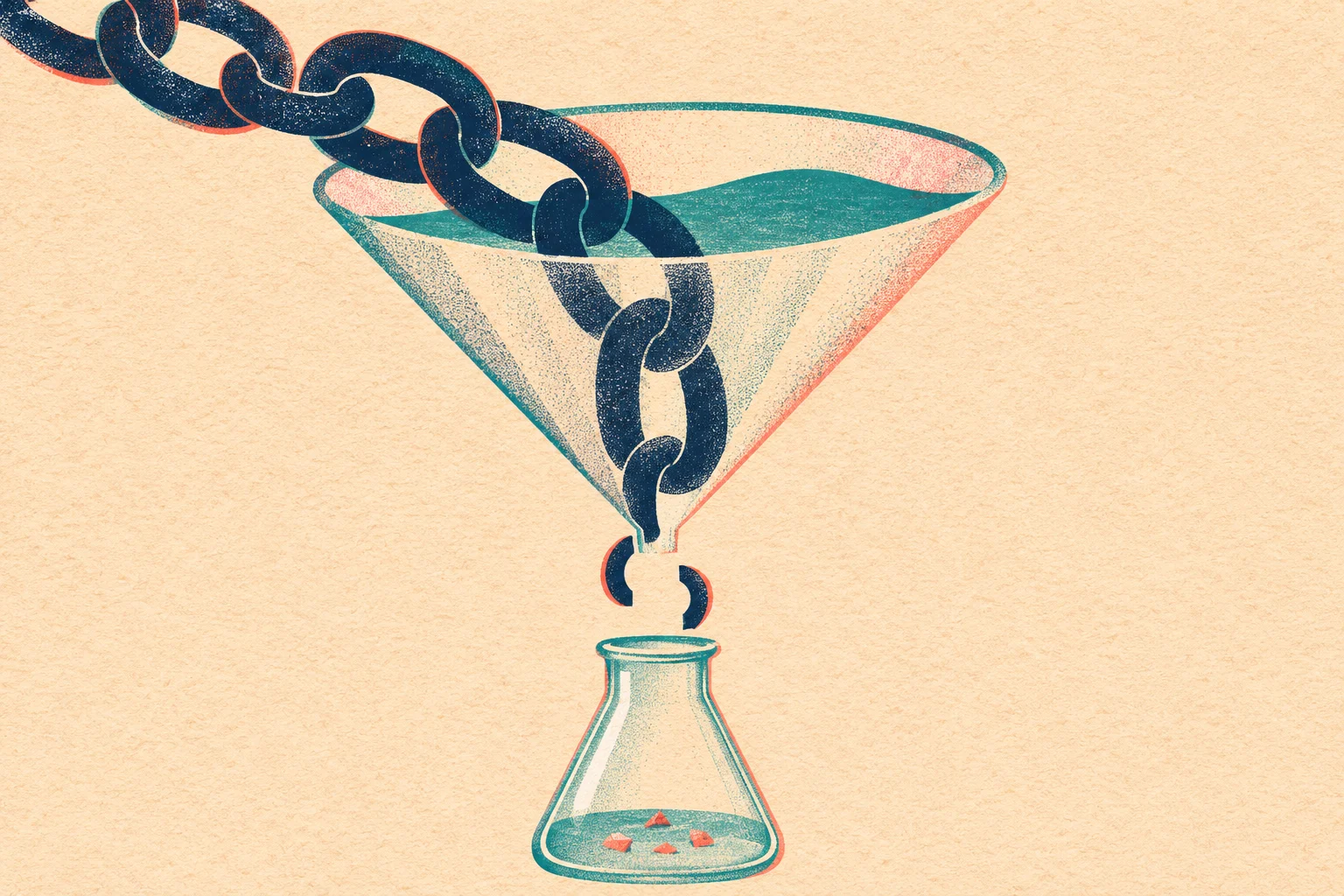
The bond
PFAS are useful, and the reason they are useful is the same reason they are dangerous. Carbon and fluorine hold each other so tightly that nature cannot easily pull them apart. For that reason the chemicals persist, and for that reason they are treated around the world as water pollutants with severe and long-lasting effects on the environment and public health.
The Utah team went after the bond itself. It used reactive chemicals called nucleophiles to cut the carbon-fluorine link. The process is called defluorination, and it is the core of any real destruction. With several of the compounds tested, nearly all of the fluorine came off as fluoride. These included PFOA and trifluoroacetic acid, or TFA, a small molecule known for being especially hard to break. According to the paper, the reaction worked across long-, short- and ultrashort-chain perfluorinated carboxylic acids. PFOS gave way only in part. After 24 hours, one nucleophile, NH₂⁻, had removed about 80 percent of its fluorine, and a second, CH₃S⁻, had removed 63 percent under the same conditions.
The team also tested two fluorinated plastics, PVDF and PCTFE, which are widely used in batteries, industrial products and munitions. The university describes the fluorine removal from them as efficient. The paper goes further and calls both plastics completely defluorinated.

The fire
The temperatures are what stand out. Most of the tests ran at 110 degrees Celsius (230 degrees Fahrenheit) or lower, only a little above the boiling point of water. Some materials needed up to 150 degrees. PFAS incineration, by comparison, often runs at 1,000 degrees Celsius or more.
Even at that heat, fire does not always finish the job. When the breakdown is incomplete it can leave secondary pollutants, including smaller fluorinated compounds. Some of these are more volatile than the chemicals they came from and can spread through the atmosphere. The furnace that was meant to end the problem can send pieces of it into the air.
Washington is uneasy about the furnace too. In its April 2026 interim guidance on destroying and disposing of PFAS, the Environmental Protection Agency warned, as E&E News reported, that “not every unit currently operates at those conditions and those that do may not operate at those conditions at all times.” The agency also pointed out that most incineration studies have looked at PFAS that are “easily transformed” by burning. The guidance is non-binding. It neither endorses nor forbids any particular method, so industry still has no settled answer to the question of where these chemicals should end up.
The Utah method runs in ordinary air. It needs none of the special conditions that some rival approaches depend on: inert gas atmospheres, deep-ultraviolet light, highly reactive alkali metals, heavy-metal catalysts, high pressure applied from outside, or energy-hungry mechanical grinding.
Ordinary air. A modest temperature. On paper, at least, it is a short list of requirements.
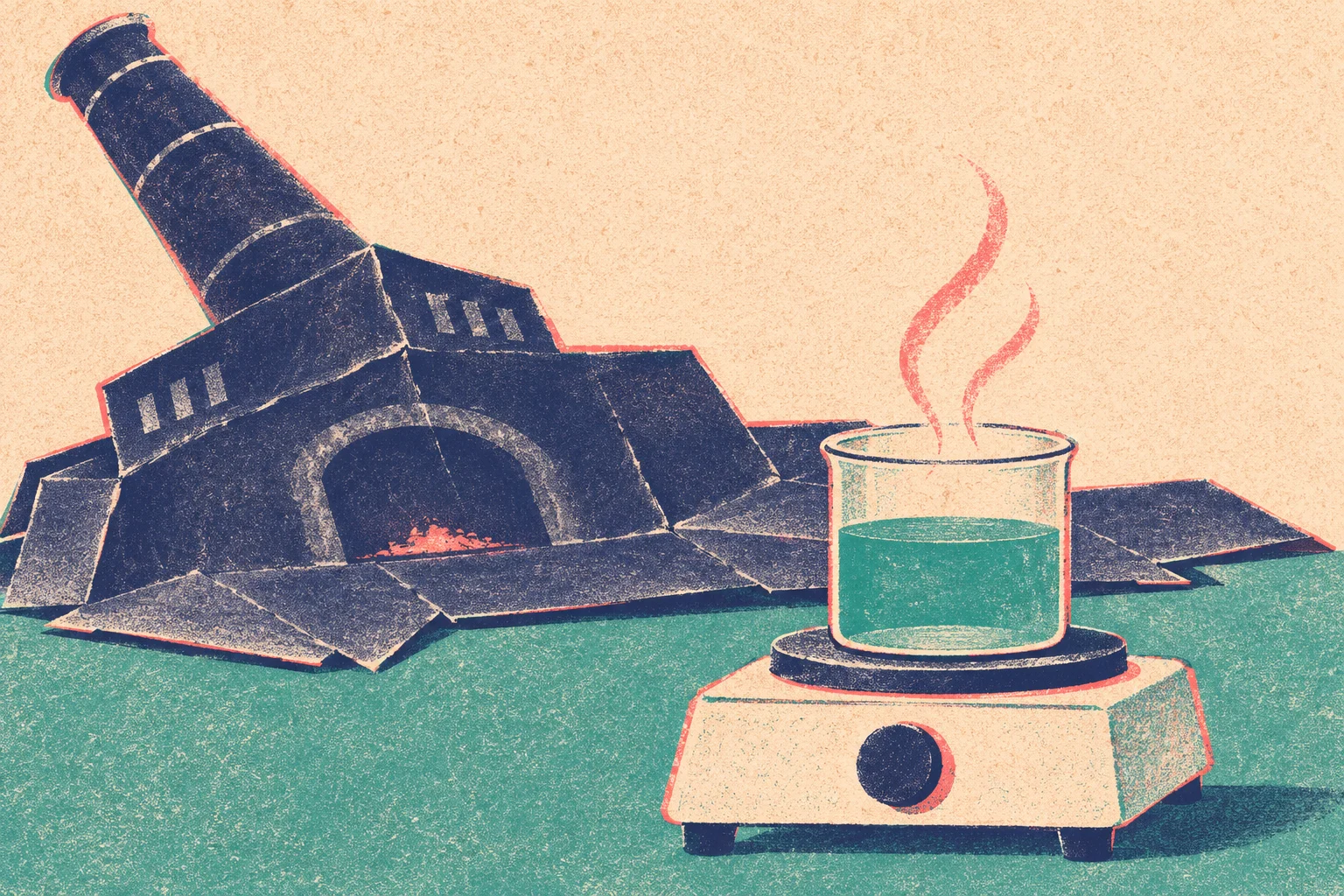
The bench
The paper has not left the laboratory. The researchers have a picture of how it could work in practice: catch PFAS from contaminated water, concentrate them into a smaller waste stream, then destroy them there instead of handing them on to some other material. They have not yet tried this on real waste. That is next on their list, along with alternative reagents and reaction conditions, the cost of treatment, ways to reduce the method’s own environmental impact, and whether what is left after the reaction is safe. The paper itself says the use of the solvent DMSO and of excess nucleophile needs more optimization before the process can be scaled up.
Who paid
The university states the financing plainly. The study was paid for by industry, specifically Gentex Corp., where Zang sits on the board of directors. Zang and two of his co-authors are listed as inventors on patent applications the university has filed for the process. The other authors are Pallabita Basu, Saravanakumar Manickam, Rana Dalapati, Jiangfan Shi, Matthew Hunter and Xiaomei Yang, all of the university’s Department of Materials Science & Engineering.
This arrangement is common in modern engineering, and the disclosure is to the university’s credit. It still matters to a reader. Whether a reaction like this ever leaves the flask usually comes down to money as much as chemistry: who will pay to build it, and who stands to earn from it once it works.
For now, what the flask produces is fluoride, the mineral form of fluorine and the end point of the bond’s undoing. Whether everything else in the flask is safe is still an open question, and it is one the team has set for itself to answer.