
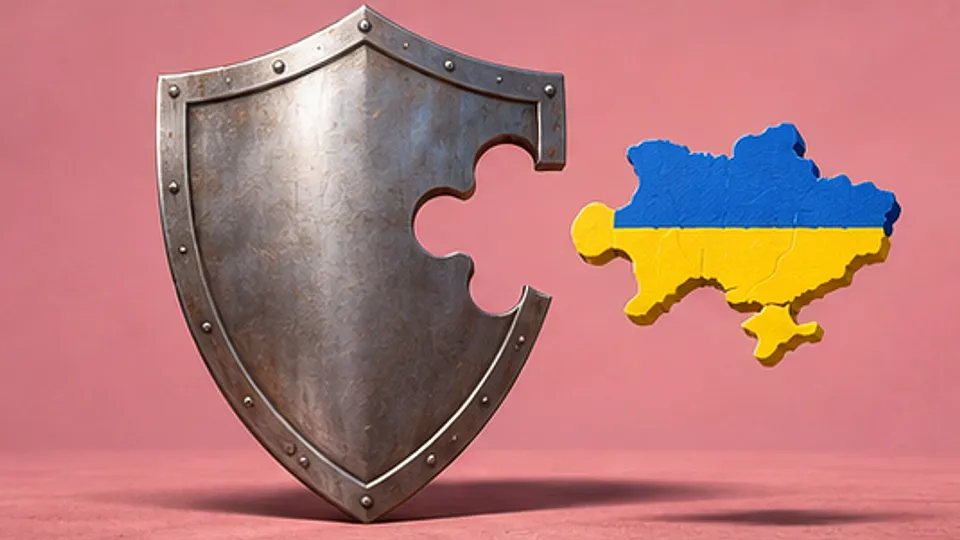
On Nov. 13, President Volodymyr Zelensky told reporters that American negotiators had asked his delegation something nobody at the table had asked in almost five years of full-scale war: whether Ukraine would give up the rest of the Donbas if the price were a seat in NATO.
“The Americans raised a question: ‘What if Ukraine joins NATO? Would Ukraine withdraw from Donbas?’ This was the first time this had been raised,” he said, in remarks his office released on Nov. 14 and CNN reported. The land in question is what Ukraine still holds of the two provinces that make up the Donbas. That comes to 20.12 percent of Donetsk Oblast and 0.38 percent of Luhansk Oblast, according to the Institute for the Study of War’s Nov. 11 terrain assessment, and it includes Sloviansk and Kramatorsk, the anchors of the line of fortified cities Ukrainians call the fortress belt.
For the trade to close, four parties would have to say yes, and so far none has. The Kremlin wants the land and a permanent ban on Ukraine joining the alliance, and the paper its negotiators handed over in Abu Dhabi asked for more. NATO admits new members only when all 32 allies ratify, and Slovakia’s prime minister has pledged to keep urging his parliament never to approve Ukraine. Ukraine’s Constitution leaves any change of territory to a national referendum, Ukrainian law forbids one while martial law lasts, and martial law now runs to Jan. 29, 2027. And the land itself is the part of the Donbas that Russia tried and failed to hold in 2014, failed to take in 2022 and has not reached this year.
Mr. Zelensky hasn’t said yes either. He said any agreement would come “without any recognition of the occupied territories as Russian,” the Kyiv Independent reported, and that he wanted guarantees, a funded army and reconstruction money spelled out before he took anything to the public.
If the American side confirms precisely this to us, together with other NATO partners, then I will ask our Ukrainian society what it thinks: do we accept it or not? I have no right to make that decision on my own. But we need specifics, and we don’t have them yet.
What was asked in Abu Dhabi
The question came out of two days of talks in Abu Dhabi on Nov. 10 and 11, the first in months to bring Ukrainian and Russian delegations together with American mediators, RNZ reported. Jared Kushner, President Trump’s son-in-law, and Steve Witkoff, his special envoy, ran them. Then the two flew to Moscow to see President Vladimir V. Putin and on to Ireland to brief Mr. Zelensky. The round, which opened with Washington pressing Kyiv on the Donbas, produced an agreement on a prisoner exchange of more than 1,000 people, with the final numbers still being worked out, and a promise that European negotiators would join the next one.
An American request for a pause in strikes on energy infrastructure went nowhere. “Putin personally does not support a ceasefire,” Mr. Zelensky said, according to Reuters. He also turned down Mr. Putin’s offer of a local humanitarian truce around Kostiantynivka. “Putin simply wants us to leave Kostiantynivka so that they can move in and occupy the entire city that way,” he said.
The security offer behind the question was thinner than the word NATO suggests. Mr. Zelensky said he had asked for guarantees modeled on Article 5 of the alliance’s treaty “as an absolute minimum,” and that Washington now spoke of something resembling Articles 4 and 5. American officials described bilateral guarantees comparable to Israel’s, he said. When he asked whether American soldiers would be based in Ukraine under them, the answer was “No.”
Washington has not confirmed his account. Mr. Kushner wrote on X that the press had reported “some of the maximalist positions proposed by both sides,” that new ideas were being explored and that “both sides understand that practical compromises will be necessary to end this war.” The post did not mention land for membership.
Following our trilateral meetings and subsequent discussions with Presidents Putin and @ZelenskyyUa, @SEPeaceMissions and I have remained in close consultation with Russia, Ukraine, and our European partners on next steps.
Our focus now is on facilitating direct engagement…
Mr. Zelensky also shut the door Moscow prefers. “If Putin expects Ukraine to have its neutrality enshrined, that won’t happen,” he said, bne IntelliNews reported. “Enshrining neutrality means you’re amending your country’s Constitution, and Ukraine won’t go down that path.”
The land on the table
The Institute for the Study of War, a Washington research group, defines the fortress belt as four large cities, Kostiantynivka, Druzhkivka, Sloviansk and Kramatorsk, plus the satellite towns strung north to south along the H-20 highway, Euromaidan Press reported. When pollsters in Kyiv ask Ukrainians about leaving the Donbas, they name Kramatorsk and Sloviansk in the question.
The war in the east started in these cities. Fighters led by Igor Girkin, a Russian intelligence officer, seized Sloviansk on April 12, 2014. On the night of July 4, Mr. Girkin pulled his men out of Sloviansk and Kramatorsk, and Ukrainian troops entered both the next day, The Moscow Times reported.
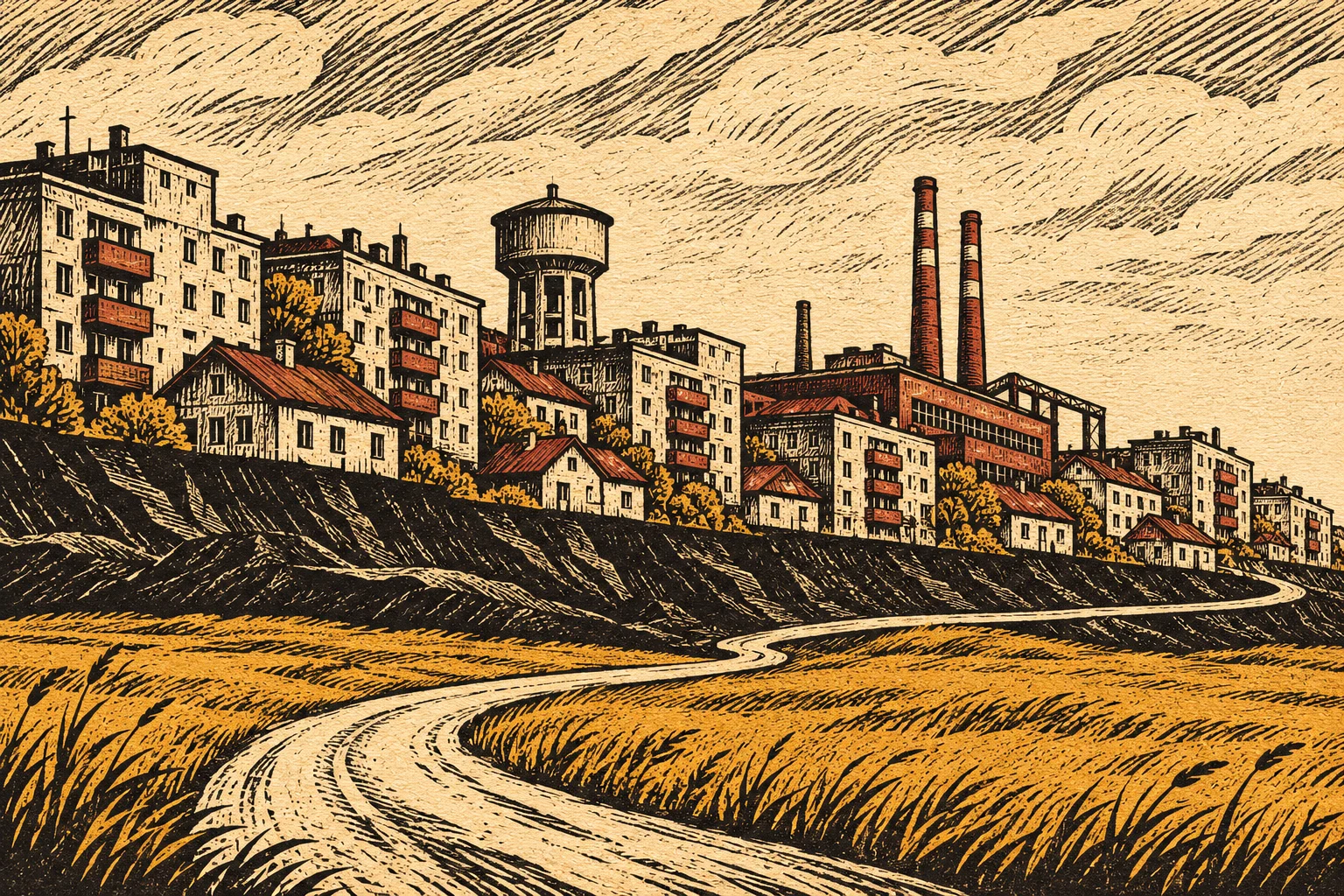
Russia’s current campaign has not reached them. Mr. Putin has set at least 15 reported deadlines for taking Donetsk Oblast since February 2022, the latest of them Dec. 31, the institute wrote in September, according to Ukrinform. At August’s pace of 2.36 square kilometers a day, it calculated, Russian forces would not finish until the fall of 2032, and it said it was not prepared to assess that they could do so on any timeline. They have been fighting for Kostiantynivka since October 2025. In its Nov. 13 assessment, the institute said it had seen evidence of at least 41 Ukrainian positions in and around the town since Sept. 1, and it recorded no Russian advances there from Nov. 10 to 13.
Clément Molin, a French analyst and mapper, wrote on Nov. 12 that Ukraine had stabilized the front east of Sloviansk with fresh reinforcements and a new commander, Brig. Gen. Andrii Biletskyi, Euromaidan Press reported. Kramatorsk was taking heavier fire from drones, artillery and guided bombs, including strikes on the bridges its residents depend on.
On Hacker News, one reader described the swap as trading “the land that they no longer have anyway.” Another reader objected.
its not about the land they dont have, its about part of Donbas russia tried but failed to conquer for the last 14 years despite supposedly being a superpower.
The record supports the objection, though the fighting for Sloviansk began 12 and a half years ago, not 14. What Washington floated would not ratify lines Russia already holds. It asks Ukraine to sign away cities Russia’s army has not reached. The institute also assessed that the Kostiantynivka truce offer was very likely meant to let Russia build up forces for a drive north toward Druzhkivka.
The 2008 promise
NATO first told Ukraine it would join on April 3, 2008, when allied leaders meeting in Bucharest wrote that Ukraine and Georgia “will become members of NATO.” That wording was a compromise. Germany and France had blocked the Membership Action Plan that would have put Ukraine on a concrete path, and no date was attached, the Kyiv Post reported at the time. The Atlantic Council has argued that the statement was one of many factors that led to Russia’s invasions of Georgia and, later, Ukraine.
Ukraine had already been through one round of Western promises. In the Budapest Memorandum of Dec. 5, 1994, the United States, Britain and Russia pledged to respect Ukraine’s borders and not to use force against it, and Ukraine sent the Soviet nuclear warheads on its soil to Russia to be dismantled, according to the Arms Control Association. On Hacker News, a reader corrected another who had called the memorandum a guarantee from the United States and Europe.
Only if you define “Europe” as UK. The Budapest Memorandum was signed by the USA, the UK, Russia and Ukraine.
The correction holds. France and China issued separate assurances of their own, and the memorandum was a political commitment, not a treaty with a defense clause. Russia’s annexation of Crimea in 2014 and its invasion in 2022 are widely regarded as breaches of it. That history explains why Mr. Zelensky calls Article 5-style protection the minimum.
The promise kept being repeated and kept being put off. At their 2024 Washington summit, the allies called Ukraine’s path to membership “irreversible.” On Feb. 12, 2025, Defense Secretary Pete Hegseth told Ukraine’s backers in Brussels, “The United States does not believe that NATO membership for Ukraine is a realistic outcome of a negotiated settlement,” Defense News reported. Mr. Trump said that afternoon he did not “think it’s practical.” The declaration from the summit in Ankara this July dropped “irreversible” and said nothing about membership, the Kyiv Post noted. It did say for the first time that “Ukraine contributes to transatlantic security,” language the alliance has long avoided because contributing to security is one of the tests for joining.
The nearest precedent is West Germany, which joined in 1955 while Germany was divided, with the alliance’s guarantee covering only the territory Bonn governed. Western diplomats had been discussing that model for Ukraine for more than a year and a half by October 2024, TVP World reported, citing the Financial Times. The American question differs in two ways. West Germany was not fighting a war when it joined, and the German model would have frozen the front where it stood rather than asking Kyiv to hand over cities first.
Thirty-two ratifications
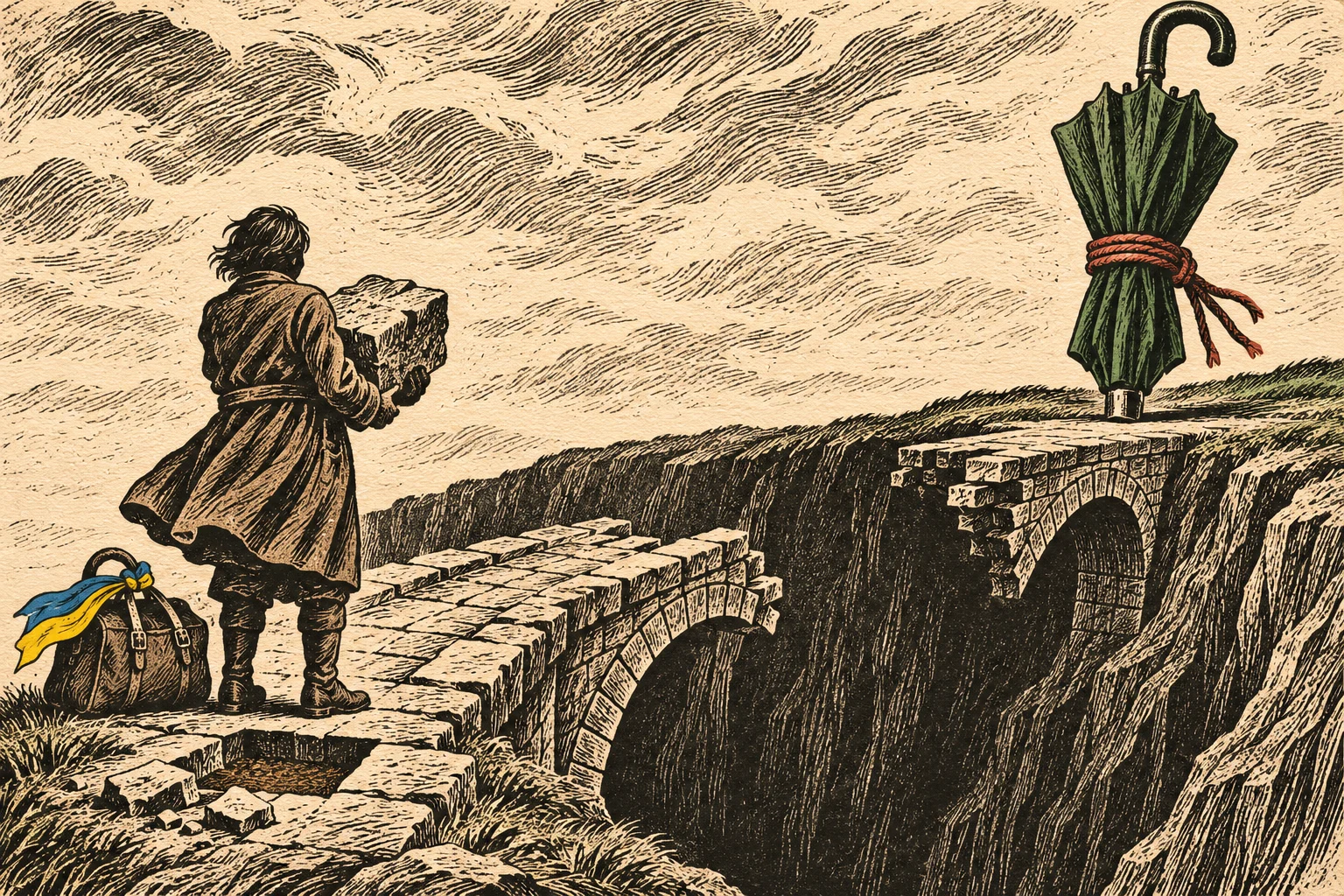
Article 10 of the North Atlantic Treaty lets the allies invite a European state only by unanimous agreement. Each ally then ratifies an accession protocol under its own national procedures, and the candidate joins only when the last instrument has been deposited with the United States government, according to NATO. In the United States that takes a two-thirds vote of the Senate. When Finland and Sweden came before it, on Aug. 3, 2022, the vote was 95 to 1, CNN reported.
Sweden shows what one holdout can do. It applied in May 2022. Turkey’s parliament did not ratify until Jan. 23, 2024, after President Recep Tayyip Erdogan tied the vote to an American sale of F-16 fighter jets, The Associated Press reported. Hungary’s parliament followed on Feb. 26, 188 to 6, Al Jazeera reported, and Sweden became the 32nd member on March 7, 2024. Finland, which applied alongside it, had joined on April 4, 2023.
Mark Rutte, NATO’s secretary general, gave the count on Dec. 2, 2025, in answer to a question from an Interfax-Ukraine correspondent. “The practical situation is, as you know, that there is consensus required by all allies for Ukraine to join NATO. And right now, as you know, there is no consensus on Ukraine joining NATO,” he said, according to the alliance’s transcript. The Trump administration had ruled membership out, and Hungary and Slovakia opposed it too, The Associated Press reported.
The American question would reverse Washington’s own position. It would not obviously move Robert Fico. Slovakia’s prime minister has repeatedly threatened to veto Ukraine’s accession, and after meeting Viktor Orban, then Hungary’s prime minister, in January 2025, he promised to keep recommending that Slovakia’s parliament never approve it, Hungarian Conservative reported. In a speech in Presov in September, he questioned Slovakia’s duty to defend the allies already inside, Ukrainska Pravda reported.
I don’t want Slovakia to be part of any military conflict because of some Article 5.
Hungary has a new government. Peter Magyar, who replaced Mr. Orban this spring, names Russia as the aggressor, but his Tisza party opposes fast-tracking Ukraine’s entry into the European Union and has ruled out sending weapons or troops, the Kyiv Independent reported. In May he told Mr. Rutte that Hungary does not supply weapons to Ukraine. Whether he would block a membership protocol was not clear.
Ian Lesser, a distinguished fellow at the German Marshall Fund, said the NATO part of the idea “seems very doubtful,” Al Jazeera reported, and that some allies would be doubtful too. Every parliament that ratified would be extending Article 5 to a country fighting a nuclear-armed neighbor that occupies part of its land, which the alliance has never done.

The referendum Kyiv can’t hold
Article 73 of Ukraine’s 1996 Constitution says questions of altering the country’s territory are decided exclusively by an all-Ukrainian referendum. Article 2 calls that territory inviolable, and the 2021 referendum law bars questions aimed at violating territorial integrity. Civil Network OPORA, a Ukrainian election-monitoring group, wrote in a Jan. 5 analysis that only the Constitutional Court can reconcile those provisions, and that the court first has to fill its vacancies, since a ruling needs 10 judges.
The ban that matters most is not in the Constitution. The Law on Martial Law and the referendum law both prohibit a referendum while martial law is in force, OPORA noted, and Ukraine has been under martial law since Feb. 24, 2022. On Oct. 26 the Verkhovna Rada voted 293 to 1 to extend it to Jan. 29, 2027, sud.ua reported. The Constitution separately forbids amending it under martial law, so Mr. Zelensky’s refusal to write neutrality into it rests on law as well as politics.
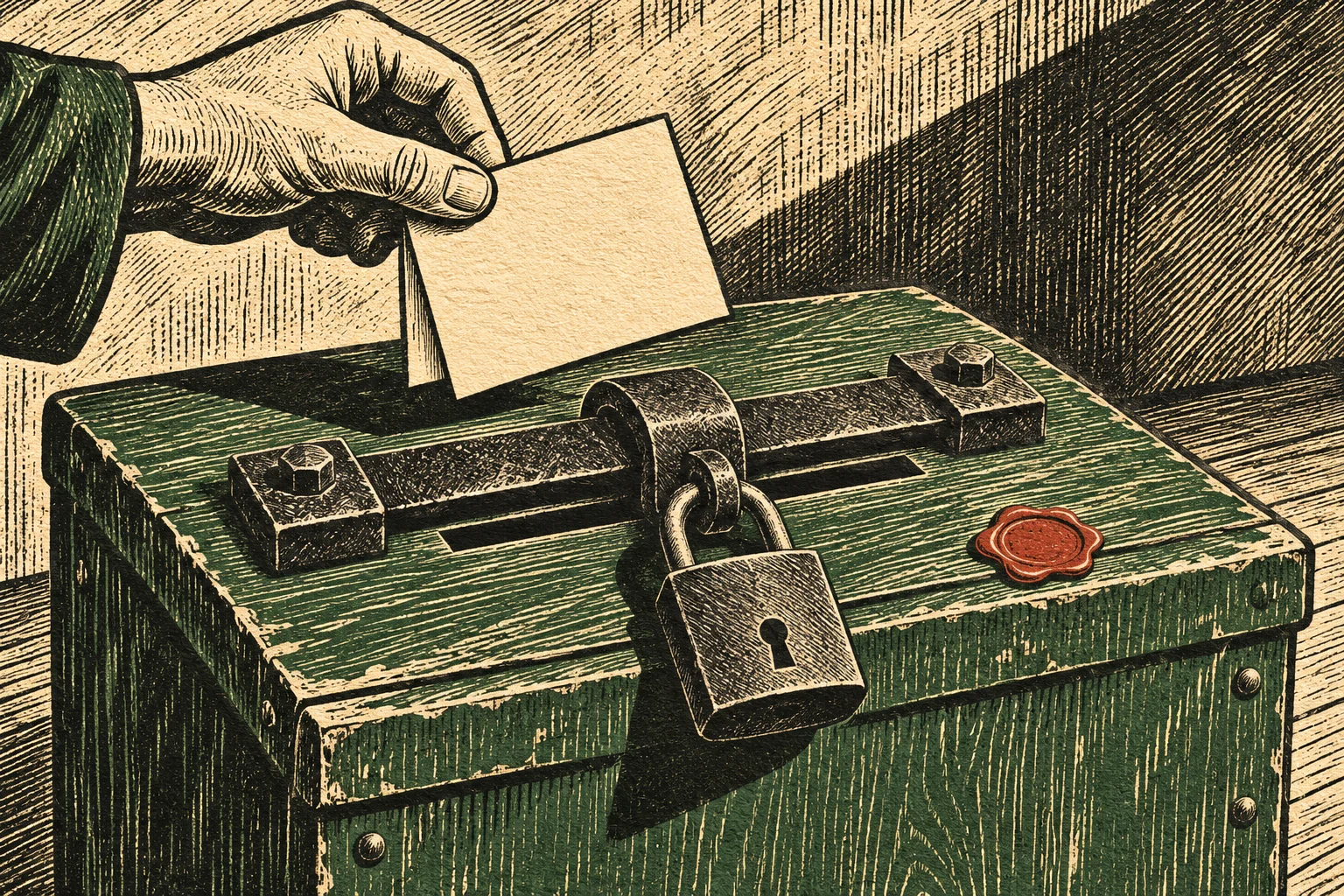
Lifting martial law would only start the clock. OPORA estimated that preparing a vote would take six to nine months, including at least six months to update a voter register the war has scrambled. It counted 5 million to 7.5 million citizens abroad, 4.6 million internally displaced and 880,000 to 990,000 in the armed forces. A referendum is valid only if at least 50 percent of registered voters take part, and a failed question cannot be put again for a year.
Lawyers have looked for a way around the vote. Edmarverson A. Santos, writing in Diplomacy and Law, argued that pulling troops back is legally different from ceding sovereignty, the same line Mr. Zelensky draws when he refuses to recognize occupied land as Russian. Mr. Santos also wrote that “a ceasefire would not automatically remove this statutory prohibition.” A withdrawal without a transfer of title might avoid Article 73. It would not give Mr. Putin the recognized border he has asked for.
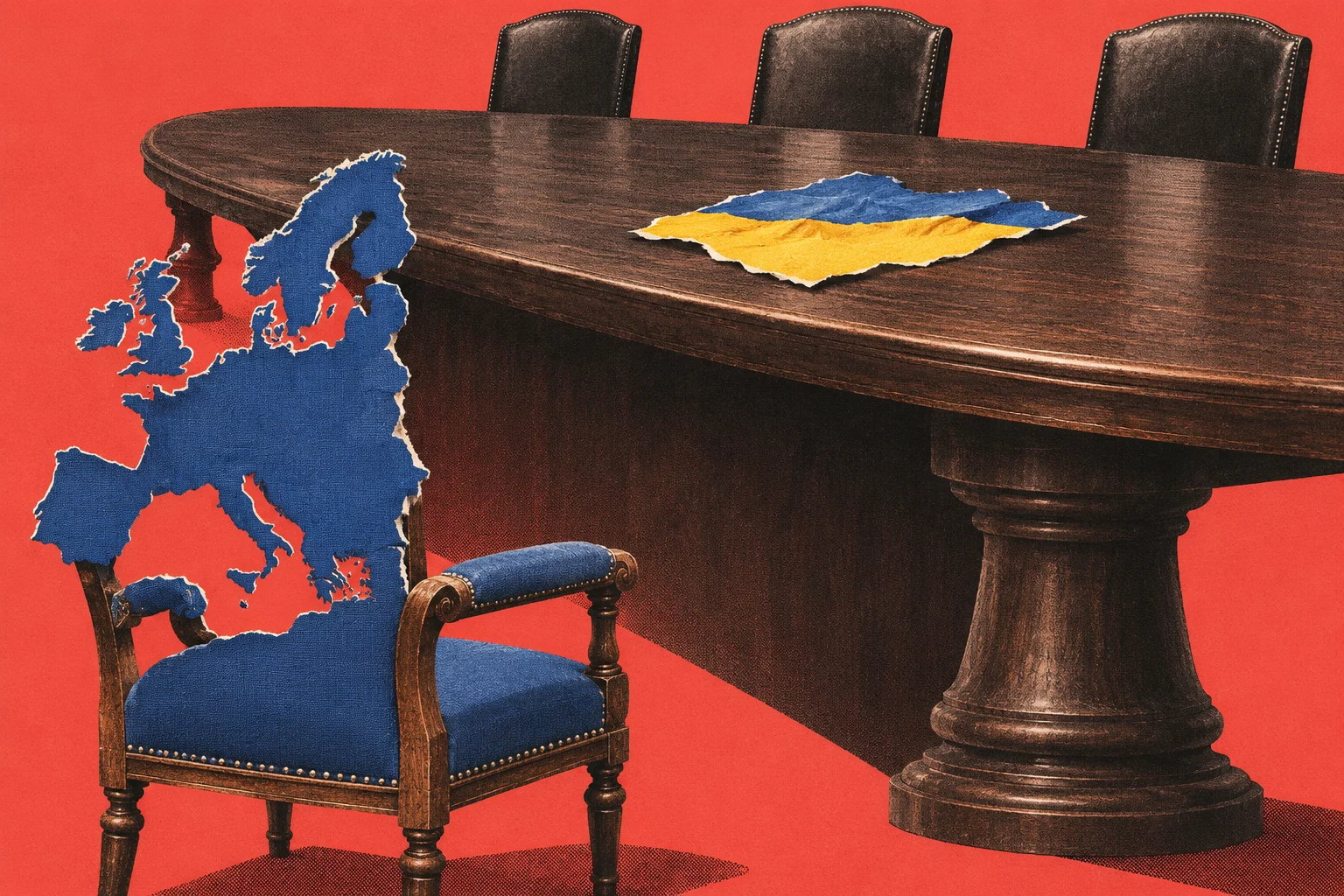
The public Mr. Zelensky would consult has already answered a close cousin of the question. In a telephone poll of 1,031 adults conducted Oct. 8 to 16 by the Kyiv International Institute of Sociology, 61 percent called it categorically unacceptable to withdraw from the Donbas, Kramatorsk and Sloviansk included, in exchange for security guarantees from the United States and Europe. Thirty-five percent said they could accept it, most calling it a difficult condition, and 7 percent said they would agree easily. Even in the east, the most open region, 51 percent were opposed, according to the institute. Anton Grushetskyi, its executive director, wrote that “the pressure campaign on Ukraine has not led to any greater readiness to accept this proposal.”
What Moscow has asked for
Mr. Putin’s terms have not moved toward the American question. On June 14, 2024, in a speech at Russia’s Foreign Ministry, he said Ukraine must pull its troops out of all of Donetsk, Luhansk, Kherson and Zaporizhzhia and formally renounce NATO before he would order a ceasefire, Meduza reported.
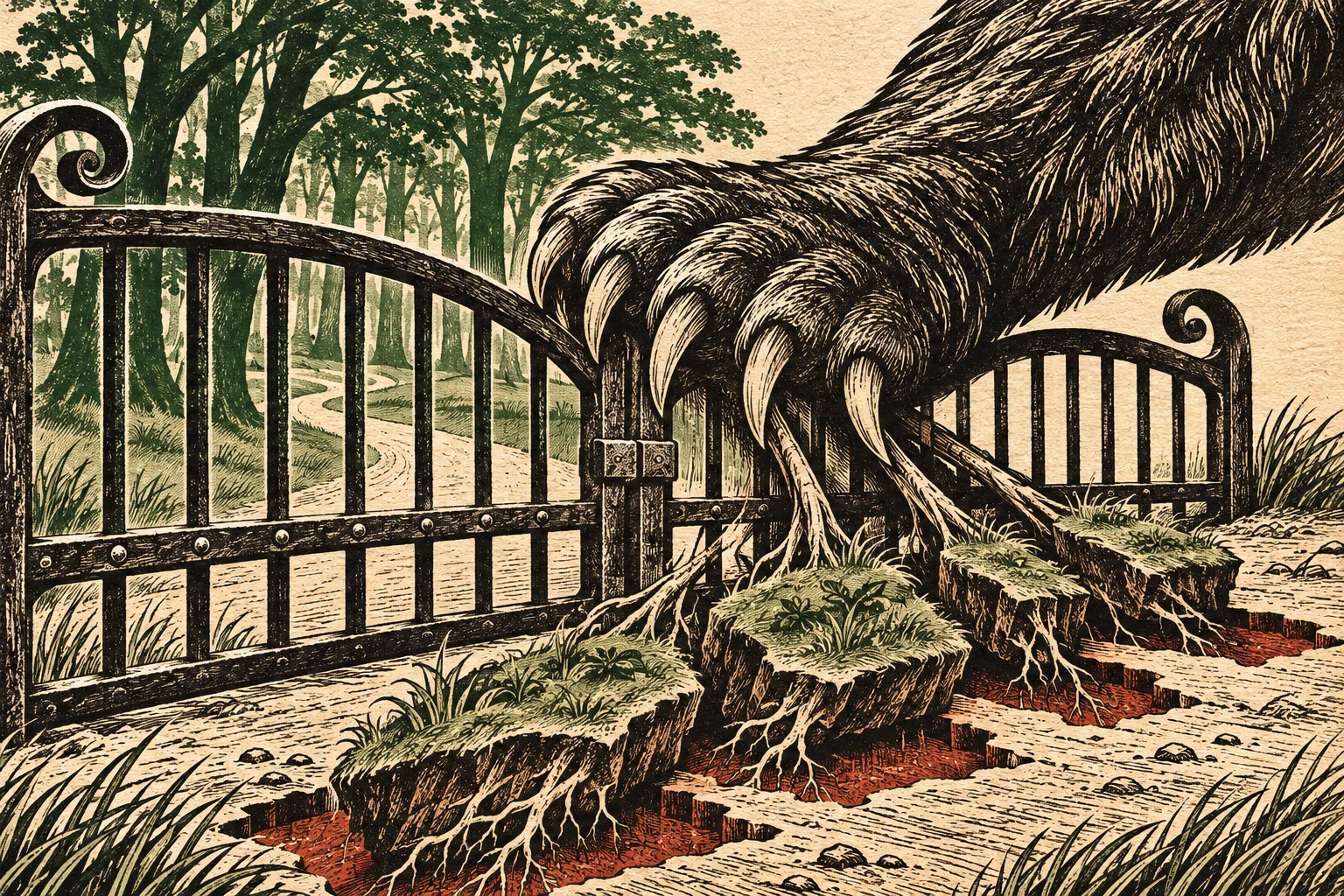
In Abu Dhabi, Russian officials circulated a paper calling for NATO to pull its forces back to their 1997 positions, before the alliance took in Central and Eastern Europe, The New York Times reported, according to Ukrainska Pravda. Moscow wants any settlement to bar Ukraine from NATO permanently, Radio Free Europe/Radio Liberty reported. Bild reported that the Kremlin also wanted Finland out of the alliance. Dmitry Peskov, the Kremlin spokesman, denied it. “No, no such conditions were put forward,” he said, the Kyiv Post reported.
The Kremlin had not responded to Mr. Zelensky’s disclosure as of Nov. 15. Harry Nedelcu, a senior director at Rasmussen Global who previously served on NATO’s policy planning staff, told Al Jazeera that the question tested how much the Donbas really matters to Moscow, and that “everything indicates that the Russians will never accept this.” He called Russia’s proposed new European security architecture “a code name for Russia having veto [power] when it comes to NATO.”
The case for the trade
The best argument for the swap is that it would buy the one protection Ukrainians have said would make a peace hold. Timothy Ash, an emerging-markets economist who writes often about Ukraine, made it on his Substack on Nov. 15.
I actually think that if NATO membership was really part of any deal - in exchange for an end to the war ... but required Ukraine to withdraw from Donbas that most Ukrainians would agree.
Then Mr. Ash asked whether the United States and the other allies would really agree to such a deal. “I just don’t think so,” he wrote, and he asked whether Mr. Trump could be trusted to offer it. Chris Featherstone, a political scientist at the University of York, told Al Jazeera that the idea “could be seen as a recommitment to the alliance” by an administration that has questioned it, and called it “an attempt to test this Ukrainian position.”
On Hacker News, a reader who saw why Kyiv might take the deal set out how Moscow might respond.
But if it happened anyway, what would he do? My hope is that he would spin it to his people as a successful ending to his “special military” whatever. My fear is that he would immediately attack and put NATO to the test to see if the mutual defense commitment was real.
Set against the record, Mr. Ash’s case is stronger than the poll makes it look and weaker than the diplomacy requires. The institute’s question offered guarantees from the United States and Europe, not membership, so its 61 percent does not measure the trade now being floated. The October results it published did not test that version. But the deal depends on an invitation Washington cannot issue alone, and Sweden’s case shows a single ally can hold a protocol for 20 months. Nothing public says which would come first, the withdrawal or the last ratification. If Ukraine left the fortress belt before the final instrument was deposited, it would have given up its strongest ground while still outside Article 5. The reader’s fear is the scenario Mr. Fico has said he wants no part of. The hope runs into a Russian paper that asks NATO to shrink.
What comes next
Washington says the next meeting that includes Mr. Putin is not about Ukraine. Mr. Trump, Mr. Putin and Xi Jinping, China’s leader, plan their first three-way meeting at the Asia-Pacific Economic Cooperation summit in Shenzhen, which runs Nov. 18 and 19. A Trump administration official told Al Jazeera that China “is not really a part of that track, so it doesn’t seem appropriate to have the Ukraine discussion there.” Yuri Ushakov, Mr. Putin’s foreign policy aide, said on Nov. 12 that the two presidents would keep negotiating over Ukraine at the summit, the Kyiv Post reported.
Mr. Witkoff and Mr. Kushner have said another trilateral round is planned with Europeans at the table, but no date or venue had been announced as of Nov. 16, the Kyiv Post reported. Europe’s team is to include Britain, France, Germany, Italy and Poland, along with E.U. officials. “Without Europeans, there is no support for Ukraine,” President Emmanuel Macron of France said last week, The New York Post reported. “There is no more US support.”
Any referendum waits on the Verkhovna Rada. Martial law expires at 5:30 a.m. on Jan. 29, 2027, unless lawmakers renew it again, as they have every three months since February 2022.