
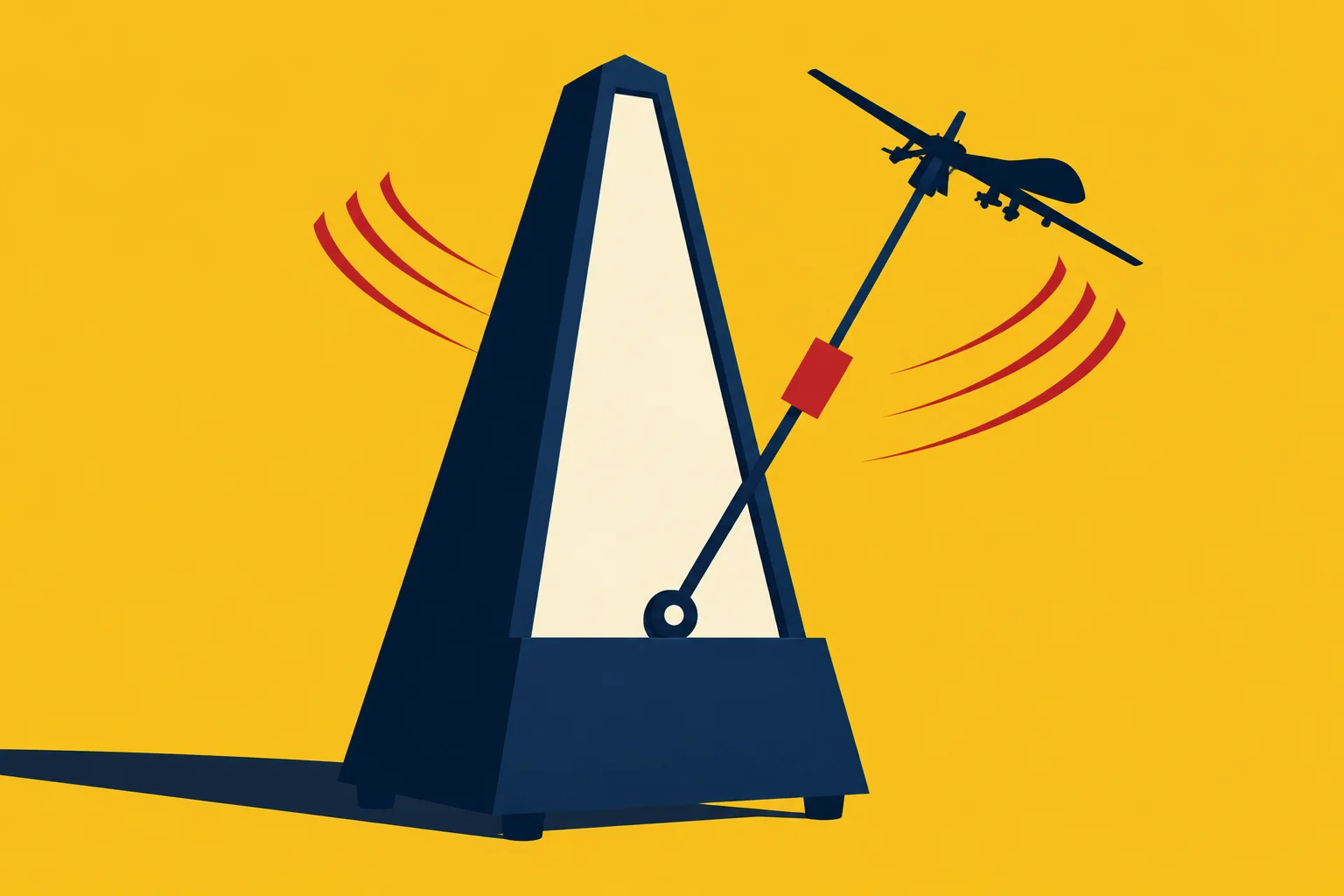
Public records kept by US Africa Command list 84 air strikes in Somalia through September 2026, and the New America Foundation, which tracks the campaign independently, counted 88 over the same period, Al Jazeera reported. The two numbers differ in method — the command tallies its own announced operations, an outside tracker compiles reports separately — and the gap of four is what that usually costs. Both figures tell the same story about pace. The previous annual record for this campaign was 63 strikes, flown across all of 2019 during Donald Trump’s first term, per Time.
Do the arithmetic: 84 strikes in 273 days is one strike every 3.3 days; 63 in 365 days is one every 5.8 days. The campaign is running at roughly 1.8 times the fastest previous tempo, with a quarter of the year still to go. The longer view is starker. From 2007 to 2017 the United States flew 42 strikes in Somalia in total, according to Time’s tally. It now flies that many in about four and a half months.
The targets are two armed groups. In the south, the strikes hit al-Shabaab, the al-Qaeda-linked insurgency that has fought the federal government for two decades. In the north, they hit ISIS-Somalia in Puntland’s Golis Mountains — the first strike AFRICOM announced for 2026, on January 21, targeted ISIS positions there, and a further series on February 22-26 and 28 struck near the mountains about 70 kilometres southeast of Bossaso, according to the command. The February strikes, AFRICOM said, were meant to “degrade ISIS-Somalia’s ability to threaten the U.S. Homeland, our forces, and our citizens abroad.” That sentence, or a close variant, has prefaced nearly every strike announcement for years; it does not say how many targets were hit, or who else was there.
The mechanism underneath the strike count is straightforward. The American aircraft fly in coordination with the Federal Government of Somalia, and sometimes at its direct request: in March 2025, AFRICOM struck al-Shabaab near Mogadishu after what US officials described as an urgent request from the federal government, DefenseScoop reported. Washington supplies the munitions and the targeting; Mogadishu supplies the permission and, in principle, some of the intelligence. What happens after the ordnance lands is where the record thins out.

What a strike leaves behind
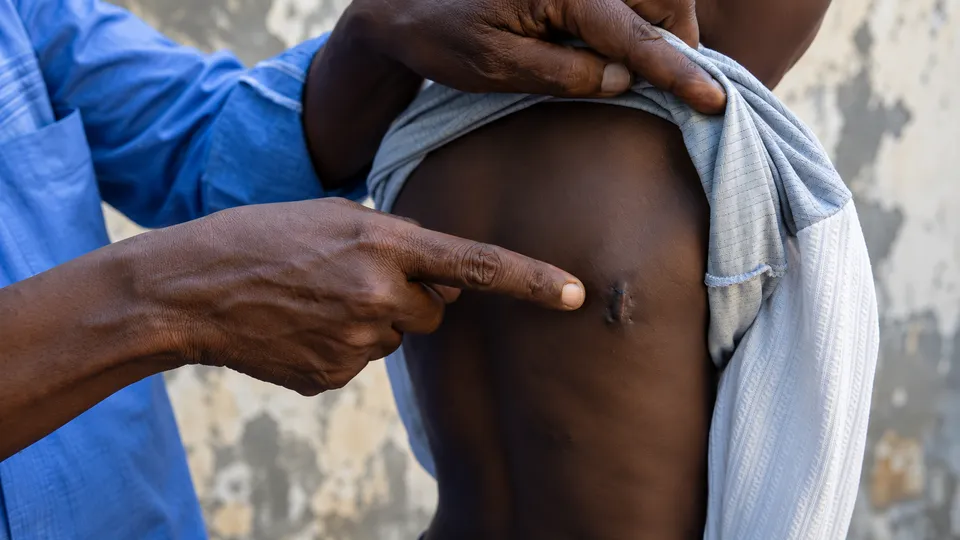
Nearly a year ago, a suspected US strike in southern Somalia left shrapnel embedded in the body of Maryam Haji Abdi Guled’s son. A fragment sits near his hip. Doctors have warned that removing it could leave him paralysed, so it stays where it is, and so does the risk: Guled still walks him to school every day because she fears that if another child pushes him while playing, the metal could shift. “Suspected” is the operative word — no strike announcement has been matched to the one that hit her family, which is the usual state of affairs.
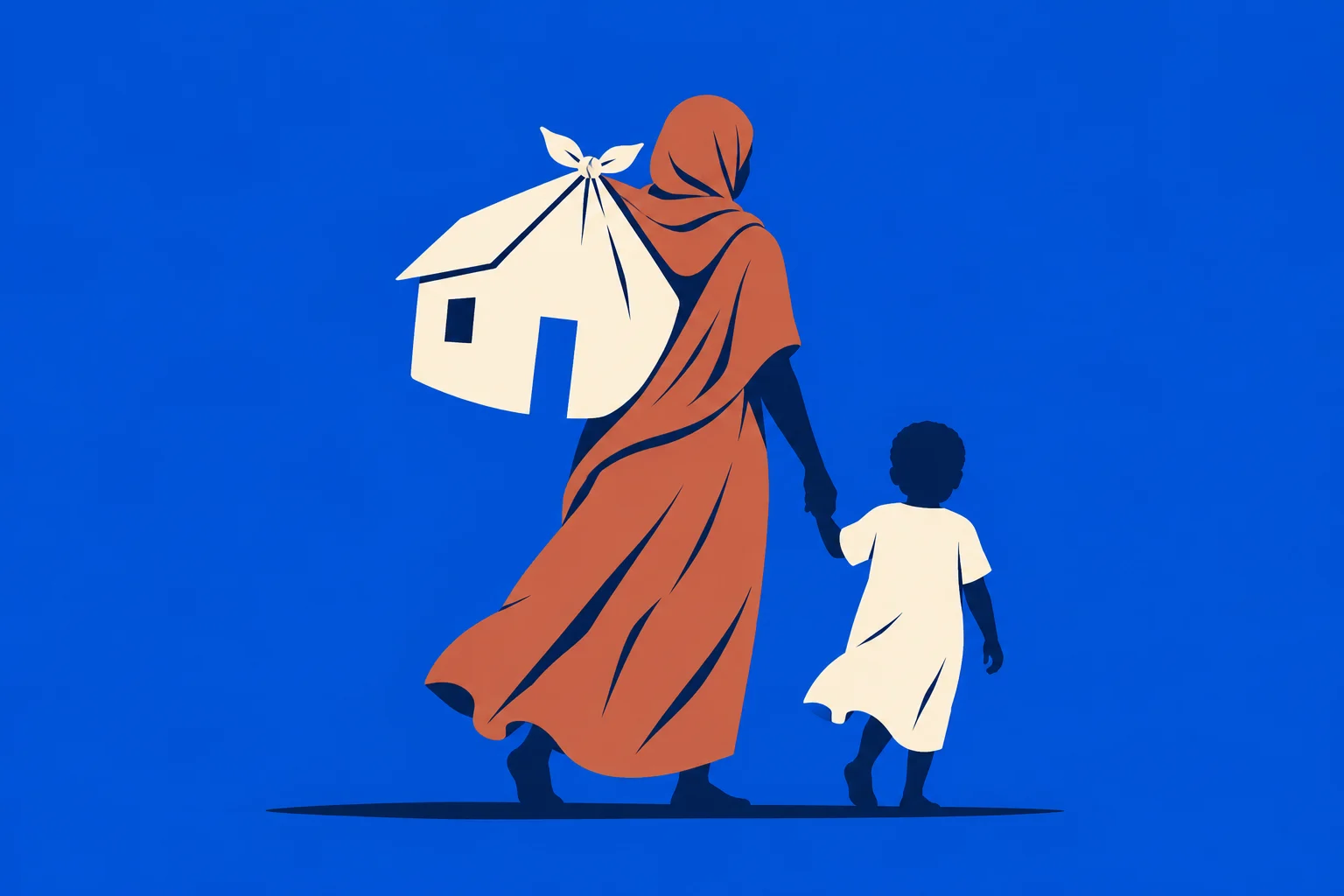
Al Jazeera’s account gathers families across the south recounting deaths, injuries and displacement under the intensifying campaign. Displacement leaves a record where casualties often do not: a UNHCR-led protection network recorded 22,800 people fleeing Jamaame and surrounding villages in the Lower Juba region over three days, November 16 to 18. That is one district, one episode, in a country where the UN counts over three million people already displaced by conflict and drought.
Five admitted deaths
The civilian accounting for this campaign has a denominator problem that predates Trump. The monitoring group Airwars estimated that between 2007 and August 2022, US air strikes in Somalia killed between 78 and 153 civilians, including 20 to 23 children and 12 to 13 women; the tally, compiled on Wikipedia, notes 79 of the dead were identified by name. Over the same span the United States acknowledged five civilian deaths. That is not a dispute at the margins of a dataset. At the low end of Airwars’ estimate, the gap between the independent count and the official one is fifteen to one.
For the command’s count to be the right one, its post-strike assessments — conducted largely from intelligence feeds, in territory where al-Shabaab decides who may travel, and where investigators from Amnesty International and Airwars have documented deaths the Pentagon initially denied — would have to be finding almost nothing that external investigators later found. The historical record runs the other way. AFRICOM only began publishing regular civilian-casualty reports on Somalia in 2020, after years of pressure, and its assessments depend on information that, by its own account, external monitors cannot verify.
If the final quarter of 2026 matches the first three, the year will close at roughly 112 strikes, nearly double the 2019 record. What will not necessarily close with it is the accounting: independent verification of civilian harm for the 2025 and 2026 strikes has yet to catch up with the tempo, and the families Al Jazeera spoke with are still waiting for anyone to confirm what hit them.