
South of the modern city of Kapan, in Armenia’s Syunik region, on the right bank of the Voghji River, there is a wooded slope the local people call Tandzu Lenj: the slope of pear trees. A capital lies under those trees. Its walls, its palace and the streets where its kings once lived are now covered by forest.
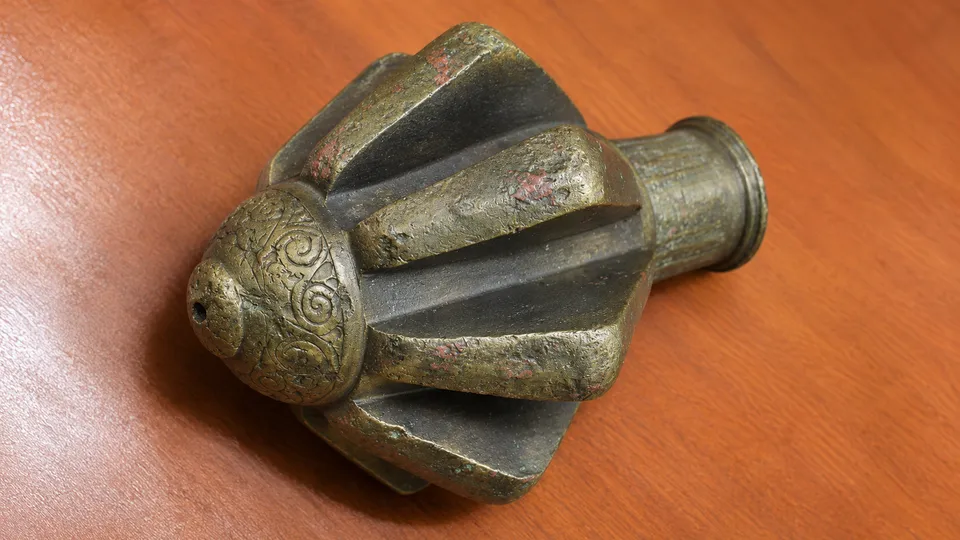
This autumn the slope gave up the head of a copper scepter.
The Institute of Archaeology and Ethnography of Armenia’s National Academy of Sciences announced the find on 16 November, as Arkeonews reported. It came from the part of Old Kapan where the inner citadel and the royal palace stood. The team is led by Gagik Sargsyan, whose name also appears as Sarkisyan, a vice-director of the institute and head of its epigraphy department. They went back to the site in mid-October to continue systematic work that began in 2024. According to Armenpress, the project was initiated and is funded by the Syunik Regional Administration.
The researchers describe the object as a symbol of governing authority. They have not said when it was made, which reign it belongs to, or whether it was held by a king or by some lesser official of the court.
A scepter, then, without a king.
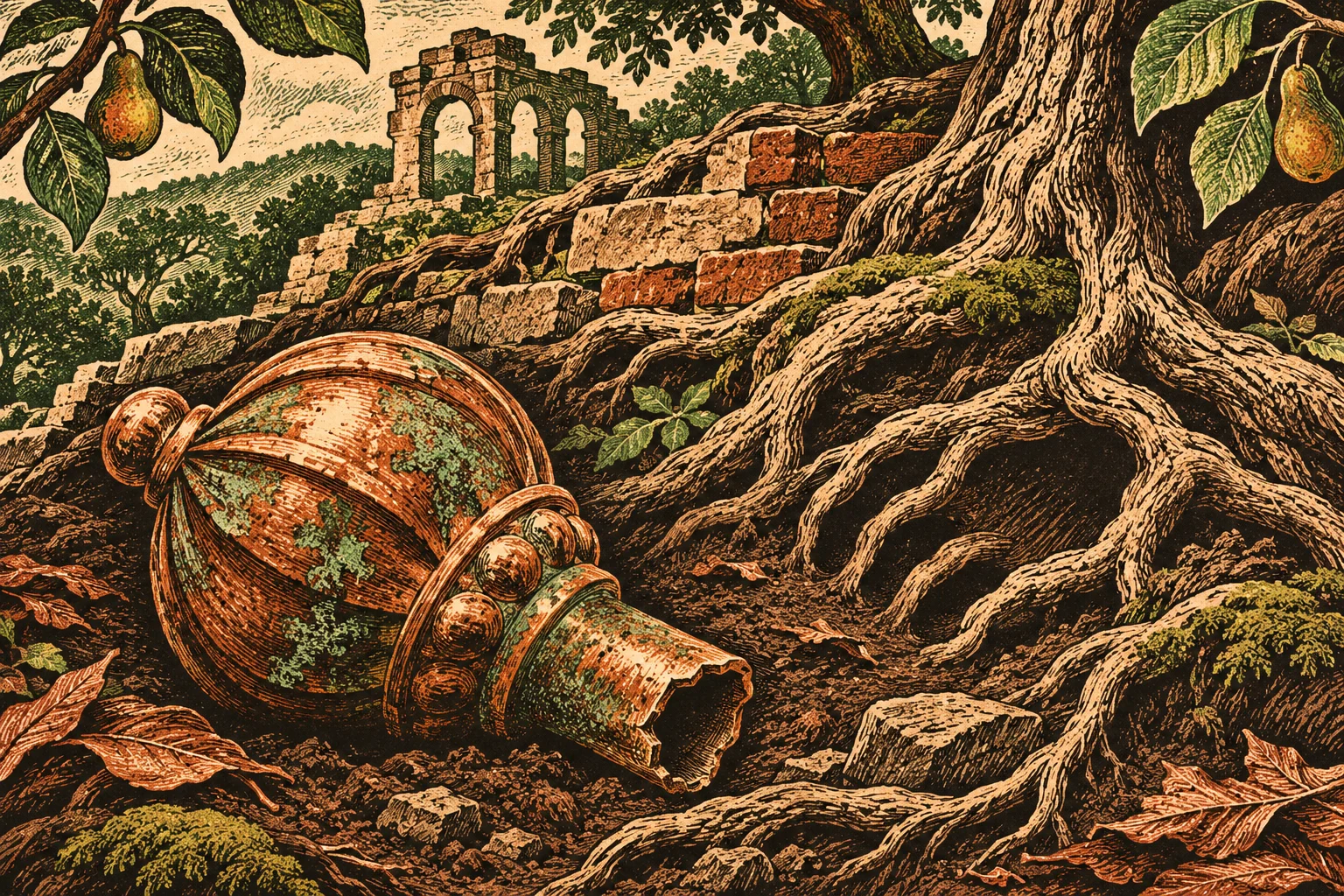
One could put it like this: such objects exist to make one person’s power visible to everyone else, and they usually survive the power they stood for. The hand that held this one has no name yet. The copper is still here.
What lay beside it
The scepter head was not found alone. The diggers also recovered metal fasteners from the cover of a parchment manuscript, which suggests that books and writing had a place in the royal quarter. There were two coins, pieces of medieval glass, iron nails, rivets and fragments of pottery. Armenpress dates the coins, glass, nails and potsherds to 10 November and says they lay under a layer of soil.
Reports disagree on where the scepter head has been taken. Arkeonews and Armenpress name Kapan’s local history museum, while News.am names the Kapan Geological Museum.
A city behind walls
Written records mention Kapan as early as the 5th century. It grew in weight after the Kingdom of Syunik was founded in 987. The city became its capital and the seat of its rulers, and remained one of the region’s political centres from the 10th to the 12th century. Soviet archaeologists looked at the ruins, but according to an assessment the institute published in 2025, the first thorough and systematic excavation began only in 2024.
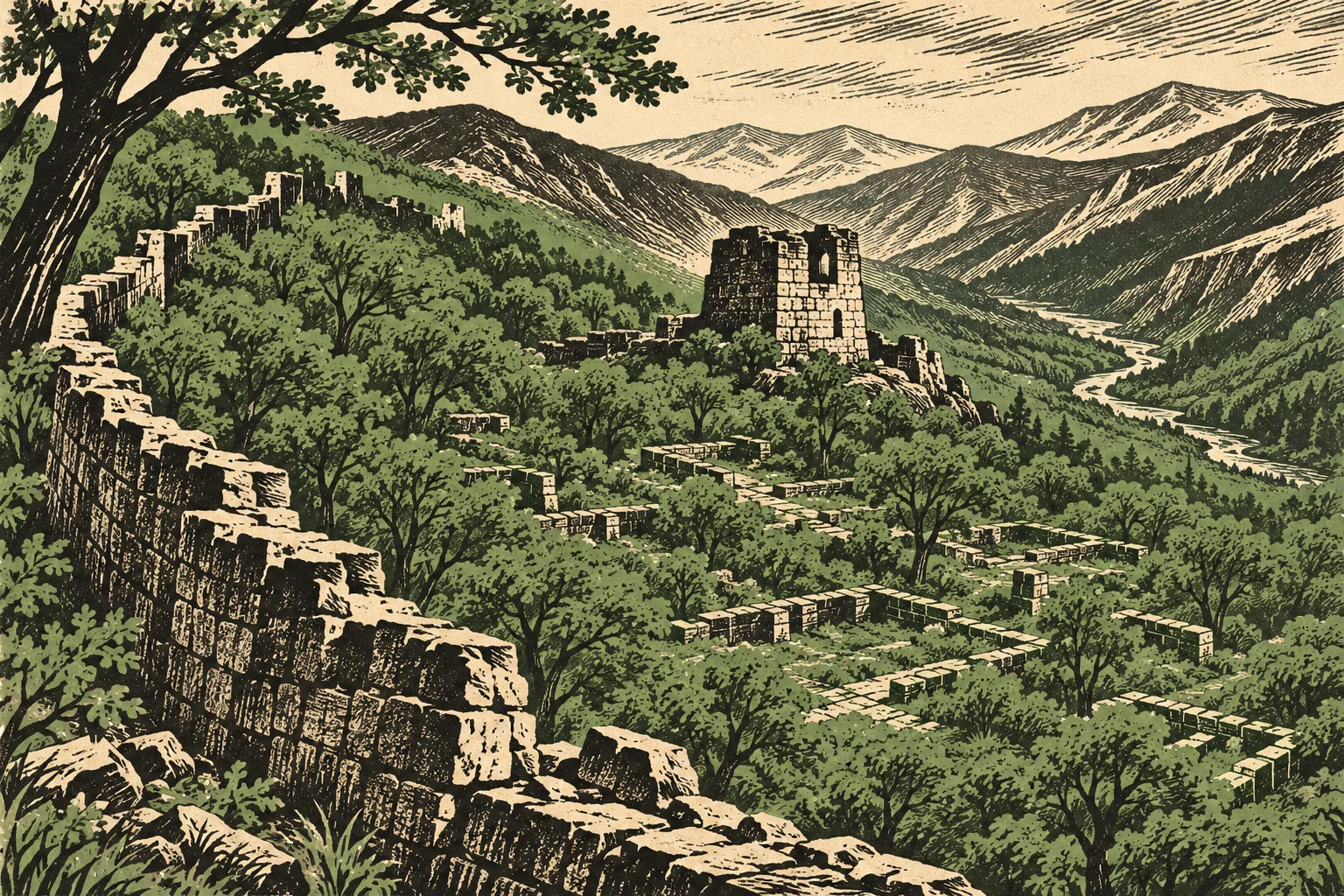
What has come out of the ground is the outline of a city built to resist. Strong walls surrounded it, in places with double-layered masonry. In the eastern section stands a large defensive tower, still about four metres high, next to one of the castle’s gates. This was an administrative seat, and it was also a stronghold, placed to watch over the mountains and the river valley around it.
The church beneath the palace
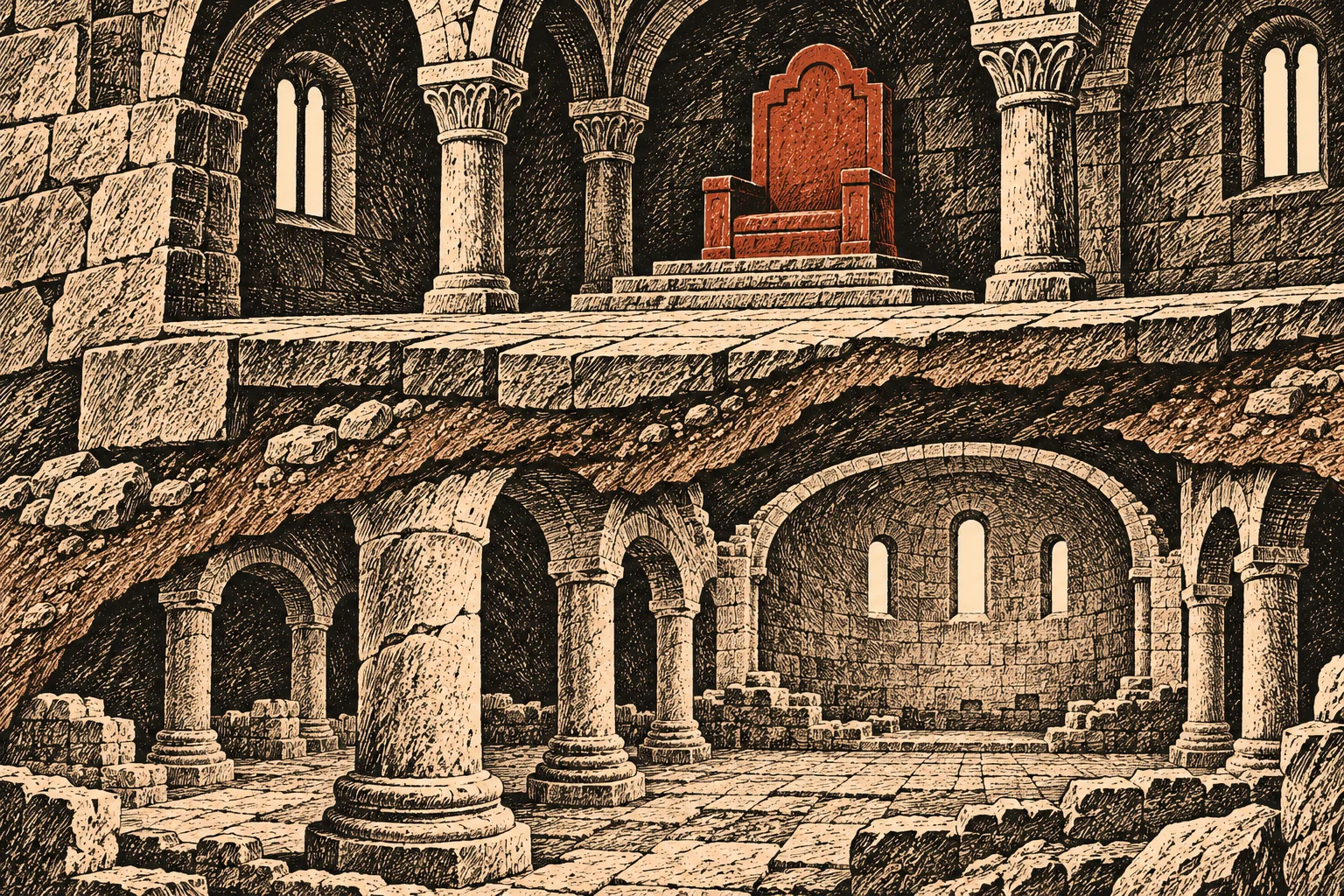
The most striking result came in 2025. Under a later palace, the team found the foundations and column bases of a three-aisled basilica dated to the 4th or 5th century. It had a horseshoe-shaped apse and a stone-paved floor. At some point about 25 centimetres of fill was spread over that floor and a second floor laid on top, a sign that the building was altered more than once during its life.
Near the church the excavators found a stone oil press about 1.2 metres across. Some 30 metres south of the palace complex were the remains of a small chapel with a rectangular apse.
So the kings of Syunik built on top of the faithful. Before Kapan was a capital it was a place of churches, and the palace rose on the foundations of a basilica. It is an old habit of power to settle where authority has already been made sacred, and to build its own walls on that ground.
A furnace, and the end
In the 2026 season the team uncovered a furnace or oven of neatly cut stone on the edge of the settlement. They think it may have heated water for a bathhouse and say more baths and service buildings may lie nearby.
The city’s fall is told by the medieval historian Stepanos Orbelian, whose history of the province of Syunik is one of the main written sources for the region. As the institute’s account summarises him, Kapan was destroyed in attacks led by Amir Harun in 1126. The kingdom held out until 1170, sheltered by the fortress of Baghaberd nearby.
Other accounts give a different date. The encyclopedia entry on the Kingdom of Syunik says Seljuk invaders ruined Kapan in 1103, and Armenian Geographic writes that Baghaberd became the kingdom’s capital that same year, after Kapan fell. The excavation may help settle which chronology is right. Dating the scepter head and studying exactly where it lay could also show what it was used for at court.
For now the work is closing. Sargsyan has said that bad weather has made digging hard and that the 2026 season will end within days. The scepter head is in a museum. Most of Old Kapan, its walls, its palace rooms and the parts nobody has reached yet, is still under the pear trees.