
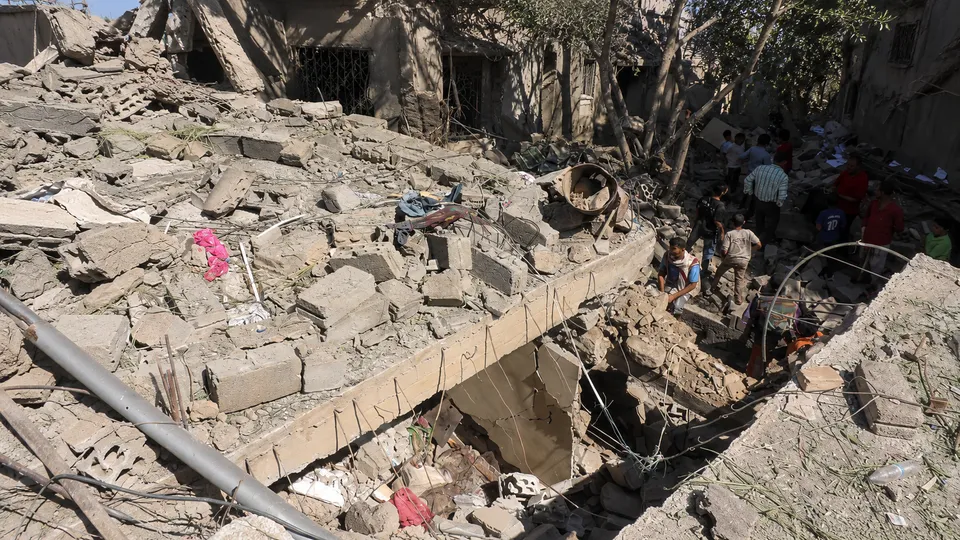
Nearly 260,000 people have been driven from their homes in Yemen since August, the United Nations said late Wednesday, as fighting between government forces and the Houthis intensified in the southwestern province of Taiz.
About half of them have taken shelter in Taiz, according to a report from the UN Office for the Coordination of Humanitarian Affairs, Al Jazeera reported. The UN human rights office has verified 251 civilian casualties in that time, 57 killed and 194 wounded. Half of the dead were children.
Majid al-Nazili, a spokesman for government forces, said Wednesday that they had carried out 835 targeting operations against the Houthis, known as Ansar Allah, killing or wounding 285 of the group’s fighters and destroying tanks and weapons depots. His figures could not be independently verified. Mr. al-Nazili said the heaviest clashes were in the Jabal Han highlands of western Taiz, which overlook the roads linking the province to Aden, the government’s base. Fighting was also reported in the Dhubab and al-Masrakh districts.
A government military source told Al Jazeera that airstrikes hit Houthi gatherings and infrastructure in Maafar, south of the city. On Thursday, the Defense Ministry said in a statement that Houthi rallies and “cultural courses” would be treated as legitimate military targets. It said the group used the events to recruit children and told civilians to stay away.

Aid groups have reached more than 174,000 displaced people since August, “nearly six in 10 displaced households,” with food, hygiene kits and emergency cash, OCHA said. Families say “their most pressing need is shelter, followed by food and cash,” according to the agency. Yemen’s Education Ministry says more than 2.5 million children are out of school because of the war.
The Houthis opened a ground offensive in western Taiz in early September. They took ground along the Red Sea coast, including the port of Mocha on Sept. 10, then seized the main roads into the provincial capital and all but encircled it. The siege has left the city short of food, fuel and medicine. Government counterattacks have left some areas contested.
Earlier this month, the government, backed by a Saudi-led coalition, began a counteroffensive it calls Dawn of Yemen, with the aim of retaking Houthi-held territory as far as Sanaa, the capital. That push came after the Houthis declared a blockade on Saudi Arabia in the Bab al-Mandeb strait in July, ending a UN-brokered truce that had held since 2022.

The war has spilled across the border. Saudi Arabia’s civil aviation authority said Thursday that the death toll from Wednesday’s Houthi strike on King Fahd airport in Dammam had risen to two. The Houthis say their attacks on Saudi airports answer years of Saudi restrictions on ports and airports under their control, Sanaa’s airport among them. The State Department ordered nonessential staff and their families to leave the U.S. Embassy in Riyadh, which was badly damaged at the start of the U.S.-Israeli war on Iran, warning that hostilities “have the potential to escalate rapidly beyond that immediate area.”
Government forces also accused the Houthis of striking the airports in Aden and al-Rayyan on Wednesday, days after missiles landed near a Cairo-bound plane in Aden. Rashad al-Alimi, the head of the Presidential Leadership Council, condemned the attacks and called on other countries to designate the group a “terrorist” organization.
Inside Taiz, women who started out baking cookies for soldiers at the front are now raising money for weapons and ammunition, AbdulHakim Helal reported for Al Jazeera. Most Yemeni women stay out of the fighting. Amira al-Saghir, an activist, said the city was “subjected to daily shelling in preparation for an invasion.” She tied the turn toward ammunition to claims on social media that government fighters were running short, and said some donors asked that part of their money go to bullets as rural districts fell.

Huriya Wabel, a humanitarian activist, said the Houthis were waging “a war of extermination against our city.” Many civilians want to fight beside the army, she said, but have no weapons.
On Oct. 8, the women’s department of Taiz’s Supreme Council for Popular Resistance started a campaign to arm 10,000 pro-government fighters with rifles and ammunition. Khadija al-Majidi had just come back from her second trip of the day to the fighting around Jabal Sabir, the mountain south of the city, where she delivered $3,000 worth of ammunition and military supplies to the front commander, along with winter clothes, shoes and food.
“Did you expect us to carry flowers for the criminal who came from the farthest reaches of the country?” Ms. al-Majidi said.
Much of the money comes from Yemenis abroad. Ms. al-Saghir said one woman whose husband serves in the army gave her wedding ring. Another brought envelopes of Yemeni and Saudi bills with a handwritten note: “God willing, we will win. Buy ammunition for the heroes with this.”