
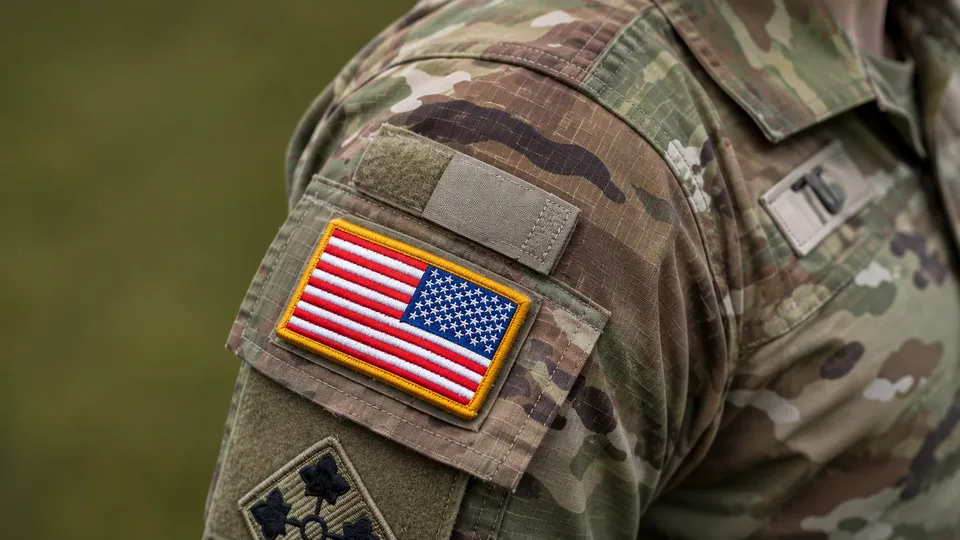
A US Army lieutenant colonel arrested in England on suspicion of spying for Russia spent exactly seven days in British hands before being handed to the US military on November 17, without ever being charged in a UK court. The Head of Counter Terrorism Police, Assistant Commissioner Laurence Taylor, said the investigation had been passed to US partners “in line with existing international protocols,” as Al Jazeera reported. That phrase does a lot of work: it points to the 1951 NATO Status of Forces Agreement, the treaty that decides which of two allied governments gets to put a soldier on trial when the host country’s own national-security law would, on paper, hand down a tougher sentence.
The soldier was arrested near Gloucester on November 10 under sections 1 and 3 of the UK’s National Security Act 2023. Section 1, obtaining or disclosing protected information for a foreign power, carries a maximum of life imprisonment, raised from a 14-year cap under the previous Official Secrets Act, according to the Act’s explanatory notes. Section 3, assisting a foreign intelligence service, caps at 14 years. Counter Terrorism Policing, working with MI5, UK Defence Counter Intelligence, the FBI’s Philadelphia field office and the US Army Counterintelligence Command (ACIC), ran the investigation jointly, but it was the US that asked for custody, citing primary jurisdiction under the NATO Status of Forces Agreement for offences by a serving member of a sending state’s forces, as NBC News reported.
| From | To | How |
|---|---|---|
| Soldier contacts suspected Russian handlers (self-initiated, per Telegraph source) | UK Counter Terrorism Policing sting | |
| UK Counter Terrorism Policing sting | Arrested near Gloucester, Nov 10 (National Security Act ss.1 & 3) | |
| Arrested near Gloucester, Nov 10 (National Security Act ss.1 & 3) | Held in London police custody | |
| Held in London police custody | US invokes NATO SOFA jurisdiction | |
| US invokes NATO SOFA jurisdiction | Transferred to US Army custody, Nov 17 |
Three outlets, citing people familiar with the case, have identified the soldier as Lieutenant Colonel Brandon Tyner, 41, a senior human resources officer who joined the Army in 2008 and served in Afghanistan from December 2013 to December 2014, plus tours in Iraq and Qatar, according to the Daily Telegraph’s reporting, summarized by the Western Journal. UK police have not confirmed his name. At the time of his arrest he was posted to Imjin Barracks, the Gloucestershire headquarters of NATO’s Allied Rapid Reaction Corps (ARRC), the alliance unit tasked with preparing for a Russian attack on NATO territory. Imjin Barracks sits a few miles from GCHQ, Britain’s signals-intelligence headquarters.
An amateur sting
The Telegraph, which first reported Tyner’s name, described a “long-running investigation” in which he allegedly initiated contact with people he believed were Russian intelligence operatives but were not, with a source close to the case calling his tradecraft “surprisingly amateurish.” The paper reported he described himself as a “change agent” and a crypto enthusiast. A US official told the Associated Press that no information reached actual Russian operatives. The Kremlin denied any connection: spokesman Dmitry Peskov said the arrest “does not concern us in any way” and that Russia had “nothing to do with this.”
That last detail, no information transferred, matters for what comes next, because it narrows which US statute applies and how severely. The equivalent US charge would run under Article 106a of the Uniform Code of Military Justice, which authorizes death only when espionage involves nuclear weapons, war plans, cryptographic systems or a major weapons system, and only if a court-martial panel unanimously finds an aggravating factor such as creating a grave risk of death to another person. Absent those findings, Pentagon sentencing guidelines effective for offences after December 28, 2023, put espionage and attempted espionage in the UCMJ’s top confinement band, 20 to 40 years, up to life without parole, which is the same range the UK’s Section 1 offers at its ceiling, just without the British statute’s single life-sentence cap and without the US statute’s capital provision. Whether prosecutors treat an unsuccessful, amateurish approach to a fake Russian handler as warranting anything near that range is the open legal question a court-martial, if one is convened, will have to answer.

Why the UK didn’t keep the case
Under the NATO Status of Forces Agreement signed in London in 1951, jurisdiction over a visiting soldier’s offence is concurrent when, as with espionage, the conduct is a crime under both the sending state’s law and the host state’s law. Article VII gives the sending state, here the US, the primary right to prosecute offences committed against its own forces or security, and gives the host state, here the UK, primary right over everything else, with either government able to waive its claim. London’s statement that the handover was “in line with existing international protocols” is the public face of that waiver: Britain, despite having the harsher maximum sentence on its own books, deferred to Washington’s claim that an American officer’s attempt to sell out an American-led NATO unit is primarily an offence against the United States, not against the United Kingdom. A similar pattern, a UK national-security case resolved through institutional channels rather than full public prosecution, surfaced last month in a separate case involving a Royal Navy sailor charged with spying for a foreign power British authorities still won’t name; this case differs in that the country, Russia, was named from the first police statement.
Brigadier General Sean Stinchon of Army Counterintelligence Command called the case “a sobering reminder that insider threats are real and persistent” and credited the “strength of our partnerships” between ACIC, the FBI, the Justice Department and UK services. FBI Director Kash Patel said the bureau has “no tolerance for anyone who breaks their oath to the United States,” and called the allegations a matter “of the utmost concern to the United States and our allies.” Deputy Assistant Commissioner Vicki Evans, overseeing the UK side, called the case “very serious” and said its investigation “is very much ongoing” even after the handover. Authorities on both sides say the case is unconnected to a separate incident at RAF Fairford, the US bomber base nearby, where a man was charged on October 27.
No US charge sheet has been filed as of this writing. CBS News has reported that one is expected soon, which will be the first point at which the public learns what, specifically, prosecutors think Tyner tried to hand over and to whom he thought he was handing it. Until then, the only established facts are the ones that moved the jurisdiction, not the ones that will decide a sentence: a seven-day UK detention, two statutes cited and never applied, and a treaty clause older than NATO’s current membership that let the case cross the Atlantic before a single charge was read in open court.