
The State Department released a report on Thursday laying out how the United States handled more than $12 billion from sales of Venezuelan oil and minerals after U.S. forces seized Nicolás Maduro in January.
The 53-page document covers Jan. 3 through Sept. 30. It says a U.S. Treasury account took in more than $12.26 billion from “verified and approved entities engaging in authorized activities” and had paid out $12.11 billion, nearly 99 percent of deposits, by the end of September, leaving about $169 million, according to the report. Most of the money went to Venezuelan banks for foreign exchange interventions.
The department said the disclosure was meant to “promote transparency and accountability in the management of these funds,” Al Jazeera reported. Large parts of it are redacted. It doesn’t name the final recipients. It says only that about $9.4 billion went to “legal entities” and $2.9 billion to “individuals.”
Democratic senators have spent months criticizing how little the administration had disclosed about the money, The Washington Post reported. Secretary of State Marco Rubio had said the accounting firm KPMG was hired to audit “every single expenditure.” Until Thursday, none of that work had been made public.
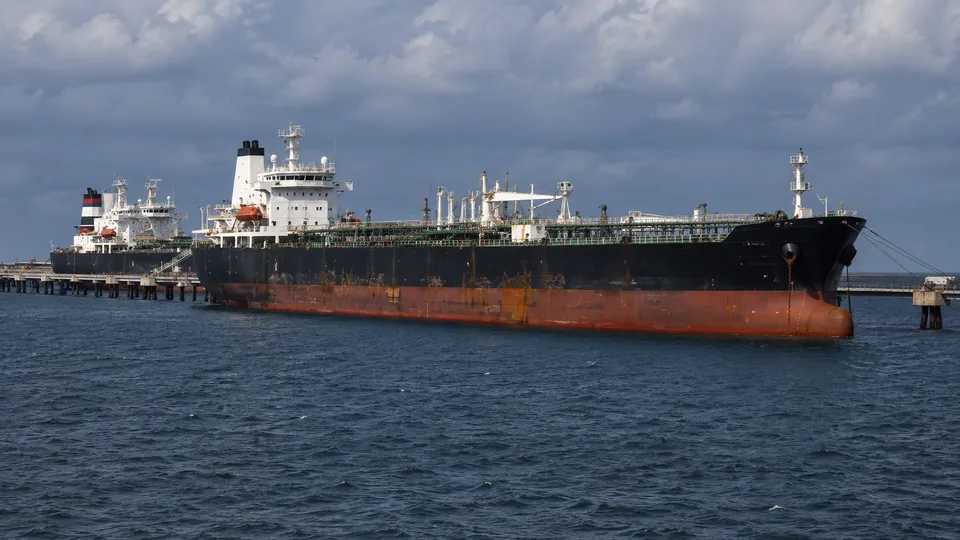
The names of the roughly 20 depositors are blacked out too. The New York Times has reported that most of the money came from Trafigura and Vitol, the commodity traders that received special licenses to sell Venezuelan oil shortly after the Jan. 3 operation. More than $12.1 billion of the deposits came from crude oil, other petroleum products and natural gas, according to the report. Gold, minerals and fertilizers made up the rest.
There were two accounts. The first, opened at Qatar National Bank in January, received about $500 million, and nearly all of it was sent back to Venezuelan entities by the end of that month. After that, a dedicated account controlled by the Treasury took over.
In the foreign exchange interventions, Venezuelan banks sell dollars to pull bolivars out of circulation and prop up the currency. Other payments went out at the request of Venezuela’s central bank.
The report says “the funds remain sovereign property of Venezuela.” They are also “held pending disposition for public, governmental, or diplomatic purposes” as Mr. Rubio decides.
The accounts grew out of the January raid on Caracas, in which U.S. forces took Mr. Maduro and his wife to New York, where they face charges including drug trafficking. Delcy Rodríguez, then the vice president, took power and struck deals with Washington giving the United States a direct stake in profits from Venezuela’s oil and mineral exports. An executive order President Trump signed in January set up the special accounts, with the money meant to flow back to Venezuela under U.S. control.
Mr. Trump made Venezuelan oil revenue part of his pitch before this month’s midterm elections, including at a rally in Texas. Venezuelan rights activists have said they worry Washington is putting oil money ahead of support for democratic reform.
The report is dated Oct. 29 and went to Congress in early November, according to The Post. It doesn’t cover anything that happened after Sept. 30.