
On October 21, Northwestern Polytechnical University, in the old imperial capital of Xi’an, posted a procurement record on its own website. The record showed the purchase of two Nvidia H200 chips, among the most powerful processors the American company makes for training and running advanced artificial intelligence. The price was 874,700 yuan, about $123,000, which works out to a little under 440,000 yuan a chip. The seller was Shaanxi Bosuan Network Technology, a supplier also based in Xi’an. Reuters could not find any contact details for it.
The document was unearthed by Reuters in an exclusive by Eduardo Baptista, and Al Jazeera carried the findings on November 11. By the standards of the AI trade, where data centres are counted in tens of thousands of chips, the sum is small. The buyer is another matter.
A quarter of a century on the list
Northwestern Polytechnical is one of the “Seven Sons of National Defense”, China’s elite universities devoted to defence work, and it has deep ties to the People’s Liberation Army. Its laboratories work on military aircraft, missiles and satellites. The US Commerce Department added it to the Entity List, Washington’s trade blacklist, in 2001 over alleged involvement in missile proliferation and military research. The Justice Department, in its own filings, says the designation was made for national security reasons. In 2019 Commerce tightened the rules again: licences to export controlled American technology to the university would be denied in most circumstances.
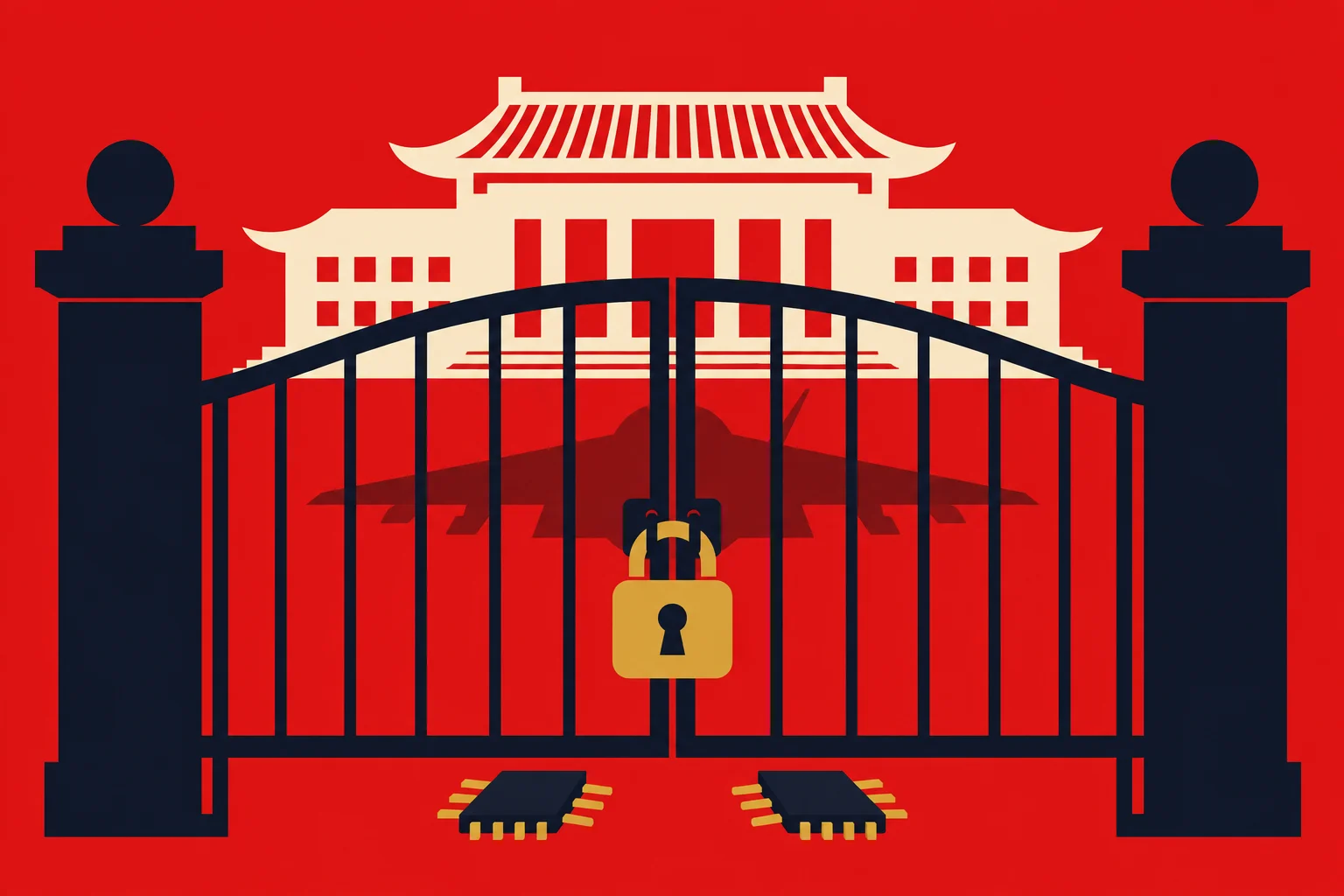
Selling an H200 to China requires a US export licence. The Trump administration has started letting some H200s go to China on a case-by-case basis, but that opening left untouched the separate restrictions on Entity List institutions. For Northwestern Polytechnical the answer from Washington, on paper, is still no.
Paper is one thing. Xi’an is another.
Renting what cannot be bought
The two chips were only the part that showed. This year the university also signed five contracts with Chinese companies to rent computing capacity, which gave it access to H200s and other powerful Nvidia processors, according to the Reuters records. In January its cybersecurity school signed two seven-month contracts for servers carrying eight H200 chips each. Other rentals ran on Nvidia’s A100 and A800 processors.
A reflection, not a finding: a government can forbid a sale, because a sale has an object, a buyer and a border to cross. A rental is harder to stop. The chip stays in someone else’s rack in someone else’s building, and what crosses the line is only its work: the hours of computation, the trained model. Export law was written for crates. Computing power doesn’t travel in crates.

Not the only door
Reuters reviewed 26 Chinese procurement and corporate records from this year. They show universities and research institutions buying Nvidia chips restricted by the United States, or renting services that run on them, through domestic suppliers. Shenzhen University bought three H100 processors in September. Wuhan University of Technology bought a server fitted with H100s in June. A week before the Xi’an story, the agency reported that small quantities of H200s had been reaching China by indirect routes even as Beijing held back approval for large-scale imports.
So two capitals each keep a gate closed, for opposite reasons, and the chips get through the fence between the gates.
Washington has prosecuted this kind of traffic to this particular university before. A Chinese national named Qin pleaded guilty to illegally exporting American goods to Northwestern Polytechnical, anti-submarine warfare products among them. According to the Justice Department, on or about July 21, 2018, he told investigators he had no customers on the Entity List when in fact he had at least two: Northwestern Polytechnical and the National University of Defense Technology. That case ended in a courtroom. The October receipt went up on a university website.

Silence
Northwestern Polytechnical, Nvidia and the Commerce Department’s Bureau of Industry and Security, the office that enforces export controls, did not respond to Reuters’ requests for comment.
The timing is bad for Nvidia in Santa Clara. Al Jazeera notes that the record came to light as scrutiny grows over chief executive Jensen Huang’s affair with an alleged spy for Beijing. Members of Congress have asked Huang to explain a customer who was reportedly a Chinese spy, and the company’s board has hired a former US attorney to investigate him. None of the reporting links the Xi’an purchase to that affair. They are separate stories that happen to land on the same desk in the same week.
For twenty-five years the university has been on a list meant to keep exactly this hardware away from it. Last month it bought two of the chips anyway, from a supplier with no contact details, and listed the purchase on its own website.