
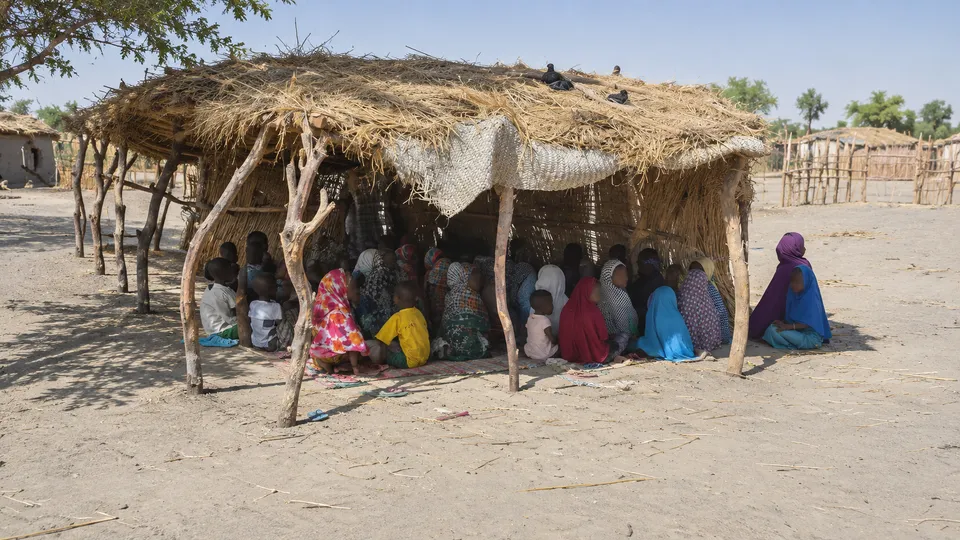
The order was only a few lines long, and it travelled by radio. On October 7, according to the Nigerien publication African Perceptions, the Interior Ministry in Niamey transmitted message number 002235 to the governors of Diffa and Zinder, two regions of the country’s southeast. As Al Jazeera reported, the message instructed the authorities to close the schools and the water facilities used by the Arab Mahamid community, to make Mahamid patients pay the full cost of their healthcare, and to stop issuing them civil status documents. It went further: documents already in Mahamid hands — national identity cards, passports — were to be withdrawn, and the security forces were to enforce all of it.
Al Jazeera has not independently authenticated the document, nor established whether its instructions were ever carried out. A radio message can be a death sentence pronounced in static, or it can be nothing at all. But in Diffa, what followed it has the shape of a noose tightening.
A people of the borderlands
The Mahamid are an Arab people with historical ties to Chad and to Sudan. Many live in the Diffa region, in Niger’s southeastern corner, near the Lake Chad basin; some families have been settled there for generations, arriving in successive waves of migration from the neighbouring countries. Again and again, disputes over their nationality and their identity papers have put them at odds with the state.
Officials have accused some Mahamid residents of obtaining nationality documents fraudulently, of trafficking arms, and of links to the armed groups that plague the Lake Chad basin. Those accusations, it must be said plainly, have not been independently verified. In the history of the Sahel, an unverified accusation against a whole community is a familiar instrument — cheap to make, ruinous to carry.
The governor’s caution
On August 22, at a security meeting in Diffa, Governor Mahamadou Ibrahim Bagadoma and other officials discussed nationality papers, cross-border movement and security, along with the tensions over water and grazing land, according to the state news agency ANP. Bagadoma warned against holding the entire Arab community responsible for allegations involving particular individuals. It was a reasonable sentence, spoken in a meeting room. The question that hangs over Diffa now is whether it survived the journey from the governor’s mouth to the ministry’s radio.
The letter to the president
On November 6, the African Commission on Human and Peoples’ Rights sent an urgent appeal directly to Niger’s president, Abdourahamane Tchiani; it was made public on November 9. Three of the commission’s representatives signed it — the commissioner responsible for the human rights situation in Niger, and the heads of the working groups on economic, social and cultural rights and on the rights of Indigenous populations, communities and minorities. They raised the reported restrictions on water, education, healthcare and identity documents, and expressed concern over alleged violations of the Mahamid’s fundamental rights. The appeal, the commission notes, is not a formal finding that the government has violated those rights.
A commission in Africa can write a letter. It cannot open a school, unblock a well, or hand a farmer back his identity card. That has always been the tragedy of the continent’s paper institutions — they watch, they record, they appeal, and the water stays shut.
Two months
On November 8, according to the Chadian broadcaster Radio Ndarason Internationale, Mahamid representatives were summoned to a meeting in Diffa and told they had two months to leave Niger. Present, the broadcaster reported, were the Diffa prefect, the Gueskerou administrator, the Komadougou canton chief and village chiefs. Approached afterwards, the community’s representatives declined to comment. What is there to say, at such a meeting’s end, that the minute-takers have not already decided?
The Nigerien publication La Roue de l’Histoire reported on November 10 that the authorities have set December 31, 2026, as the deadline for the community to go. Neither publication has produced a formal expulsion order, and Al Jazeera has not independently confirmed the decision, its legal basis, or whether it would apply to the entire community. In Diffa, families must now weigh a rumour with a date attached against everything they have built over generations.
Memory of 2006
Niger has been here before. In 2006, the government announced plans to expel Arabs from Diffa to Chad; the operation was suspended after protests and negotiations. Twenty years on, the same script is said to be moving through the same offices — the ministries, the prefectures, the canton chiefs. Those who govern rarely invent anything new. They reach into the drawer for what was tried the last time, and the people of the borderlands wait once more to learn whether they are citizens or cargo.