
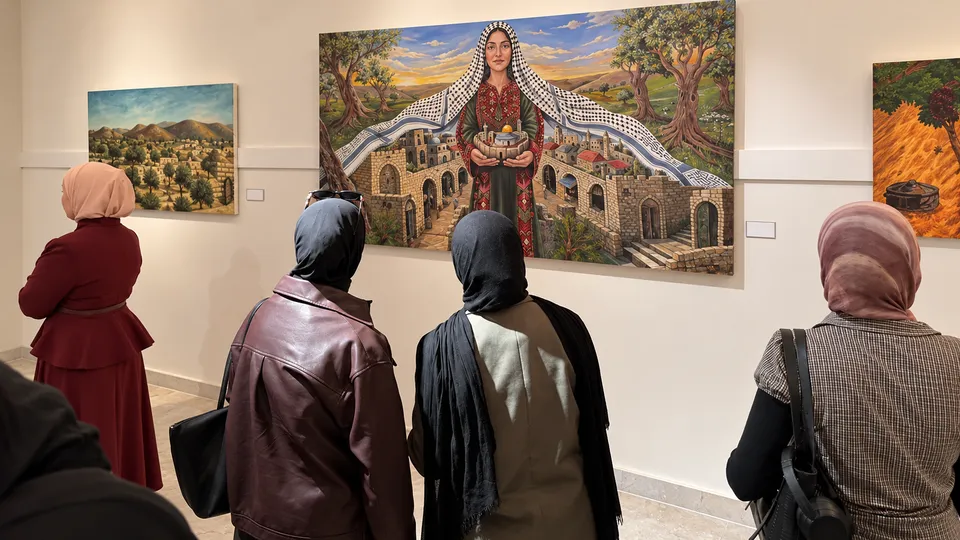
They came to the Bethlehem Peace Center with their families and friends, the way people come to any exhibition opening — and then they gathered before a screen. On it, by live feed, was another small crowd, 80 kilometres and an unbridgeable permit regime away: artists and their guests in a studio in Bureij refugee camp, in the central Gaza Strip. “‘Our works are next to each other’,” Leila Warah’s report for Al Jazeera takes as its title — a phrase that is true only in the way the organisers intend, paintings on two walls that geography and decrees have been arranged to keep apart.
The two openings, held earlier this week and running three days, marked the launch of Anamel Falasteen, the first competition organised by Falasteen Collective — a cultural initiative founded in 2025 by Palestinian artists, filmmakers, designers and others working in arts and culture. Its premise is the sentence no bureaucrat can refute: that these young artists’ work, and their chances of ever meeting, are separated by Israeli movement restrictions. The exhibition answers the restriction not with argument but with simultaneity. If the people cannot travel, the image will.
Palestine is not one story
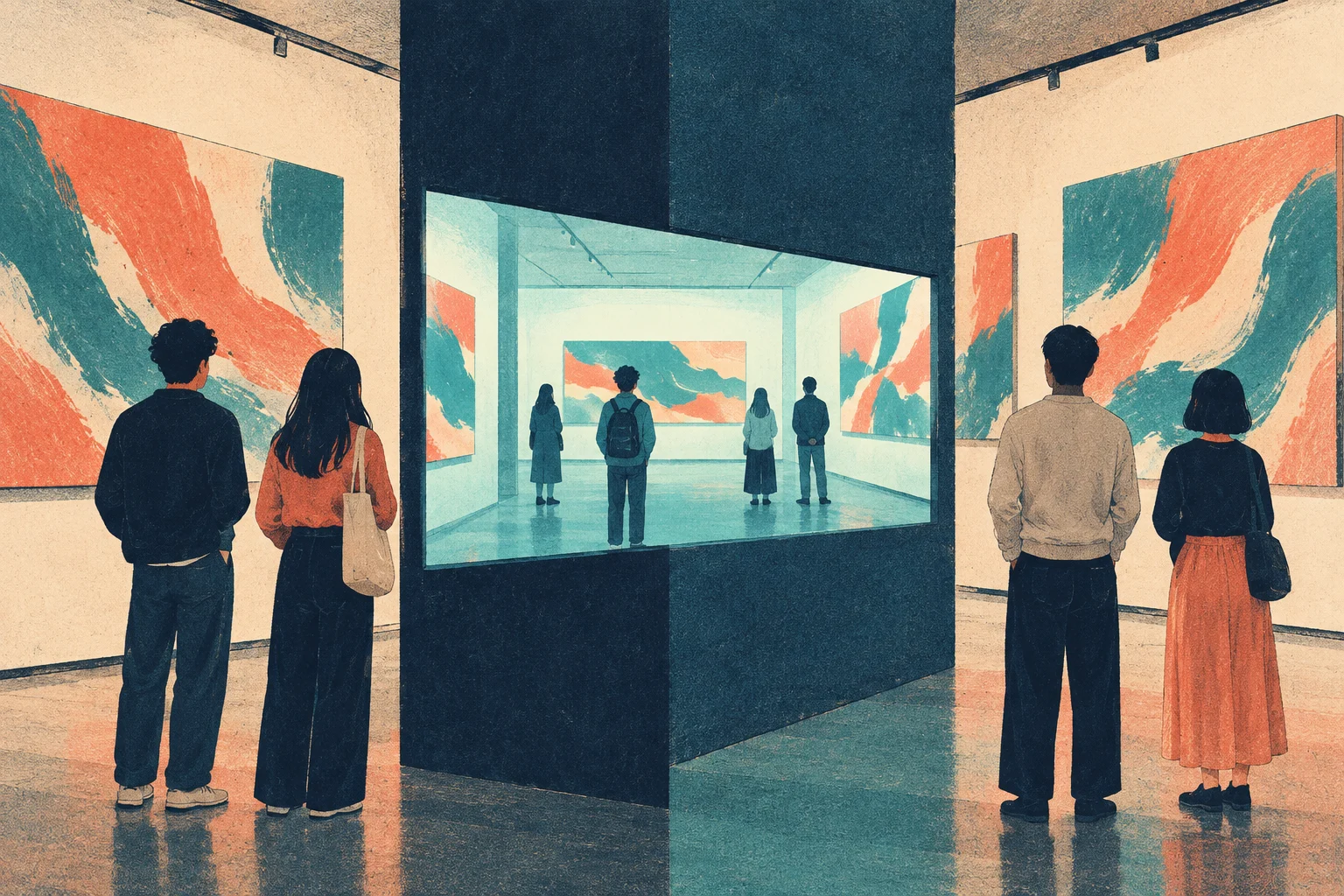
The Palestine News Network reported that more than 120 artists took part in the Bethlehem and Gaza exhibitions. “Palestine is not one story,” the collective’s Abu Srour told the agency, describing a breadth of experiences and identities drawn from Nablus, Bethlehem, Jaffa, Haifa, Acre, Jerusalem and other cities — and saying the competition aims to bring artists from across Palestinian communities together and give them an open space to show their work.
Even in Gaza, where the machinery of war has ground museums and archives to rubble — a Palestinian team has been racing to save what heritage survives — the making of new work goes on. That is worth pausing on, not as consolation but as fact: a people cut into enclaves, from Bureij to Bethlehem, still finds one another in the one territory that has no checkpoint, the shared room on a screen where the paintings, at least, hang side by side.