
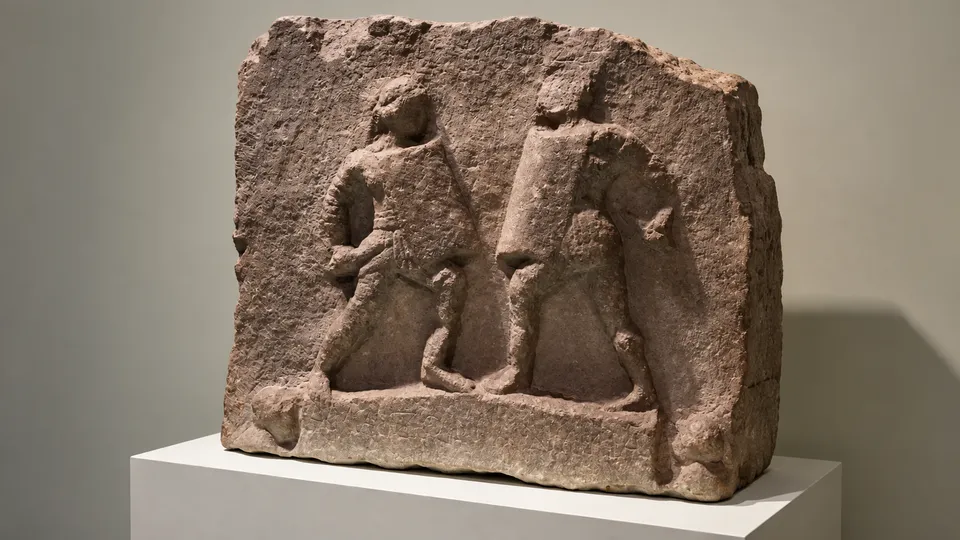
Nearly 2,000 years ago, two female gladiators known as Amazon and Achillia fought each other in the arena at Halicarnassus, on the Aegean coast of what is now Türkiye, and both walked out alive.
Almost everything else about the fight has disappeared. What survived is a Roman marble relief, now in the British Museum, that preserves the women’s names, their equipment and the uncommon outcome. Found at Halicarnassus and dated to the 1st or 2nd century A.D., the relief stands about 66 centimeters high by 78 wide and shows the two advancing on each other with swords and shields.
Their gear matches the standard for male gladiators: large shields, protective armor on the legs and sword arm. Neither wears a helmet. Inscriptions above the figures give their arena names.
Those names were probably stage names, not birth names. Kathleen Coleman, a classical scholar, has argued that the pair evoke Achilles and Penthesileia, the Amazon queen whom Achilles kills in Greek mythology. “Achillia” gives Achilles a female identity; “Amazon” recalls Penthesileia and the wider tradition of female warriors. The pairing may have been an act: the two women could have fought as a recurring duo, staging a mythic confrontation for Roman audiences, Arkeonews reported.
The choice would have landed hard at Halicarnassus. Centuries before the fight, the city’s Mausoleum, one of the Seven Wonders of the Ancient World, bore an extensive frieze of Greeks battling Amazons. The imagery was part of the place.
The inscription settles the ending. Rather than recording a death, it indicates that both fighters left the contest alive. The British Museum describes the monument as commemorating either the women’s release from gladiatorial service or their discharge after a draw. Ms. Coleman offered the more specific reading: the text refers to missio, permission for gladiators to leave the arena without being killed and return to their barracks. On that account the pair were not set free. They had simply fought well enough to earn survival, and their careers went on.
Physical proof of female gladiators is thin. Ancient writers recorded women in Roman arenas, and the museum notes that Suetonius described the Emperor Domitian staging contests between women in nighttime spectacles. Carved depictions are far rarer.
The relief entered the British Museum’s collection in the 19th century and is not on display. But almost two millenniums later, a single block of marble still delivers its three facts: Amazon, Achillia, and a draw that spared them both.