
Donald Trump carried Maine’s 2nd Congressional District by nine points in 2024. By the normal arithmetic of House races, that should make former governor Paul LePage a comfortable favorite to flip the seat. Instead, as the Boston Globe reports, polls show a tightening race, independent analysts rate it among the most competitive in the country, and the two campaigns plus outside groups have already spent more than $10 million combined on it.
The drag is Trump himself. LePage, 78, built his brand as ‘Trump before Trump’ — the combative Republican elected governor in the 2010 Tea Party wave, who told the NAACP to ‘kiss my butt,’ wished aloud he could duel a Democratic state lawmaker, and left an expletive-filled voicemail to prove the point. His supporters loved it: as one Republican told the Maine Center for Public Interest Reporting in 2013, when LePage offended people they would say, ‘Go Paul. Do it again.’ He won reelection in 2014 on that persona.

This cycle, the persona is dialed down. LePage has publicly broken with the administration on tariffs and on the war in Iran, while arguing his personal relationship with Trump is itself a district asset. ‘I know him personally, and I will say right now, I will be able to get into the Oval Office,’ he said at a recent televised debate. ‘My opponent will not.’ David Whitney, Maine’s Republican national committeeman, acknowledged the headwinds — ‘I don’t think that $6-a-gallon heating oil is helpful to any Republican’ — while calling LePage’s chances ‘very strong’ and noting that ‘the edges are rounded off a bit.’ The LePage campaign did not respond to the Globe’s request for comment.
The nominee Democrats didn’t want
The Democrat, State Auditor Matt Dunlap, 61, was not the party’s first or second choice. He entered the race as a primary challenger to incumbent Jared Golden, aggravating Washington Democrats who believed the centrist Golden was the only candidate who could hold the seat; Golden himself, before retiring, called Dunlap hopeless against LePage. After Golden withdrew, GOP-linked groups spent in the June 9 primary to boost Dunlap — on the theory he would be the weaker opponent — while the Democratic Congressional Campaign Committee endorsed state senator Joe Baldacci. Dunlap won after a lengthy ranked-choice tabulation over Baldacci and former congressional staffer Jordan Wood. The DCCC has since invested in the race, and Dunlap calls House minority leader Hakeem Jeffries ‘a huge help.’

Dunlap’s message is the cost of living, and his contrast is stylistic: professorial where LePage is loud. ‘It’s easy to underestimate me,’ he told the Globe after a Brewer town hall, arguing that outsiders also underestimate the district’s independent streak given Trump’s unpopularity. His plan is to relitigate LePage’s eight years as governor — the income-tax cuts and spending reductions, but above all the repeated vetoes and blockades of Medicaid expansion until voters forced it through in a 2017 referendum. Democrats expect the attack to land harder after health-care cuts in Trump’s ‘One Big Beautiful Bill.’
The residency question
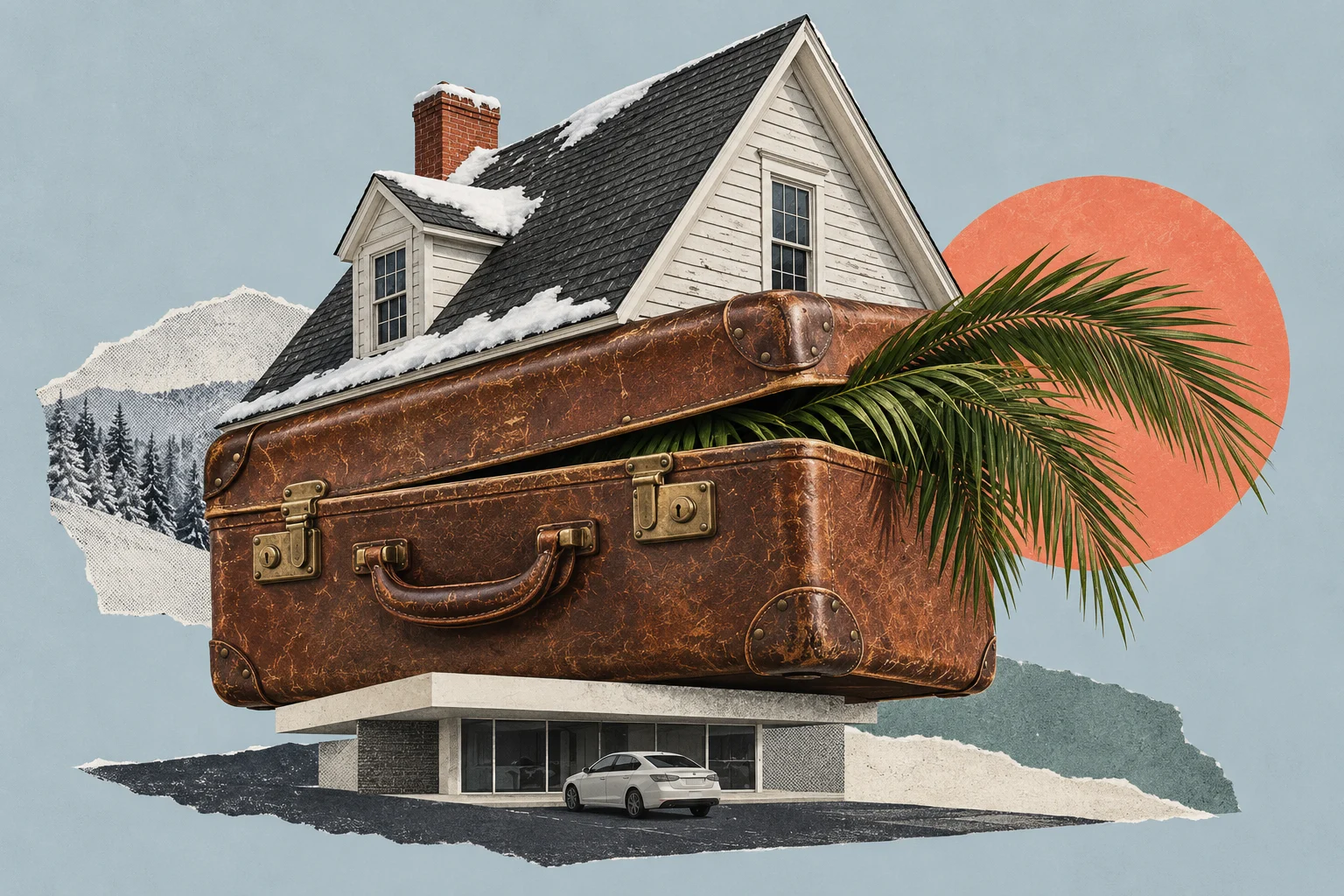
LePage left Maine for lower-tax Florida when his second term ended in 2018, returned in 2022 for a failed challenge to Governor Janet Mills, and now concedes he is a ‘snowbird,’ though he insists he is not in Florida year-round. His reported in-state address is an apartment above a car rental office in Augusta.
The mechanics favor Republicans on paper and cut against them in practice. House Speaker Mike Johnson campaigned for LePage in Bangor last week and called the race ‘top five’ nationally; Vice President JD Vance has stumped twice; Trump himself has not appeared in Maine. Democrats are increasingly favored to retake the House, and the 2nd District is the GOP’s best shot at flipping a Democratic seat untouched by redistricting. Baldacci, who lost the primary to Dunlap, thinks the environment explains the tightening: voters don’t want a ‘rubber stamp’ for Trump, and LePage ‘hasn’t had to play in this national political environment before, to this extent, when it’s going against him.’
The unresolved variable is the voters who dislike LePage and plan to vote for him anyway. Jeff Anderson, a retiree from Jonesport interviewed at a fall festival in Mars Hill, wished Golden had run again, then delivered a verdict on the former governor brief enough for LePage himself to admire: ‘He’s a jerk, but he did a lot of good things.’ How many of those voters exist, relative to the ones counting $6 heating oil against the Republican brand, is the number the $10 million is being spent to move.