
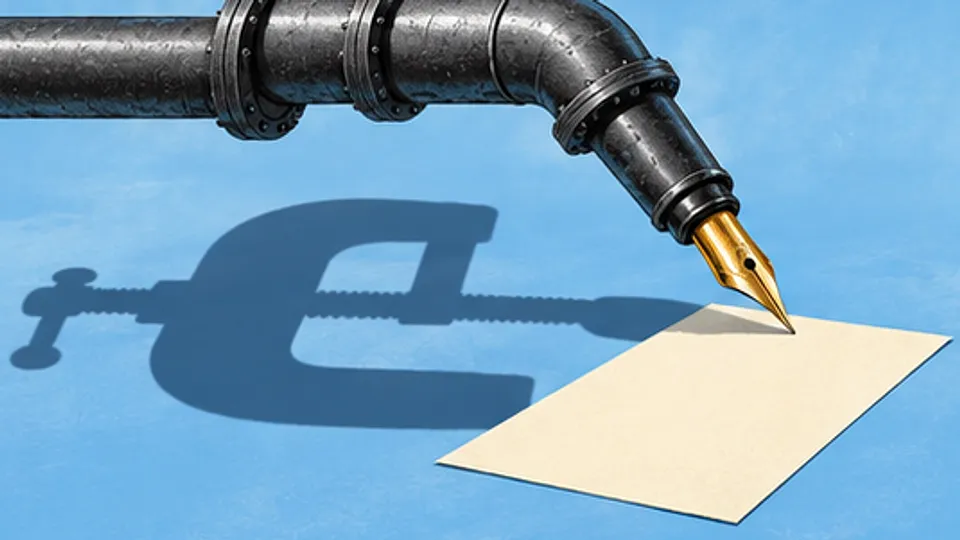
Negotiating with Donald Trump has a distinctive structure. In a normal trade negotiation, two sides argue over terms and then announce what they agreed. In this one, the U.S. president announces the agreement first — at a podium, with a number on it — and then the other side is invited to either sign it or discover what the alternative costs. The announcement is the negotiation. Everything after that is collections.
Exhibit A is the Alaska LNG project. Trump has announced South Korean participation in a $50 billion liquefied natural gas development; Seoul keeps saying, politely, that nothing is finalized and any participation depends on the project’s commercial viability and compliance with domestic legal procedures — the sort of language a finance ministry uses when it has read the press release and not found its signature anywhere. We noted the gap between the announcements and the fact sheet on this last week; the gap has not closed.
On Friday, a reporter asked Trump whether he had jumped the gun by announcing South Korea’s involvement. “I didn’t jump the gun,” he said. And then he explained his theory of the case, which is worth quoting in full:
If they don’t want to do it, that’s OK with me. I’ll just charge them more. Tell them if they don’t sign shortly, I’m going to double it up.
Double what up? Trump did not say, according to CNBC’s report of his remarks, which came via the White House. South Korean media raised the possibility that he meant tariffs — the all-purpose instrument — but the beauty of the threat, as a matter of negotiating technique, is its vagueness. A specific threat can be priced. An unspecified doubling can be anything, so Seoul has to model all of them.
The deal keeps getting BETTER
Meanwhile the deal itself is growing, at least in the announcing. On Truth Social on Friday, Trump said South Korea’s investment package “keeps getting BETTER” and unveiled an additional $8.4 billion enhanced oil recovery project — a technique that uses methods like carbon dioxide injection to squeeze more crude out of an oil field. South Korean local media, citing the country’s industry ministry, reported that the oil recovery project was not among the agreements reached between Seoul and Washington. The ministry said it was trying to verify Trump’s announcement and had contacted the U.S. through trade channels for clarification.
I want to be fair about what’s going on here, because there are two coherent readings. The charitable one is that this is anchoring: you announce a big number, you announce a bigger one, and eventually the counterparty signs something in the vicinity of the first number and calls it a win, and maybe it is. The less charitable one is that one side of the table believes it is announcing deals and the other side believes it is conducting due diligence, and those are different activities that cannot both be finished at the same time.
The background: the Alaska LNG project itself is a real, long-discussed, roughly $44 billion development whose backers have spent years courting Asian buyers, with Reuters reporting last year on U.S. efforts to drum up Japanese and South Korean support. So the pipeline is not imaginary. What is apparently still imaginary is South Korea’s signature on it, and the president’s position is that the signature is a formality whose delay will be monetized. “If they don’t want to do it, that’s OK with me” is a thing you say when it is extremely not OK with the people in Seoul whose phone is about to ring.