
The notice went up on the White House website late on Friday evening, at the hour when Washington has mostly stopped reading. President Donald Trump had signed an executive order putting on hold a sweeping package of sanctions against the Russian economy, and he told Congress the pause was in the national interest. Last month he had signed that same package into law himself. The law set its own deadline for the sanctions to take effect, and that deadline was two days away.
As the Associated Press reported, the White House offered no immediate explanation of how the pause served the national interest. The notification said only that a report setting out the decision had been submitted to Congress.
A law with a dead man’s name
The law carries the name of Lindsey Graham, the South Carolina senator, a close ally and friend of the president. In July he came home from Ukraine and, unexpectedly, died. He had spent years arguing that tighter American sanctions were the way to push Moscow to end its war. After his death his colleagues finished the work for him, Republicans and Democrats together, and Ukraine’s President Volodymyr Zelenskyy urged them on.
The record of that work is short. According to the bill’s legislative history, the Lindsey O. Graham Sanctioning Russia Act of 2026 passed the Senate 86–11 on August 7. The House accepted the Senate’s version 262–159 on September 16, and the president signed it on September 18. Four weeks later he set it aside.

The law, which Graham drafted with the Connecticut Democrat Richard Blumenthal, was written to cut off the money Vladimir Putin needs for a war he began by invading his neighbour more than four years ago. It targeted Russian officials and banks, and the shadow fleet of tankers that keeps Russian energy moving across the seas. It also directed the president to impose tariffs of up to 100% on the five largest importers of Russian oil or natural gas. Countries that buy less than 15% of Russia’s gas exports and have taken significant steps to cut those purchases were exempt.
One sentence on a Friday
Months of hearings, amendments and roll calls were undone by one sentence. The Hill quoted the order: “I am hereby waiving the application of such sanctions, restrictions, and duties provided for in the Graham Act.” The tariffs were paused too, shortly before they were due to begin.
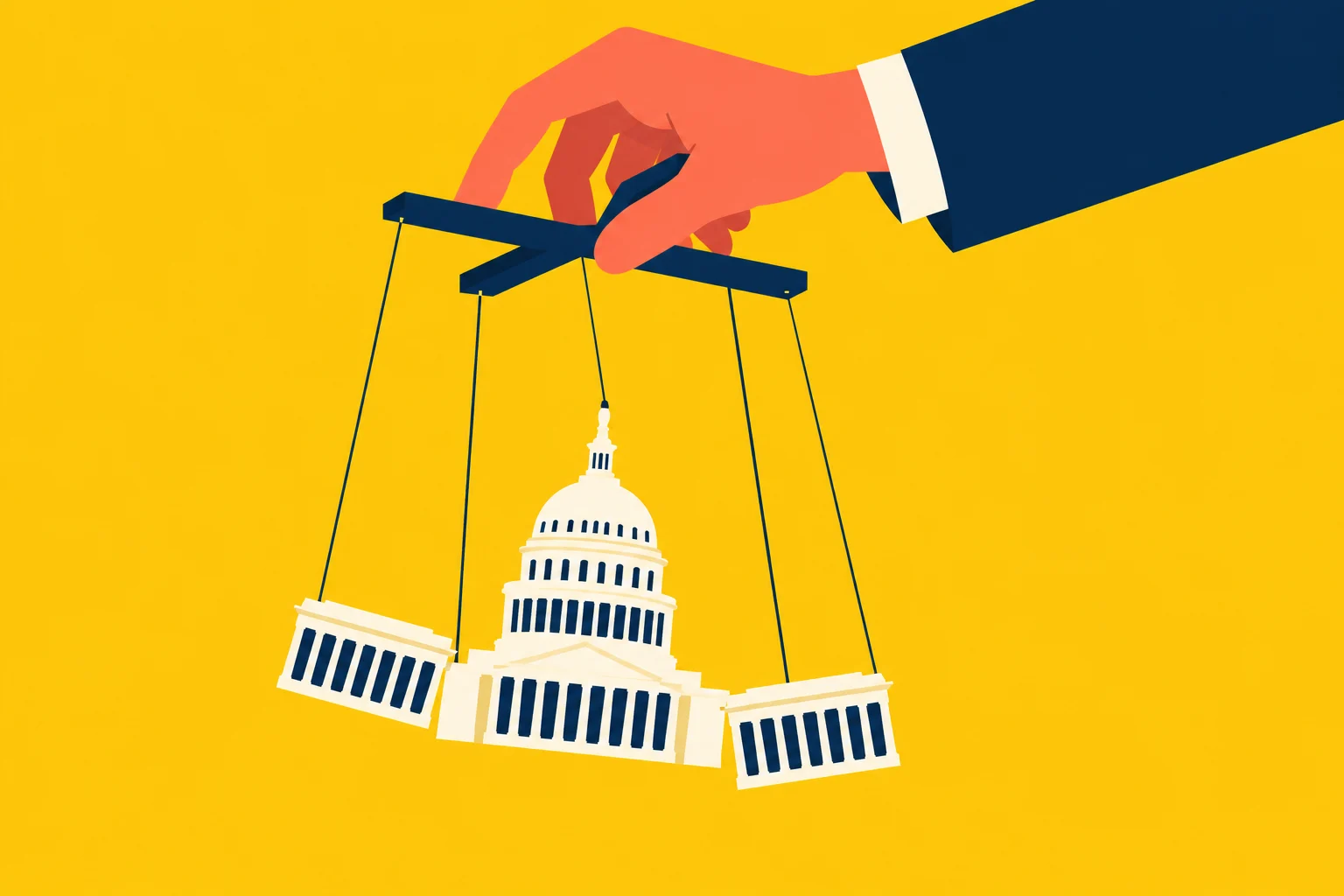
Here is a reflection, and only a reflection. Every legislature believes it is writing commands. Often it is writing options, and the person who holds the pen decides which options become reality. A law that can be waived is a request with a seal on it, and the man in the palace can decline it whenever the evening is quiet enough.
Diesel
The waiver came a week after Trump announced a diesel deal with Putin. By the president’s account, Russia would immediately supply more than 300,000 tons of diesel, then another 500,000 tons in November, then 1 million tons “immediately thereafter.” The stated aim was to bring down global energy prices, which according to the AP are high mostly because of Trump’s own war on Iran.

Members of both parties attacked the arrangement. They said it would help Russia fight its war in Ukraine and would do nothing for fuel prices. Earlier analysis had already found the deal unlikely to lower prices before the November 3 vote, and Zelenskyy said the American president had chosen “the wrong side”. Trump, for his part, has increasingly turned on Zelenskyy, blaming him for failing to reach a deal with Putin to end the fighting.
Ukraine’s soldiers and civilians are the ones left exposed. They have no vote in South Carolina and no seat in the Senate, and their fate moved a little on Friday night with the price of diesel.
The objections
Blumenthal, the surviving co-author, said in a statement that Trump was turning his back on “the majority of Americans, their representatives in both houses of Congress, and our European allies.”
These waivers have nothing to do with our national security, and everything to do with sucking up to Vladimir Putin.
Don Beyer, a veteran Democratic congressman from Virginia, had spoken against the bill while it was being debated. Within hours of the announcement he wrote on social media that he and others had “warned” that Trump might do exactly this. He called on Congress to “fix this flawed law to stop Trump from capitulating to Putin and ensure that it truly supports Ukraine.” His objection had been to the structure of the law, which handed a president large powers and then trusted him to use them.
The sister
The politics are awkward for one person in particular. Darline Graham, the late senator’s sister, was appointed to serve out the remaining months of his term. She co-sponsored the bill named for her brother, made it a centrepiece of her campaign, and is now running for the seat in her own right against the Democratic nominee, Annie Andrews. When the president signed the bill she said: “I wish Lindsey were here to celebrate this historic day.” She has Trump’s endorsement and is expected to campaign with him in South Carolina next week. NBC News reported that she had not criticised either the diesel deal or the suspension.
At a debate with Andrews in Columbia on Sunday, before the waiver, she said she had been “so proud” to help pass the measure. She also conceded that how it was used was the president’s business.
It gives the president tools that he can use if he so chooses, to end the war through economic sanctions. So that’s up to him as to whether or not he wants to use it, or whether he wants to use something else, but I think the purpose of it is to bring down the gas prices and ultimately end the war. And when the war ends, gas prices will fall.
Five days later, he chose.
The election is less than three weeks away. An AP-NORC Center for Public Affairs Research poll published on October 1 found that Americans disapprove of how the president has handled the Iran war and blame him for higher prices. His approval ratings are near historic lows, and Republicans are fighting to keep both chambers of Congress on November 3. In South Carolina, a woman is campaigning on her dead brother’s law alongside the man who has just suspended it.