
President Trump said on Tuesday that the United States would stop providing Israel $4 billion a year in aid beginning in 2027, though it would continue selling arms to its closest ally in the Middle East, the Associated Press reported.
Mr. Trump, speaking by phone to Fox News as Americans voted in the midterm elections, said Prime Minister Benjamin Netanyahu had approached him with the idea and that the two had been discussing it for a couple of years.
“You can consider it barter. You can consider military aid or cash,” Mr. Trump said. “Look, we give them $4 billion of things and money, and they don’t need it. And I was approached by Bibi Netanyahu, and we’ve been talking about it for a couple of years because it’s a lot of money.”
Mr. Trump also cast the aid as a political liability. He singled out Abdul El-Sayed, a Democratic U.S. Senate candidate in Michigan and a vocal critic of Israel, and even far-right conservatives long loyal to the president have questioned the relationship, with the commentator Tucker Carlson openly doubting its value.

“The left uses the $4 billion payment — that everybody knows about, it’s no secret — as a signal of unfairness,” Mr. Trump said. “And we can’t allow that to happen. I don’t like that, because it’s too easy. It’s almost too easy a target. And Bibi and I have been talking, and we’ve agreed. He was very understanding of it.”
Mr. Netanyahu’s office had no immediate comment. Yair Golan, a leader of Israel’s opposition bloc and a former deputy military chief, said an end to U.S. military aid would deal a “severe blow to Israel’s security” at a time when the country is fighting wars on multiple fronts. “The burden of funding defense needs at such a critical juncture will fall entirely upon the Israeli public,” Mr. Golan said in a statement.
The figure Mr. Trump cited tracks an agreement President Barack Obama signed in 2016, committing $38 billion in security assistance to Israel over 10 years, or $3.8 billion a year. Under its terms, Israel’s ability to spend part of the money on its own military products was to be phased out until all of it flowed to American military industries. Mr. Netanyahu has talked for years about weaning Israel off the aid. He told The Economist in January that he wanted to “taper off” U.S. military assistance over the next decade and said such a change was “in the works.”
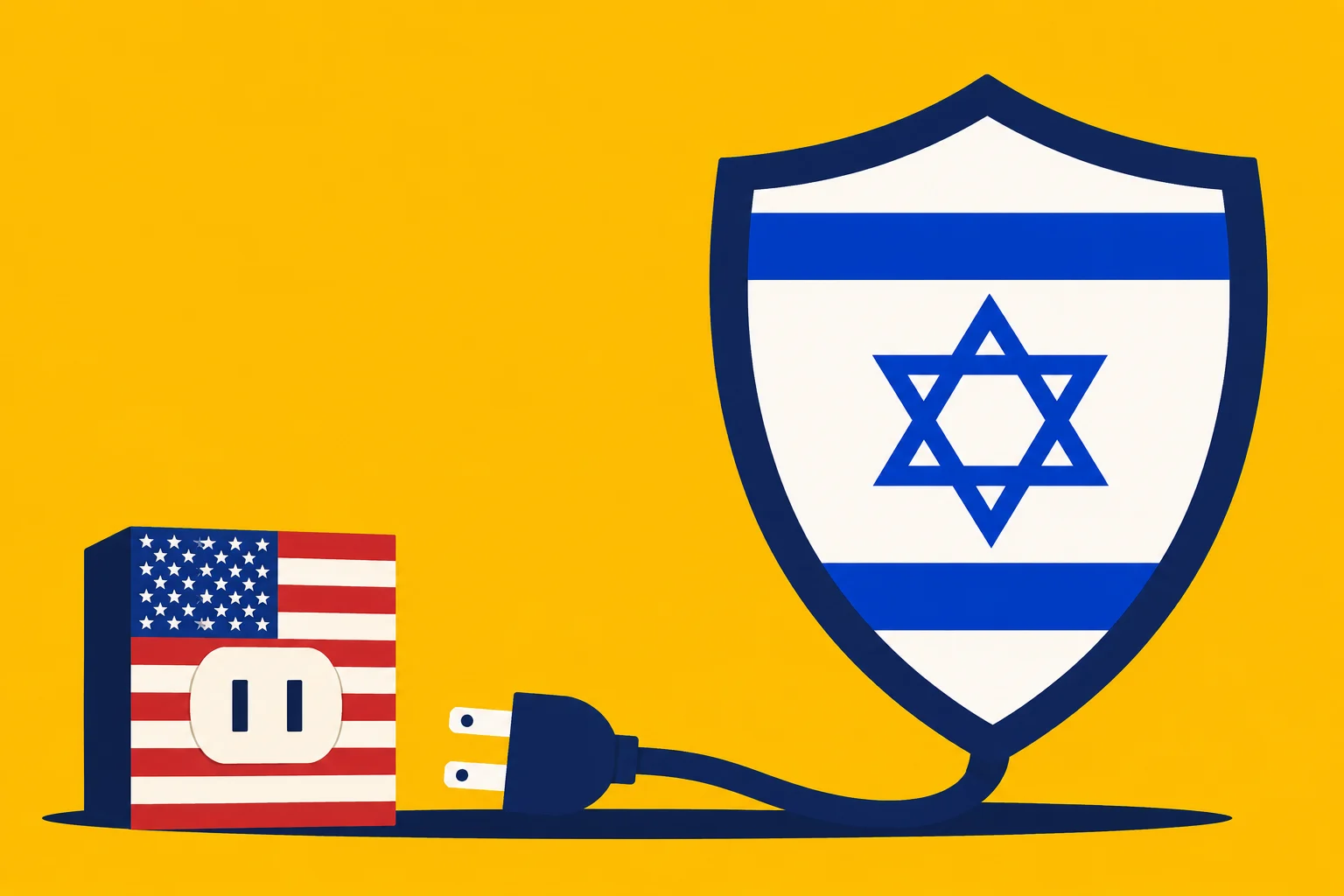
Unwinding the arrangement is not simple. The Camp David peace accords with Egypt obligate the United States to back both countries with security assistance, and much of the money comes as foreign military financing, which Israel must spend on American-made weaponry, returning the funds to the U.S. economy. Unless Israel plans to buy the same amount of American materiel on its own, U.S. defense contractors could feel an impact.
Actual spending has run far higher since the Gaza war began. A study published last year, on the second anniversary of the Oct. 7, 2023, Hamas attacks, found that the Biden and Trump administrations provided at least $21.7 billion in military assistance to Israel after the conflict started. A second study, by the Costs of War project at Brown University’s Watson School of International and Public Affairs, estimated that the United States had spent roughly $10 billion more on security aid and operations across the broader Middle East over the previous two years.