
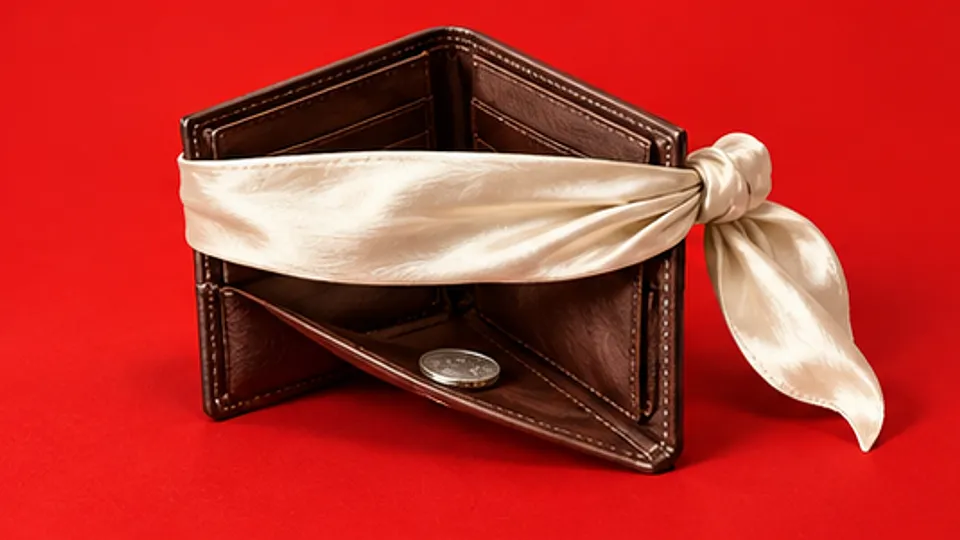
Here is how a midterm campaign currently works. On the Friday night four weeks before Election Day, President Donald Trump announced on social media that more than 20 million seniors would be getting a check. He described it as nearly $100. The White House [fact sheet](<https://www.whitehouse.gov/fact-sheets/2026/10/fact-sheet-president-donald-j-trump-announces-medicare-improvement-fund-payments-for-seniors/>) set the figure at $90 per person, a one-time payment to help Medicare Part B enrollees cover their premiums, paid out of something called the Medicare Improvement Fund. Multiply it out: $90 times 20 million people comes to about $1.8 billion, landing in bank accounts in October, which is a month known for having a large election at the end of it.
Where does $1.8 billion come from? According to [STAT](<https://www.statnews.com/2026/10/04/trump-announces-90-dollar-payments-for-medicare-premiums/>), Congress set up the Medicare Improvement Fund in 2008 as flexible money to improve how the program runs and pays providers. KFF’s Larry Levitt told STAT that no earlier administration had used it like this, but that the language governing the fund “is quite broad and gives substantial discretion to the administration.” So, basically, a pot of money meant for fixing Medicare’s plumbing has been turned into a refund. STAT also reported that people on Medicare Advantage do not qualify, and that, per KFF, they make up more than half of eligible beneficiaries. Total monthly Part B costs “start around $200,” STAT says, so the check covers somewhat less than half of one month.
That is the small promise. The big one came last month, when Trump said every American adult would get $5,000 if Republicans win the midterms. I’m not going to model the cost of that, because it depends on a condition that hasn’t happened yet. Arizona Sen. Mark Kelly, on CBS’s “Face the Nation,” described the payouts as “trying to buy votes.” Strictly speaking, the $5,000 version is more like a contingent payment, owed only if the votes come in.
Do not look at your checkbook
The money exists because voters keep saying they are broke. The White House’s position is that this is mostly a polling problem. “Ahead of an election cycle, the fact that there’s possibly partisan pollsters telling us that the people are really, really depressed, it’s a classic Democrat move,” Kevin Hassett, director of the National Economic Council, told CNN’s Jake Tapper on Sunday. Hassett put high grocery prices down to former President Joe Biden and said Friday’s government data, which showed only 29,000 jobs added in September, was an outlier.
The awkward part is that a Republican senator disagreed on live television. Louisiana’s John Kennedy, on NBC’s “Meet the Press,” said the cost of living was the biggest issue and that “we (keep) telling them not to believe their own lying checkbooks.” He added: “The American people, both sides, feel anger. If they don’t feel anger, they feel deep melancholy.” As a theory of the electorate, “anger or melancholy” does not offer a lot of upside. (rews has covered this bank-account problem before.)
The polls agree with Kennedy. In a CBS News survey, 70% of voters said Trump’s policies were pushing prices up, and 56% said his policies were responsible for today’s economy, against 20% who blamed Biden. An AP/NORC poll found 69% of adults rating his handling of the cost of living worse than they had expected. And a [Reuters/Ipsos poll](<https://www.detroitnews.com/story/news/politics/2026/10/05/trump-approval-hispanic-voters-republicans-reuters-ipsos-poll/92108622007/>) completed Monday put his overall approval at 32%, the same as September’s record low. CNN notes that the Iran war has pushed gasoline and diesel prices up and there are few signs they will come down in time to make a difference.
Defending the home office
You can see where a campaign thinks it is in trouble by where it sends the candidate. Trump spent Friday in Alabama, asking voters there to “pretend I’m on the ballot,” and Saturday in Ohio, a state he carried by 11 points in 2024 where the Senate race is too close to call. There he promised the crowd, “We’re going to win big, and we’re going to shove it up their ass.” New York Times/Siena polls showed Democrats ahead for Republican-held Senate seats in Alaska and Texas, and no clear leader in Ohio, Kansas or Iowa, all states Trump won comfortably. On Friday a leading GOP super PAC paused its spending in North Carolina, where Republican Michael Whatley trails. Democrats need a net gain of four Senate seats. In the House they have 214 seats to the Republicans’ 219, a count that includes one independent who caucuses with the GOP. (More on the map here.)
The most worrying numbers for Republicans may come from Latino voters, who swung toward Trump in 2024. An NBC/Telemundo poll found that Latino voters prefer Democrats to win Congress by 24 points, with 27% approving of Trump overall. The Reuters/Ipsos poll had Hispanic approval at 24%, the lowest of either term, and 52% of Hispanic voters planning to vote Democratic against 26% Republican. Al Jazeera reported that as Hispanic voters being twice as likely to back Democrats. CNN points to backlash against the deportation campaign, which matters a lot in Texas, where Democrat James Talarico is trying to win his party’s first statewide race in more than 30 years.
California’s Central Valley is a good place to watch this. On Sunday, in 105-degree heat in Bakersfield, Bernie Sanders rallied hundreds of people for Randy Villegas, a 31-year-old progressive community college professor and the son of Mexican immigrants, who is running against Republican Rep. David Valadao in the toss-up 22nd District, CalMatters reported. One detail stands out. According to CalMatters, the Congressional Leadership Fund, the super PAC aligned with House GOP leadership, spent more than $100,000 on primary mailers that raised Villegas’s profile and helped him get past the more moderate Jasmeet Bains. The plan was to pick the opponent it wanted to run against. A spokesperson for the National Republican Congressional Committee now calls Villegas “a rubber stamp for Bernie’s socialist agenda.” Victor Martinez, the Republican mayor of Mendota, spoke at the rally and said he was “ashamed” of Valadao over Medi-Cal cuts.
South Carolina
Then there is South Carolina, where Trump backed the appointment of Darline Graham to the seat left by the sudden death of her brother, Sen. Lindsey Graham, his close friend. His MAGA Inc. PAC spent more than $800,000 to help her win the primary runoff. Two weeks ago the Cook Political Report moved the race from solid to likely Republican, and Trump allies told CNN they are worried about her polling. On Monday, Trump attacked the Democratic nominee, pediatrician Dr. Annie Andrews, on Truth Social with an anti-transgender slur, using a version of it three times. Andrews did not mention it in her reply. “If you care more about your bills than the politics in Washington, this campaign is for you,” she said.
So the Democrat in South Carolina and the Republican senator on “Meet the Press” have settled on the same closing message: look at your bills. The White House’s answer is a $90 check that, for most people who get one, will turn up on their bank statement.