
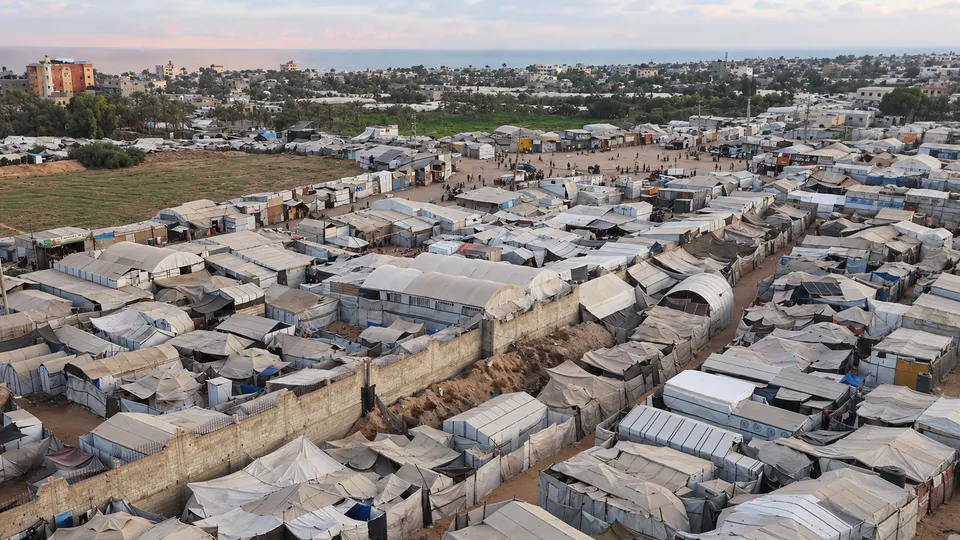
One year after a US-brokered ceasefire in Gaza took effect on October 10, 2025, the ledger for the body that brokered it is short. Israeli forces have expanded the territory they control inside the strip, Palestinians have continued to come under attack and be displaced, and the analysts Al Jazeera surveyed say President Donald Trump’s Board of Peace has failed to secure a lasting peace.
The board’s mission, as Shola Lawal lays out for Al Jazeera, was defined in Trump’s 20-point Gaza peace plan, the same document the ceasefire rested on. The plan required Hamas to release all Israeli captives and sketched a later phase of Israeli withdrawal, Palestinian governance and reconstruction. Lawal describes the war the ceasefire was meant to end as genocidal; Israel rejects that characterization, but the framing reflects how the outlet covering the anniversary sees the stakes.
On paper, the architecture exists. A January 2026 White House statement notes that UN Security Council Resolution 2803, passed in 2025, endorsed the 20-point plan and welcomed the Board of Peace, assigning it “strategic oversight,” the mobilization of international resources and “accountability” as Gaza transitions. The board’s own published roadmap commits the parties to “securing the complete Israeli withdrawal from Gaza Strip” and enabling Palestinian governance and reconstruction. Those are the commitments; the measurement is where the anniversary piece does its work.
The measured record, twelve months in, runs the other way. The photograph over Lawal’s report shows residents searching the rubble of a building in Gaza City after overnight Israeli airstrikes on October 9, 2026 — one day before the ceasefire’s anniversary. Independent tallies point the same direction: more than 100 aid groups say Israel is still killing daily in Gaza and blocking reconstruction, and only 42 of Gaza’s 666 health facilities still function. The board has also spent some of its authority narrowing the reconstruction it oversees: in September it ruled that UNRWA, the UN refugee agency for Palestinians, would have no role in rebuilding the strip — a position Hamas said matched Israel’s.
Outside assessments match the Al Jazeera framing. A nine-month tracker published by J Street, covering April 15 to July 15, 2026, found “little progress” toward implementing the plan’s second phase and described the humanitarian situation in Gaza as an ongoing catastrophe.
The number that defines year two is the withdrawal line. The roadmap promises complete Israeli withdrawal; twelve months after the ceasefire, Israel controls more of Gaza than it did when the deal was signed. Whether the Board of Peace’s oversight can reverse that direction — or whether it functions mainly as a name on Resolution 2803 — is the test its second year will be graded on.