
Here is a fun regulatory trick. You want to build a big thing, and the thing needs approval from a series of commissions. You get it most of the way through. Then you announce the thing will also do a second, quite different job. Then you file the final paperwork for the big thing, and the second job isn’t in it. Asked about that, you say the building can still do the second job. It just isn’t what’s being approved right now.
That is roughly where President Donald Trump’s 250-foot triumphal arch stands. On Friday the administration released final plans for the arch, and as CNN reported, the documents, published by the National Capital Planning Commission, leave out the drones, the snipers and the ammunition store that Trump had recently offered as a reason to build it. The plans describe the project as a “ceremonial gateway” to the nation’s capital, with no national security purpose visible anywhere in them.
The national security purpose dates to September 20. In a social media post that day, PBS NewsHour reported, Trump said that at the military’s “strong request” he had agreed to turn the arch “into a top grade Military Complex/Triumphal Arch, to house, store, and have the rapid ability to use large numbers of drones,” with snipers on the roof and the plaza and large quantities of sniper ammunition kept in storage. At the time, the Pentagon said it knew nothing beyond the president’s statement. So the military’s strong request was news to the military, or at least to the part of it that answers reporters.
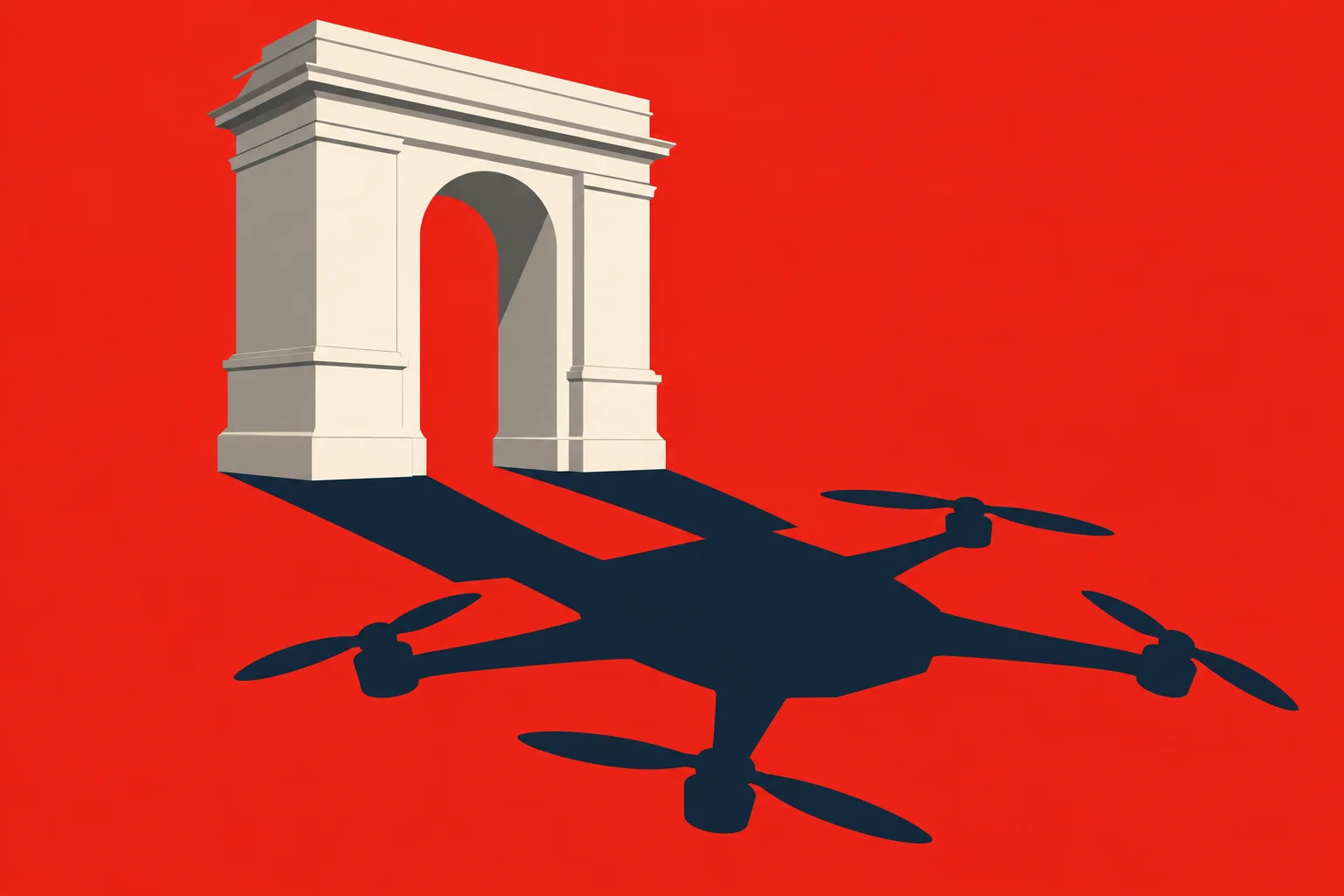
Now it’s gone from the plans. Sort of.
An Interior Department spokesperson told CNN on Saturday that the current design can accommodate the national security functions Trump described in his post, and that the arch will “enhance the visitor experience at Arlington National Cemetery for veterans, the families of the fallen, and all Americans alike.” Those are two separate claims about one building: it’s a place for visitors, and it’s also capable of being a sniper nest. Plenty of buildings fit both descriptions in the strict sense that you could put a sniper on the roof. Usually nobody says so in a press statement.
Two tracks
The more interesting part is the process. Last week the Advisory Council on Historic Preservation, a little-known independent federal agency inside the executive branch, held a private call on the arch. According to two sources close to the matter who spoke to CNN, the agency said any analysis of the arch as a military asset would be handled separately from the construction plans, which have already been moving through historical review and approval. That separate evaluation of what a military complex would do to the site’s history has to be requested by the Department of Defense. The Defense Department hasn’t asked.

So there are two tracks. On one, a ceremonial gateway gets reviewed and approved. On the other, nothing has happened yet, because nobody has started it. The effect, as CNN put it, is to sidestep the question of whether the arch would have to go back through the key commissions. Picture it from the regulator’s side. You spent months reviewing a monument. Someone then says it’s also an armed drone base. In the ordinary way of things you’d want to look at the plans again. If the drone base never shows up in the plans, though, there’s nothing new for you to look at. The drone base could arrive later through a door you don’t control, or it could never arrive at all. Either way the monument gets built.
The monument has done well so far. The Commission of Fine Arts, whose members are all Trump appointees according to PBS, has approved the plans without the military complex. The National Capital Planning Commission approved the site and preliminary plans in July and hasn’t given final approval. The administration is hoping to get it at the commission’s November meeting.
The circle
The arch would sit in Memorial Circle, the traffic circle linking Washington to Virginia, directly across from Arlington National Cemetery, with an observation deck looking over the cemetery. For scale, according to Wikipedia’s entry on the project, you could stack the 70-foot White House on the 99-foot Lincoln Memorial and still come up 81 feet short of 250.

Veterans suing to stop it argue that a structure that tall would break the solemnity of funerals at the cemetery. Preservationists argue it would interrupt the line of landmarks that includes the Lincoln Memorial, Arlington House and the Robert E. Lee Memorial. The lawsuit, brought by three veterans and an architectural historian, argues that a commemorative work in the capital needs approval from Congress, among others. When the drones were announced, their lawyer, Nicolas Sansone, called the security rationale a “belated” effort that does nothing about what he sees as the project’s basic legal flaw. I don’t know whether anyone at the White House thought a military installation would be easier to get past that argument than a monument. But the final plans make that question harder to test, because they show a monument.
The security argument has been used before. Trump made much the same case for building a White House ballroom where the East Wing used to be, and the arch is one of several projects he is pursuing to remake the capital, many of them now tied up in fights with preservationists. The drones weren’t a clean fit for this site to begin with: Rep. Don Beyer pointed out in September that a drone base there would sit in the landing path for Reagan National Airport, a problem that goes away if the drones exist only in a Truth Social post.
The Pentagon, which got a new drone warfare command only last month, referred CNN’s questions to the White House. The White House didn’t respond. As Reason noted at the time, the military use was never part of the original federal review. It still isn’t. The groundbreaking was supposed to happen in September.
Anyway, if the military really did strongly request a sniper post at the entrance to Arlington National Cemetery, it can make the request in writing. The Advisory Council on Historic Preservation is waiting for the paperwork.