
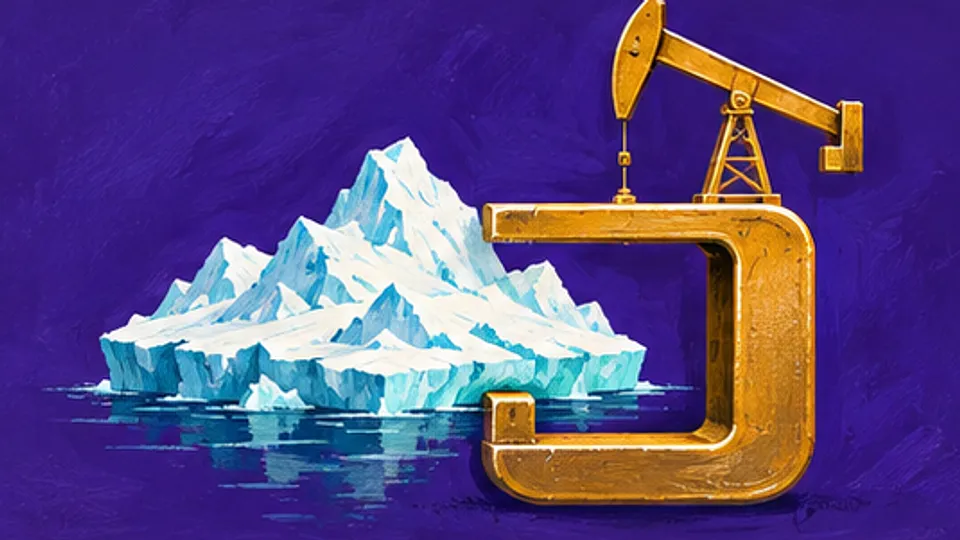
Early on Wednesday, Donald Trump posted on Truth Social that “Massive Oil, Gas, and Mineral Exploration is getting ready to begin in our new and beautiful Greenland!” He went on: “There are Experts that are saying that the amount of easily available Oil is far greater than that of almost any land, anywhere in the World.” He gave no further details, and no timeline either, so the obvious question is who exactly is getting ready, and with whose permission. On the second point the answer looks fairly clear, and it is not Trump’s. (Rews covered the post itself on Wednesday.)
Begin with the contract. On September 22, at the UN General Assembly, Trump signed a 10-page agreement with Danish Prime Minister Mette Frederiksen and Greenland’s Prime Minister Jens-Frederik Nielsen, according to Al Jazeera and Reuters. The US gets to expand the Pituffik Space Base and set up new bases at Narsarsuaq and Mestersvig, roughly 950 miles apart. Any of the three parties can propose more “defense areas,” subject to the others’ approval. The deal has no expiry date, and it bars non-NATO countries from setting up bases on the island unless the parties agree. It mentions “minerals cooperation” but does not say what that means. It also, as Fortune put it, gives the US no special exploration rights, though it does limit investment by non-NATO countries in strategic sectors. It reaffirms Danish sovereignty, and it would still apply if Greenland one day chose independence.
So America got the bases and China got kept out. Who gets the oil was left alone. On Wednesday the Danish Foreign Ministry made that explicit: the agreement “did not allocate any rights for mining or drilling,” the old extraction rules still stand, and the deal “does not grant investors from the US any preferential treatment” compared with investors from other NATO and EU countries. In other words, if “our” Greenland means anything legally, it means “ours, the same way it is Norway’s.”
That matters because Greenland’s rules are strict. In 2021 the island banned uranium mining and all future oil exploration. Anyone drilling now has to fit through a gap in that ban, and in practice there is one company standing in the gap.
The one well
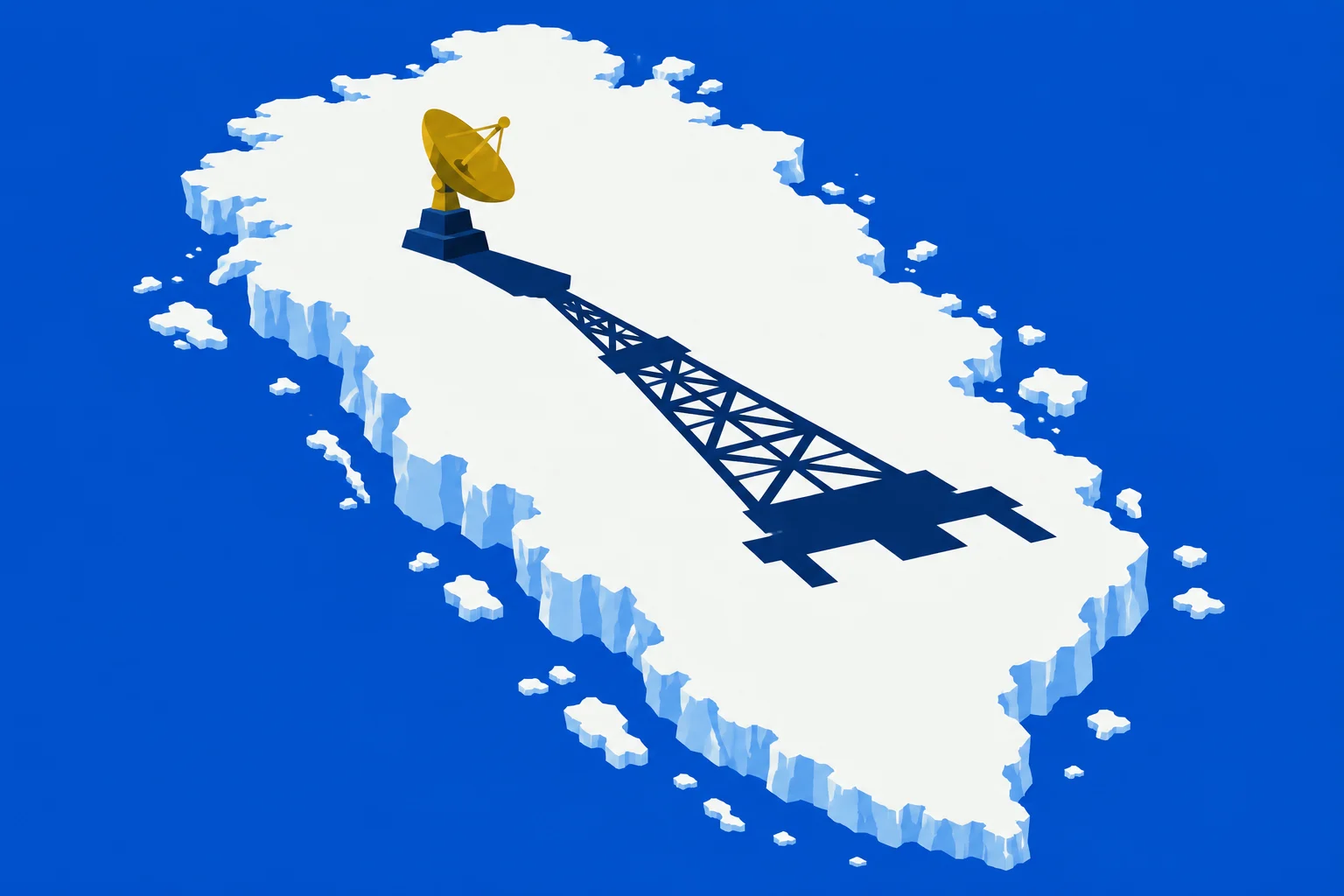
That company is Greenland Energy, which is based in Texas. It has said it will pay 100% of the costs of up to two exploration wells in the Jameson Land Basin in East Greenland, a basin no one has ever drilled, just south of Mestersvig. In exchange it can earn up to a 70% interest in the project. The licences belong to its partner, 80 Mile, through a subsidiary called White Flame Energy. They are two permits from 2015 and one from 2018, all granted before the ban. Greenland’s government is still reviewing whether Greenland Energy can rely on them.
The project’s summer did not go well. In late July a barge brought an excavator and more than a dozen containers ashore without approval. In August, as The Independent reported, Greenland’s government issued a “strong warning” that no permission had been given to land the drilling materials on the east coast. The Globe and Mail reported that the government then decided the environmental and social reviews could not be finished in time for drilling this winter. The campaign is now pushed back to winter 2027 at the earliest. Jørgen Hammeken-Holm, who heads Greenland’s mineral resources ministry, told Danwatch that drilling permits could not come before November 8 at the earliest. That falls after the short window for getting heavy equipment into the basin before the fjord freezes, and Tech Times reported that it contradicted what the company had recently told its investors.
Put that together and the “massive” exploration that is “getting ready to begin” is, as far as anyone can tell, up to two wells that cannot start for about a year, on licences whose status is under review, by a company its regulator has already scolded once.
The geology has a long record of disappointing people. ExxonMobil, Shell and Eni have all explored in Greenland since the 1970s and none of them made a major discovery. No effort has ever moved past the exploration stage. The US Geological Survey has identified major potential offshore oil and gas deposits, but they sit under Arctic ice, and the island’s rare earths are locked in rock. With no energy infrastructure and nowhere to process anything, analysts question whether mining them makes economic sense. Wood Mackenzie’s analysts put it this way: “Despite its hydrocarbon and critical mineral potential, Greenland is not Venezuela 2.0.”
Why post it now
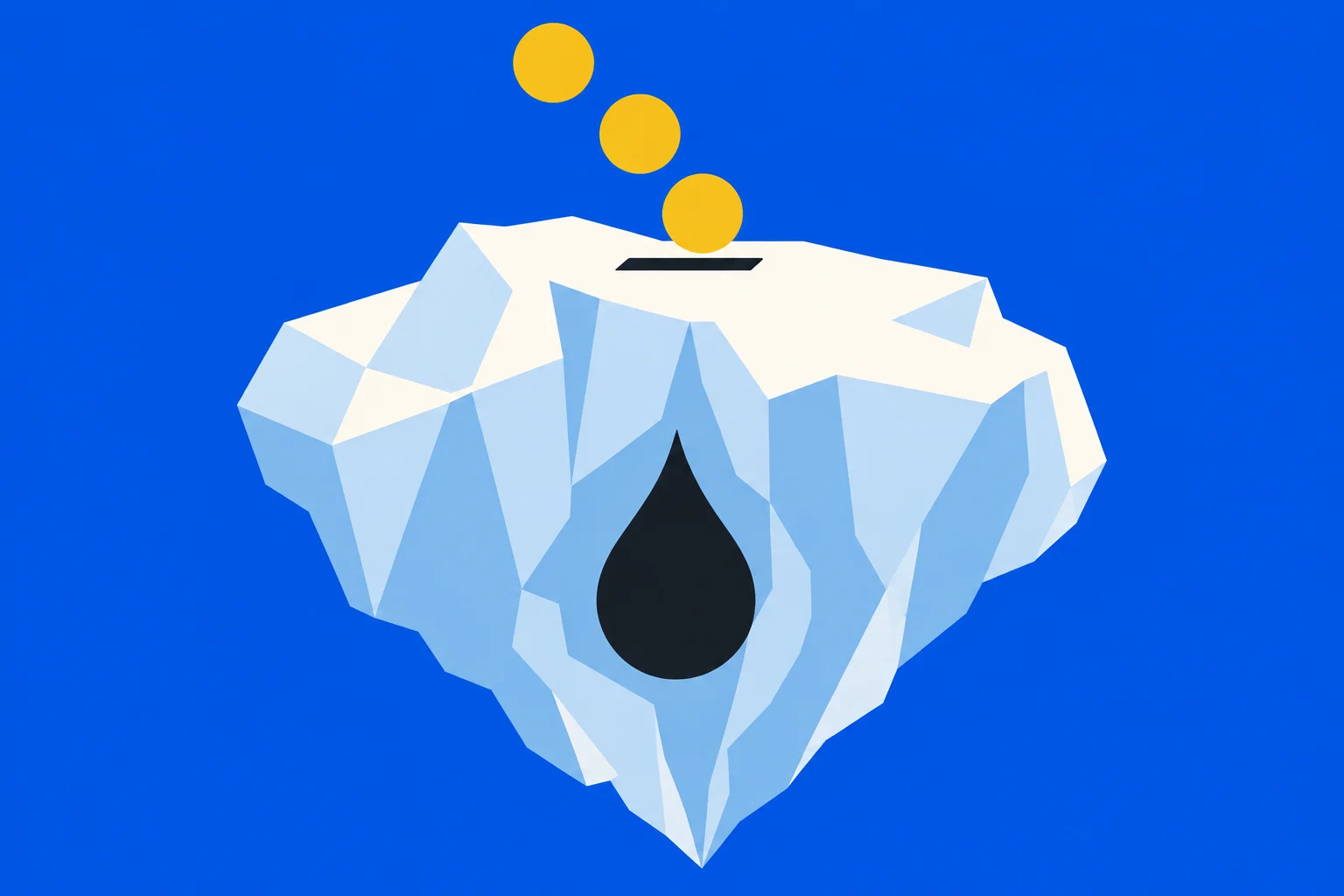
The post went up after a Tuesday campaign event in Wasilla, Alaska, where Trump was backing Republican Senator Dan Sullivan against the Democratic former congresswoman Mary Peltola. Fortune noted that energy prices are rising because of the Iran war and judged that the post was likely aimed at worried voters before next month’s midterms. That would explain a lot. Oil announcements do not need oil to work as politics. They only need to be announced.
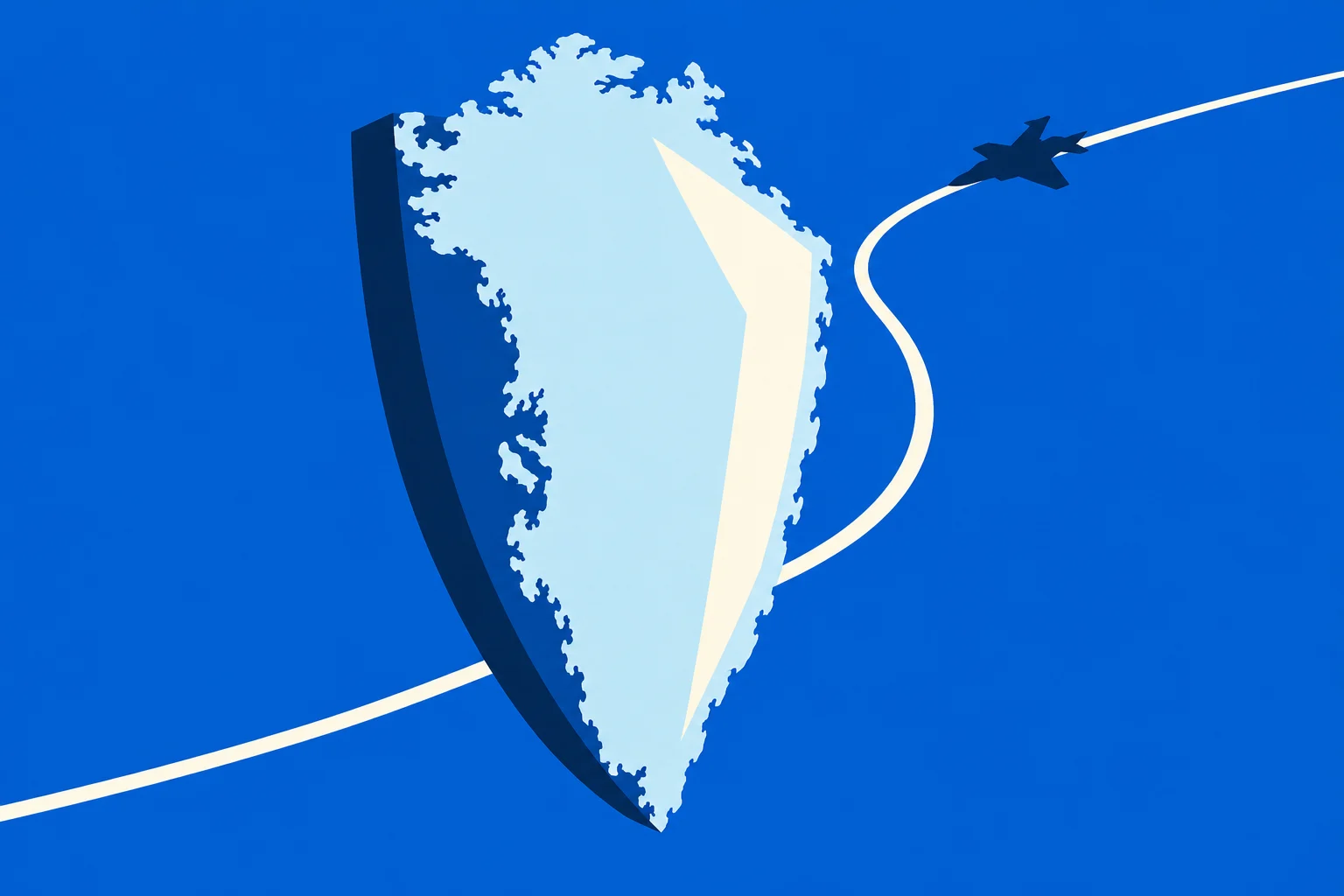
The rest of the post was about defence: “Any future attack on the United States will have to come across Greenland, where our Defense will routinely knock down drones, missiles, or any other form of weapon not yet even conceived. It gives us time, location, and sightline, like nowhere else in the World!” That part at least matches what the deal covers. Mestersvig looks out over the GIUK gap, the stretch of sea between Greenland, Iceland and Britain that Russia’s Northern Fleet has to cross to get to the Atlantic. The US once had thousands of troops on 17 bases and installations in Greenland. Today it has roughly 200 soldiers at Pituffik.
In Nuuk, the agreement still needs a second reading before a vote, and lawmakers are expected to pass it. Pele Broberg, chair of the opposition party Naleraq, said in Monday’s debate: “The US is granted extensive rights in our country. The people of Greenland are not guaranteed any fixed payment for those rights.” Vivian Motzfeldt of the governing coalition’s Demokraatit, a former foreign minister, replied that Greenland had won “massive” protection without paying for it, plus recognition as an autonomous nation. Naaja H. Nathanielsen, who represents Greenland in the Danish parliament, told TV2 she thought Trump wanted attention and that she did not read anything into “our Greenland.”
Others were less relaxed. Jacob Kaarsbo, a Danish security policy adviser, said it would be “extremely dangerous” to believe the deal had changed Trump’s intentions. Mikkel Olesen of the Danish Institute for International Studies said news coming mostly from Washington should be taken “with a grain of salt.” Richard Weitz of the NATO Defense College said Trump had “backed down and settled for less” but “got pretty much everything he wanted, except formal annexation.” In January, Denmark’s defence ministry was warning that troops would have to “immediately take up the fight” if Greenland were invaded.
Since then the US has moved on to talking about Greenland’s oil, and the oil turns out to be governed by Greenlandic permits. For now, the most concrete sign of US drilling on the island is an excavator that came ashore without permission and is waiting for a regulator in Nuuk.