

Here is how you sell a new Wi-Fi router in the United States in 2026. First, you make it in America. That’s it. That’s the rule. If your router was manufactured, assembled, designed or developed anywhere else, which describes approximately all routers, then since March it has been on a federal list of things that cannot be imported or sold, and your only way out is to ask the Pentagon or the Department of Homeland Security for an exemption. Those exemptions are decided in secret.
TP-Link, which may be the biggest seller of routers to American homes and small businesses, has asked. It has not been told yes. As Jon Brodkin reported for Ars Technica, its older models, approved before the ban, are still on shelves, but its new Wi-Fi 8 routers can’t come in. Plenty of its competitors have already been let through.
The list
The mechanism is the FCC’s Covered List, which a 2020 law created for products that “pose an unacceptable risk to the national security of the United States or the security and safety of United States persons.” For its first few years it named specific companies: Huawei, ZTE, Kaspersky Lab, some video surveillance makers, some Chinese telecom carriers. If you wanted to know what not to buy, you read the list. On March 23 the FCC added a whole category: every consumer router made abroad. The entry on the list is a single sentence: “Routers produced in a foreign country, except routers which have been granted a Conditional Approval by DoW or DHS.” Foreign drones, robotic devices and power inverters have since gone on the same way.
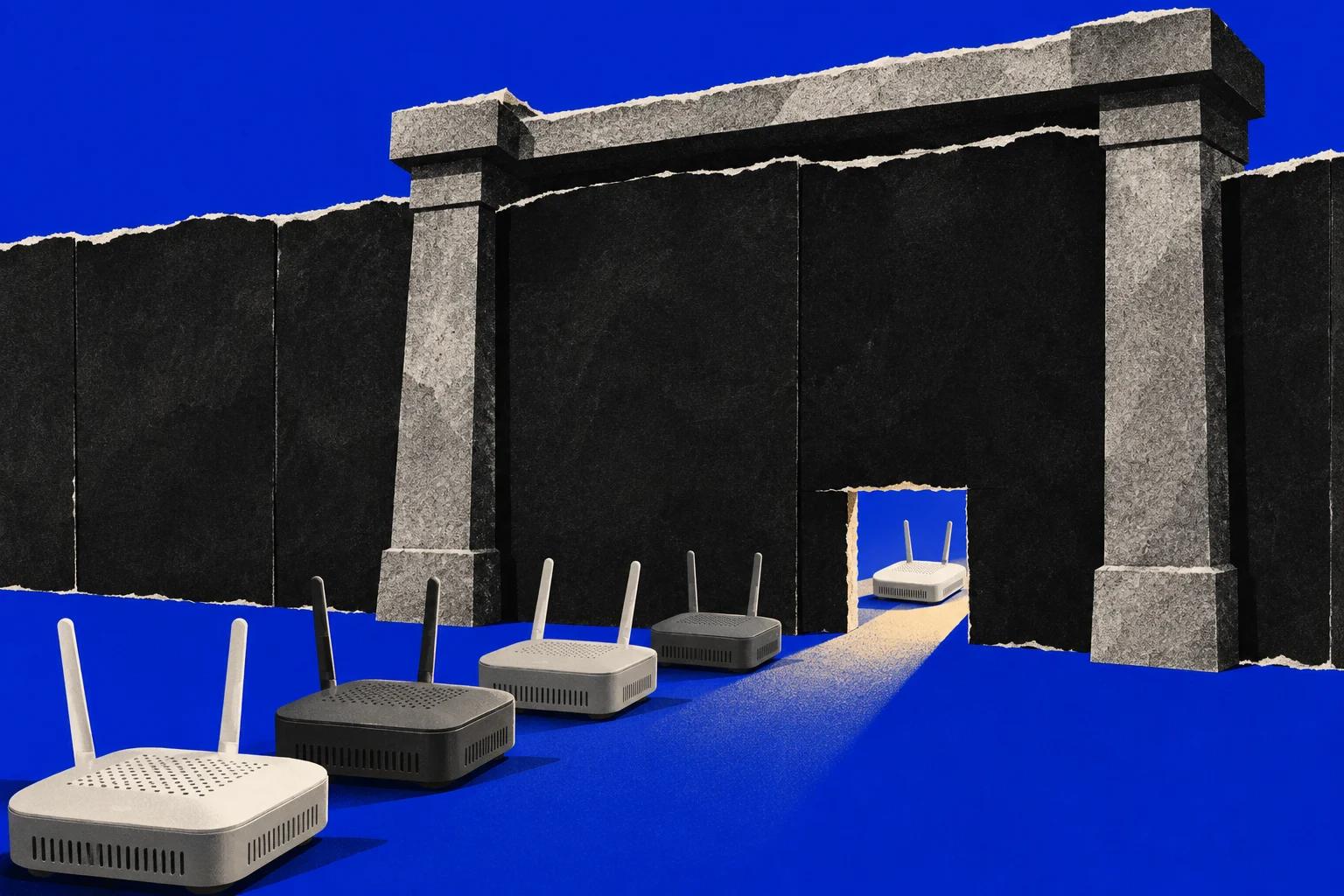
That is a different kind of list. The old version said “this company is dangerous.” The new one says “everything is dangerous until we tell you it isn’t,” which means the valuable thing is the exception rather than the rule. If you are a router company, your business now depends on getting a permission slip, and the people who sign permission slips have a lot of leverage.
Those slips are formally called conditional approvals, though most people call them waivers, and 26 have been issued. The recipients include Netgear, Asus, Adtran, Calix, Nokia, Micro-Star International, Askey, Zyxel, Humax and Vantiva. SpaceX’s Starlink got one for its routers. Amazon got one that covers the routers for its Leo satellite broadband service and the devices sold by its Eero subsidiary. Elon Musk and Jeff Bezos, two businessmen the administration likes, are doing fine. Nobody outside the government can tell whether every applicant faces the same security test or whether some of them just get waved through. The Pentagon declined to comment on TP-Link’s request, and the FCC and DHS gave no comment either.
The case TP-Link has to make
TP-Link’s problem is its history. It was founded in China in 1996, and a congressional hearing last year floated the idea that its routers are Chinese-controlled technology. The company says it has since become two companies. The American one made California its global headquarters in October 2024, months after finishing what it calls a “formal organizational separation.” Its position is: “TP-Link has split from and no longer has any affiliation with TP-LINK Technologies Co., Ltd., which serves the mainland Chinese market. Despite having similar names, these companies have entirely different ownership, management, and operations.”
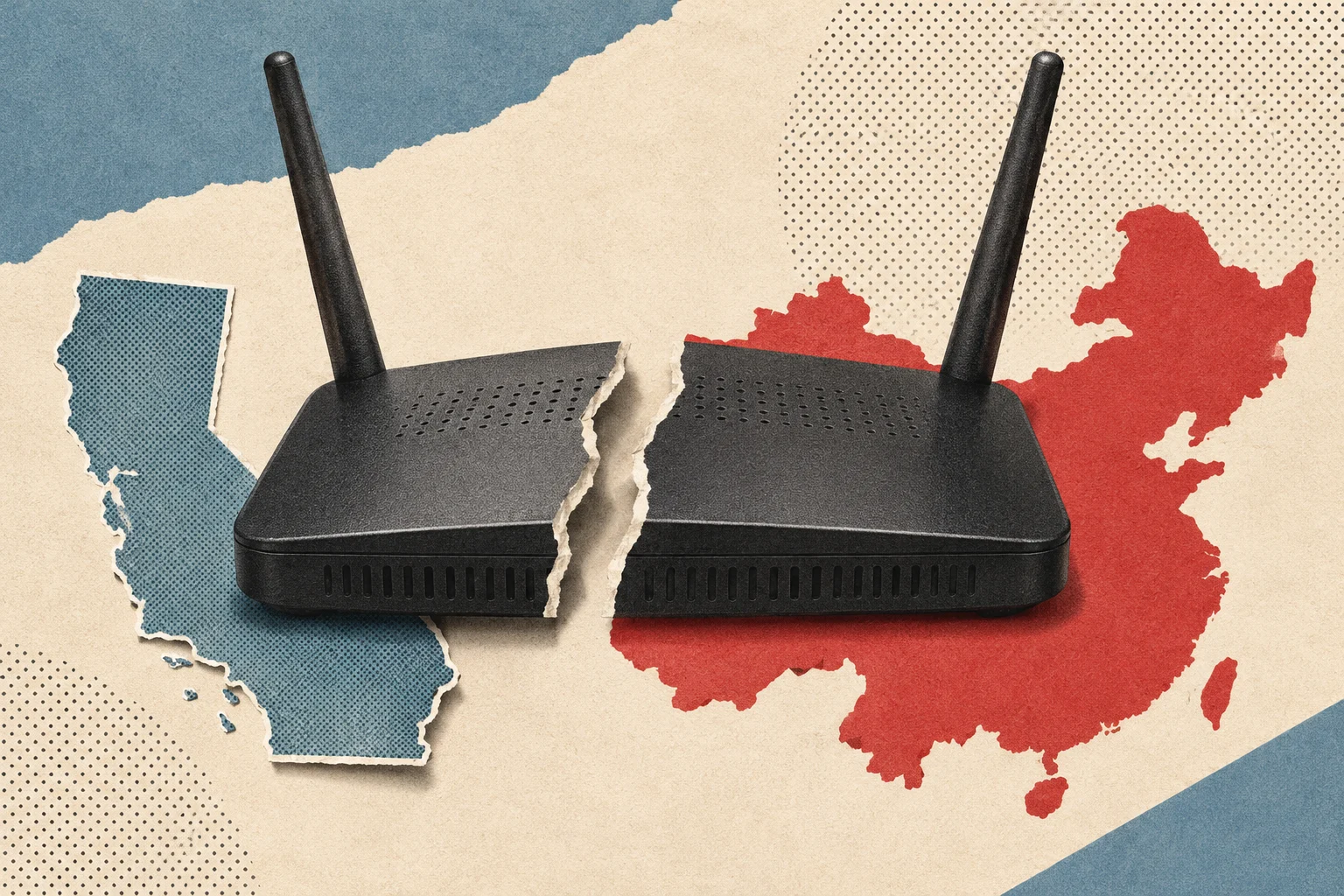
It has promised to assemble all of its new routers in the US. Its October filing offered a factory investment of nearly $1 billion, payable once approval comes through. That’s a reasonable offer if the test is “are you building things in America?” It’s less clearly relevant if the test is “can China get into your boxes?” Because the review is secret, TP-Link can’t know which test it’s taking, and neither can anyone else. Meanwhile state attorneys general keep suing it over alleged ties to the Chinese government.
The product being held up is the Archer 8 Ultra, the company’s first Wi-Fi 8 router. It went up for preorder outside the US in September, is expected to ship this month, and costs £899.99 in the UK, roughly $1,178. Most American households will survive without it. The bigger issue is that every TP-Link model from now on faces the same gate, and nobody knows whether or when it will open.
Equally awful
The security record is real but not unique to TP-Link. Microsoft said in 2024 that TP-Link routers made up most of a botnet run by Chinese threat actors. The Justice Department said in 2023 that Chinese state-sponsored hackers had hijacked a botnet built partly from routers made by Cisco and Netgear, both American companies. Netgear has its approval. The security expert Bruce Schneier told Ars he saw no reason to think TP-Link’s routers are worse than anyone else’s: “They’re all awful. They’re all equally awful.” Computers and phones are fairly secure, he said, because companies like Apple, Google and Microsoft “have massive security teams designing these things to be good in the first place and writing patches when flaws are found.” Router makers mostly don’t.
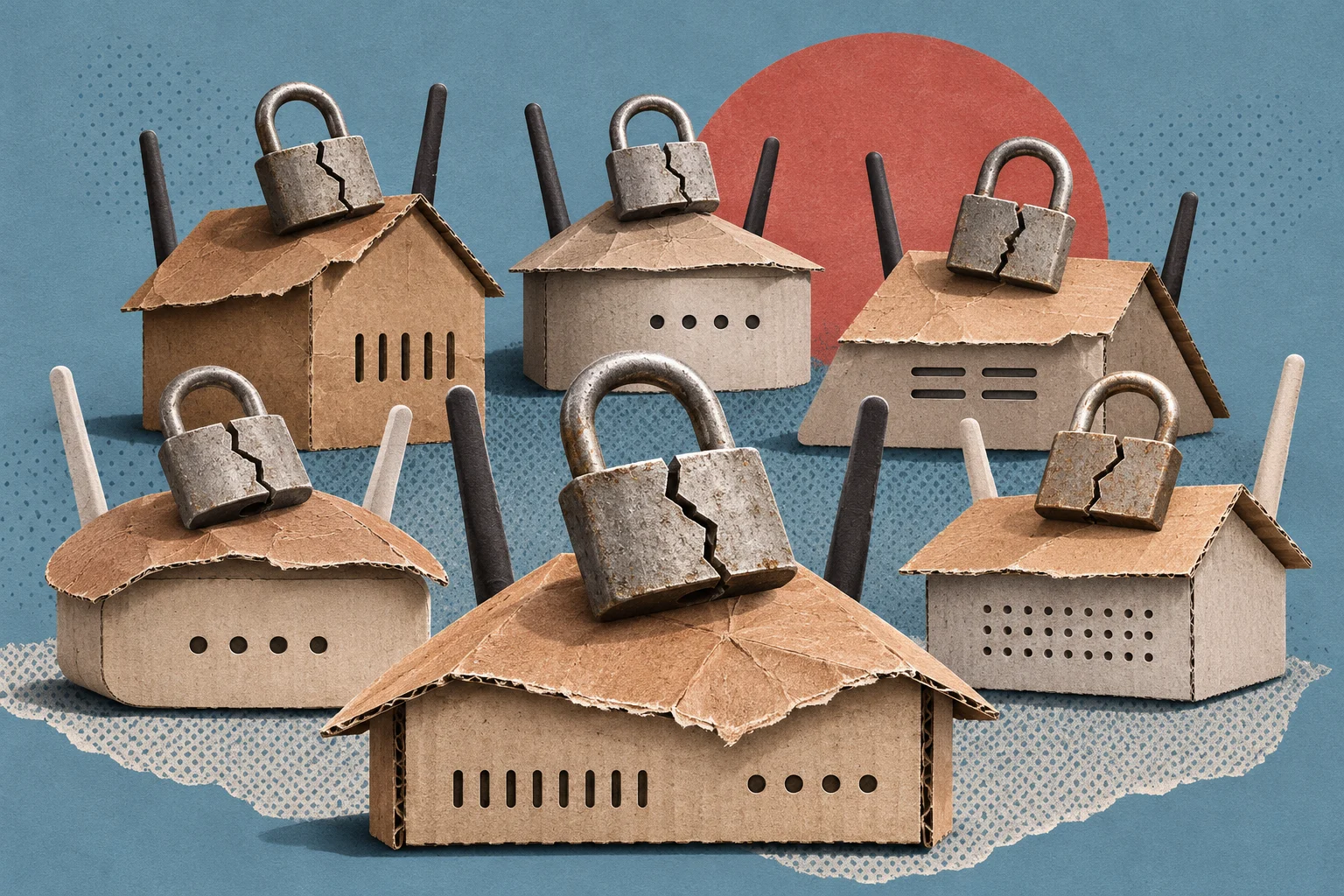
Betsy McIntyre, a lawyer who used to work on telecom mergers at the FCC and on national security reviews of foreign telecom investment at the Justice Department, likes the Covered List in principle. It’s simple, she said, and could guide small businesses, large businesses, even “moms” shopping at Best Buy. A whole category, though, tells shoppers nothing. “They’d name a company, and then people know: ‘don’t buy this,’” she said of the ideal version. “It’s a little bit muddled now.” She noted that the FCC’s role was designed to be “very ministerial” and that she had no part in the router decision. In her words, national security decision-making “can be a black box.”
Congress has noticed, in a bipartisan way. In September the House Commerce Committee’s chairman, Brett Guthrie (R-Ky.), and its ranking Democrat, Frank Pallone Jr. (D-N.J.), introduced a bill that would limit the FCC’s power to list whole categories of equipment. The FCC would have to tell Congress a week before adding anything, and new additions would be limited to technology or services from entities controlled by a foreign adversary, meaning China, Russia, North Korea or Iran. The current process, they said, “lacks the transparency, consistency, and clarity needed to meet our long-term national security needs as technology rapidly advances.”
Read literally, that rule would cut both ways for TP-Link. A ban on everything foreign would become a ban on things controlled by adversaries. TP-Link would then have to persuade the government that it isn’t Chinese, which is the argument it is already making to the Pentagon, which declines to comment.