
The disc can remain on the shelf after the game has ceased to work. Possession of the object does not necessarily mean possession of the thing purchased. A server elsewhere may still decide whether the buyer can play.
Representative Ritchie Torres, a New York Democrat, wants federal law to change that arrangement. As Samuel Axon reports in Ars Technica, his proposal would give buyers ownership rather than merely a revocable license, and require offline play to survive the withdrawal of online support. The ambition is plain. The machinery for accomplishing it is not yet public.
The purchase and the permission
The planned Power To The Players Act would direct the Federal Trade Commission to write rules protecting video-game ownership, according to Ethan Gach’s reporting in Kotaku. Torres’s announcement describes rights to own, play and transfer purchased games. Digital sellers would have to provide something more enduring than permission that a company can revoke.
“I think there should be a simple rule: if you pay for it, you own it,” Torres told Kotaku. He called the proposal a “restoration to the historical norm” and an “affordability issue.”

The distinction becomes practical when a publisher retires a game’s servers. Kotaku points to NBA 2K25, which cost $70 and was the fifth best-selling game in the United States in 2024. It is due to leave digital storefronts on October 30, with online servers shutting down by January 1, 2027, roughly two years after launch. The shutdown will make its most popular modes unplayable.
A purchase can therefore have two clocks: the buyer’s expectation of continued use and the company’s schedule for ending support. Torres’s announcement calls a game that can be taken away when the company disconnects it “a rental disguised as a sale.”
Buying a physical copy does not necessarily escape this condition. Many games distributed on discs still need online servers. Their end-user agreements generally describe a revocable license, even when the files arrive on something the customer can hold. Patches create another difficulty: the version preserved on a disc may differ substantially from the game players eventually came to know.
What must remain playable?
The proposal arrives amid pressure from Stop Killing Games and other preservation advocates. Different legislative efforts have offered different remedies; Pennsylvania’s approach is the subject of an earlier proposal on game shutdowns.
Ars describes earlier proposals requiring developers to maintain servers indefinitely, a demand criticised for overlooking the expense. Torres’s announcement does not say servers must operate forever. Instead, it would require games with online features to offer offline play after those servers close.
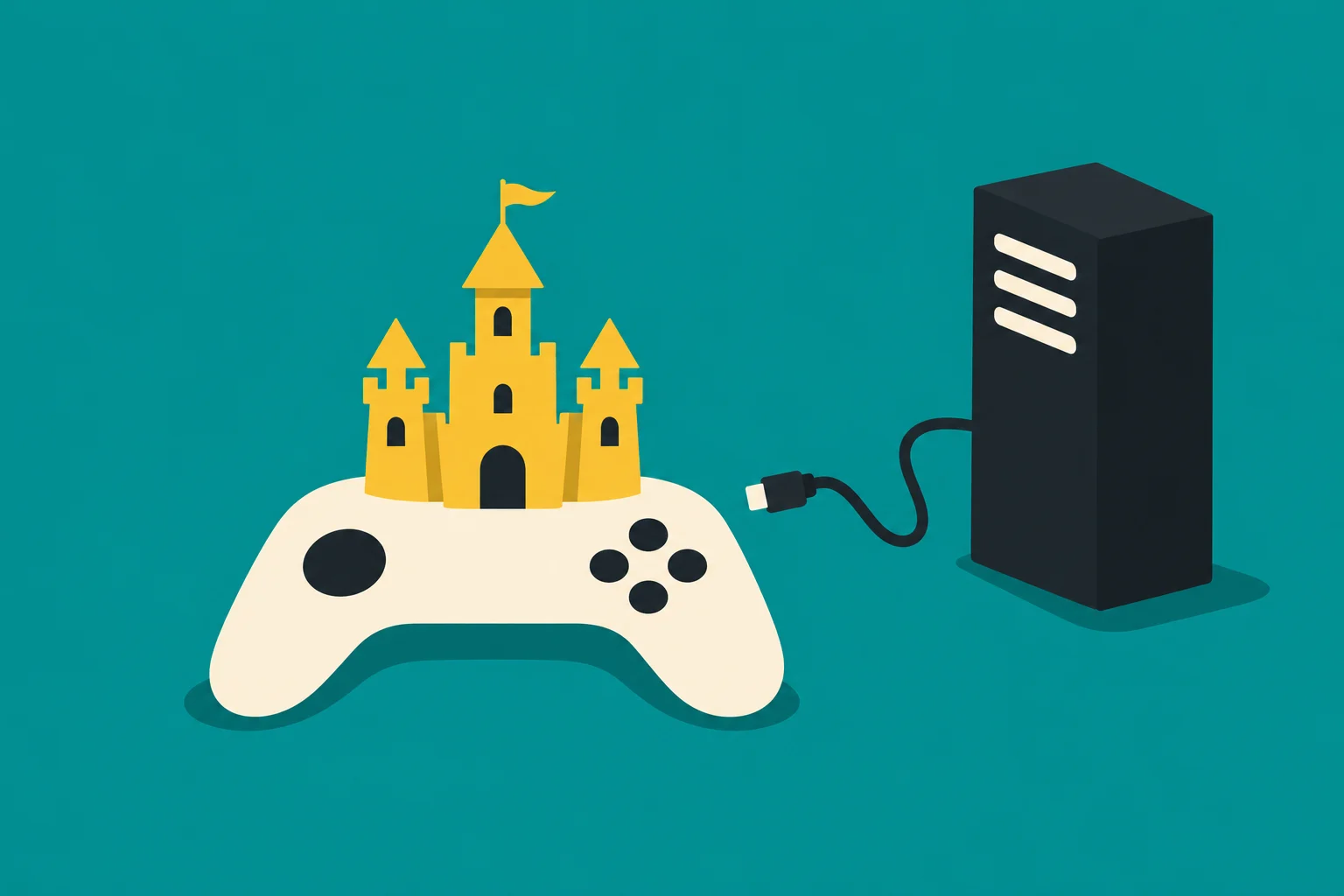
That distinction shifts the burden from keeping a service alive to changing what the software can do without it. For some online games, Ars cautions, an offline mode may not be feasible under their existing engineering. Developers could need substantially different architectures. Without the bill’s full text, it is also impossible to judge its effectiveness or enforceability.
There is a separate, unsettled route to preservation. Ars reports that large language models and specialised coding tools have enabled a wave of game and software decompilations and reconfigurations. Axon characterises these projects as almost certainly illegal under current rules, while suggesting their scale could make enforcement difficult. Whether such tools change the preservation debate remains a possibility, not an established outcome.
Before the committee door
As of the October 15–16 reporting, Torres planned to introduce the legislation; it had not yet been formally filed, and the full text was not publicly available. He had confirmed neither cosponsors nor Republican support. Introduction would still leave the committee process and the uncertain prospect of a vote.
Movies and music fall outside the announced proposal. Torres nevertheless told Kotaku: “I hope we can set a precedent that will be followed elsewhere in the digital economy.” For now, the practical question awaits legislative language: what, exactly, must a game still allow its buyer to do when the publisher switches off the server?