
On Monday, 2 November, the police came to the Mirpur industrial area of Dhaka in heavy numbers. To the west and north of the capital, in Savar, Ashulia and Gazipur, the towns that sew clothes for half the world, workers were protesting for a third day. Hundreds of garment factories were disrupted, Al Jazeera reported, its correspondent Tanvir Chowdhury filing from Dhaka. The quarrel is over pay, and over a cost of living that has run ahead of it.
The numbers fit on the back of a payslip. The legal minimum for a garment worker in Bangladesh is 12,500 taka a month, about $101. The workers want 30,000 taka, about $242. That is more than double, and they say so plainly: food, rent, transport and medical care now cost so much that the old wage no longer covers a life.
Saturday, Sunday, Monday
It began on Saturday in Ashulia, a major garment hub on the edge of Dhaka, where about 30 factories declared holidays, according to a wire report carried by the Sowetan. By Sunday more than 500 factories had shut. Thousands of workers blocked roads in Dhaka and Gazipur. Police answered with tear gas, water cannon and sound grenades, and the authorities called in Border Guard Bangladesh to help keep order.
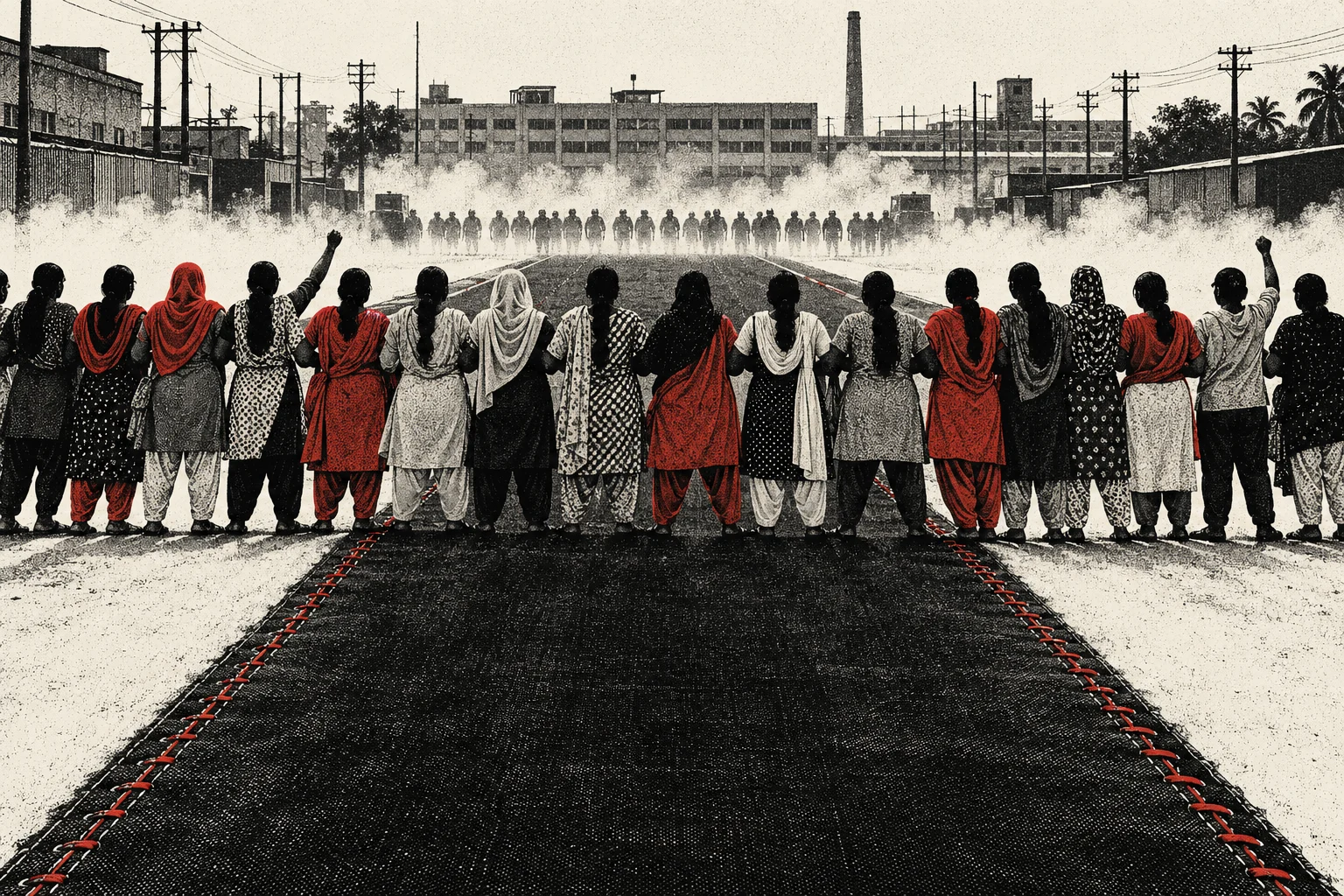
On Monday thousands of workers blocked a major highway and fought with police as the unrest spread across the industrial districts, Dawn reported. Photographs from the day showed police detaining a garment worker, and a police vehicle that protesters had set on fire.
The board
The state replied in the way states usually do: with a committee. On Sunday the government formed a new wage board to review garment wages and recommend new rates. Labour and Employment Minister Ariful Haque Choudhury said it had been set up after talks with worker representatives and industry leaders, and he asked the workers to go back to their machines. The board has six seats: two for workers, two for employers, one for the government and one for a neutral member. Prime Minister Tarique Rahman held an emergency meeting with ministers and advisers.
The workers did not go back. They kept up their demand for 30,000 taka and stayed on the roads.
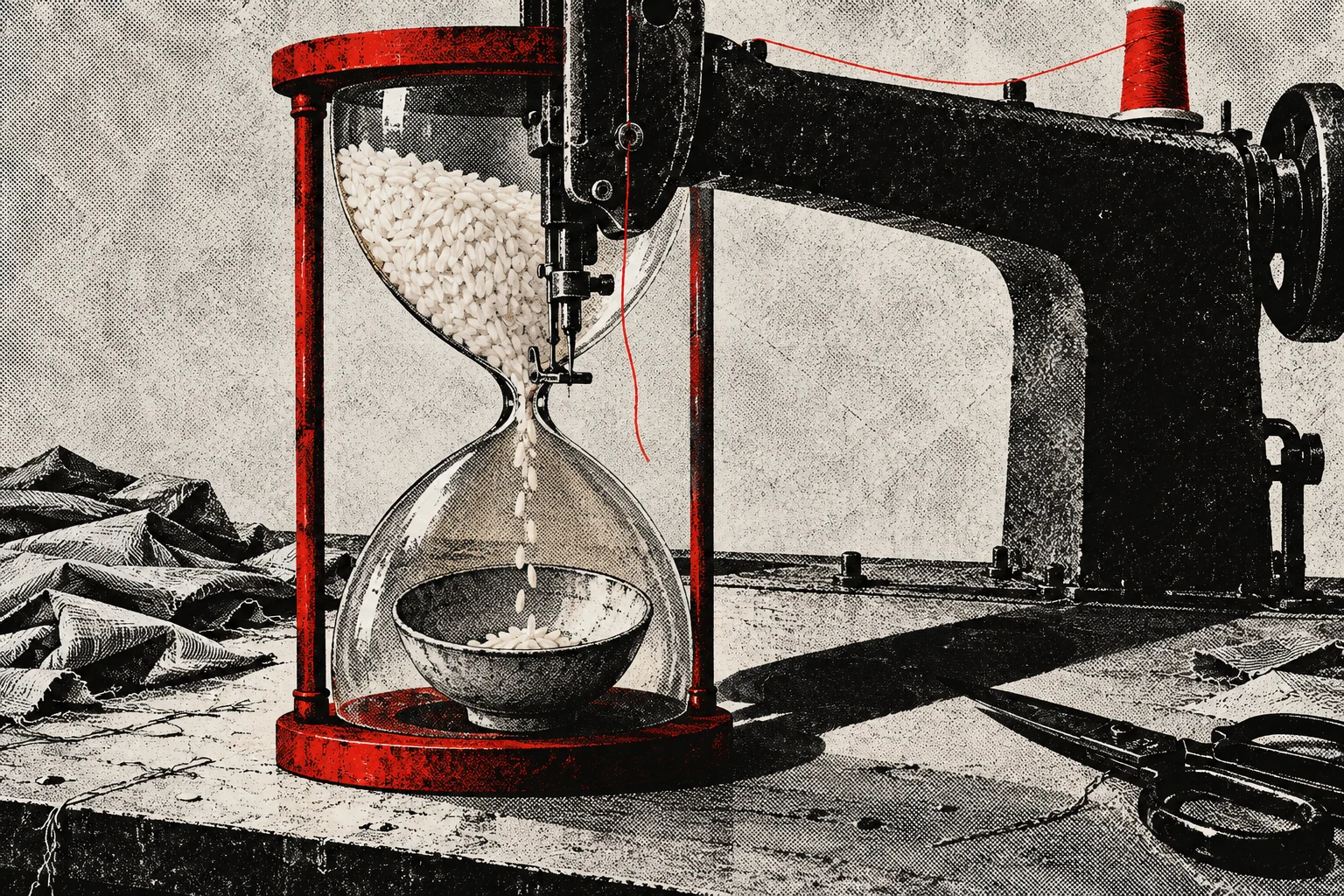
A reflection, and only a reflection: a wage board offers a government time, and time is the one thing a worker paid by the month cannot spare. Each side measures it differently. For the ministry it is a process. For the woman at the sewing machine it is another month of rice at this year’s price.
The owners
Mahmud Hasan Khan, president of the Bangladesh Garment Manufacturers and Exporters Association, said the government “has already taken a step by forming the wage board.” Then: “We expect workers to allow the review process to proceed.” If the protests went on through Monday, he warned, owners would invoke the “no work, no pay” provision.
The owners have their own list of troubles. Costs are up. Energy markets are unsettled by the US-Israel war on Iran. Demand has weakened in some export markets. Vietnam, Cambodia and India are competing for the same orders. The industry is worth roughly $38bn and is one of the country’s main sources of export earnings and jobs. Bangladesh ranks second only to China among the world’s garment exporters, and its factories make clothes for some of the biggest international brands.
Babul Akhter, general secretary of the Bangladesh Garment and Industrial Workers Federation, sits on the new board as a worker representative. He said Bangladesh has “among the lowest garment wages in the world,” and that owners should push foreign buyers for better prices rather than squeeze the floor. “They cannot build a business on the backs of underpaid workers,” he said.
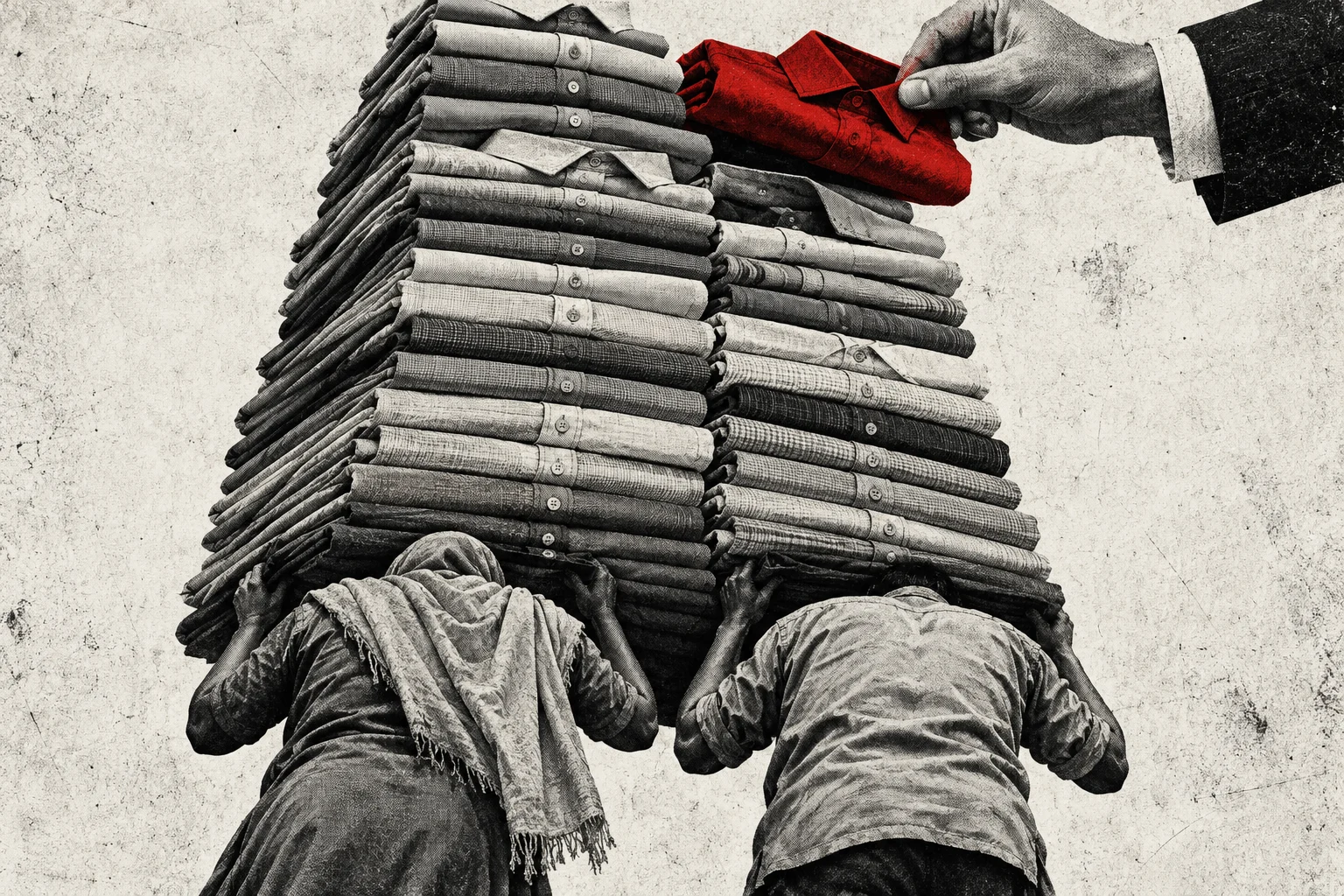
Chowdhury reported that the workers find the current pay “not enough because of the rising cost of living,” and that they want “a share” of the wealth their export industry earns.
The calendar
The present minimum is not old. It took effect in December 2023, after the last great wave of protests, in which at least three workers were killed. It raised the floor by 56 percent, from 8,300 taka. The Bangladesh Labour Act requires sector wages to be reviewed every three years, so the next review was already due in December 2026. Accounts of what workers actually take home differ. The labour activist Kalpona Akter told AFP that workers currently earn about 13,000 taka a month, while workers say that in some factories the pay falls short of the legal minimum.
So the board the government offered on Sunday was, by law, coming next month anyway. The question on the highways of Gazipur is how long people earning 12,500 taka can wait for it, and how many factories stay shut until it reports.