
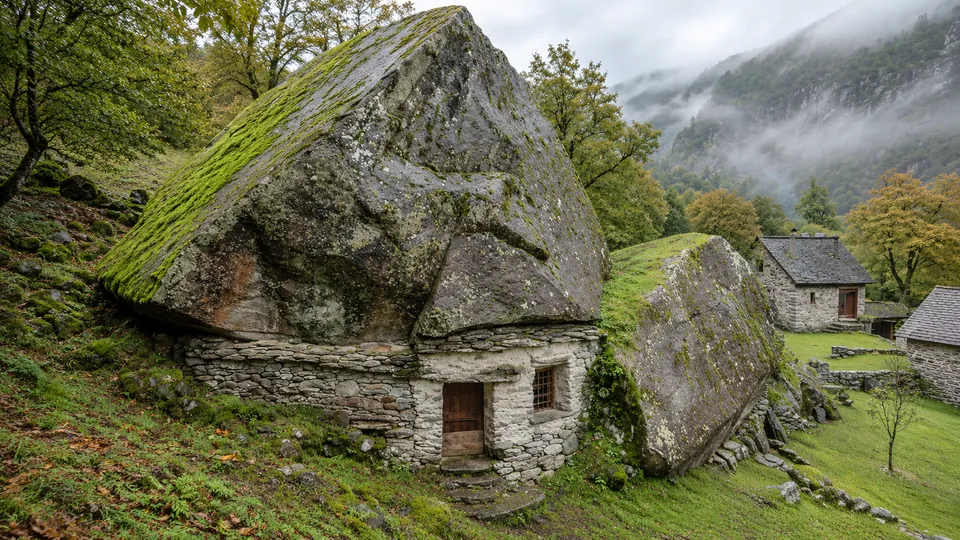
Here is a property problem. Your valley is 12.1km long and only a few hundred metres across at its tightest points. Huge boulders that have come down off the gneiss cliffs cover most of the floor, and just 1.5% of the land can be farmed. Space is scarce, the weather can kill you, and you can’t move the rocks. What do you do?
For centuries, the people of the Bavona Valley in the Swiss canton of Ticino answered that question by treating the rocks as buildings. They hollowed out the gaps beneath fallen boulders, built dry-stone walls, hung doors and got shelter for people and animals out of rock that was already there. Locally these structures are called splüi. Mike MacEacheran describes them in a piece for BBC Travel as rock architecture found nowhere else in Switzerland. Around 405 have been recorded across the wider Maggia Valley region, and the oldest surviving ones date to the Middle Ages.
Accounts of the count vary a little. Ticino’s tourism board says more than 400 have been documented in the Bavona Valley itself. The inVallemaggia portal puts it at roughly 400 across all of the Vallemaggia, with one in four on the Bavona valley floor. The formal inventory, according to the municipality of Cevio, was carried out by the Museo di Valmaggia between 1994 and 2003. It found more than 200 along the valley floor, 130 in Val Calnègia alone and about 50 more on other pastures. That adds up to 380-plus, so “about 400” holds up whichever valley gets the credit.
“Traditional barns are a common feature of the Alpine landscape,” said Tanya Harvey Ciampi, the guide who showed MacEacheran around. “But the ancient splüi are found only here.”
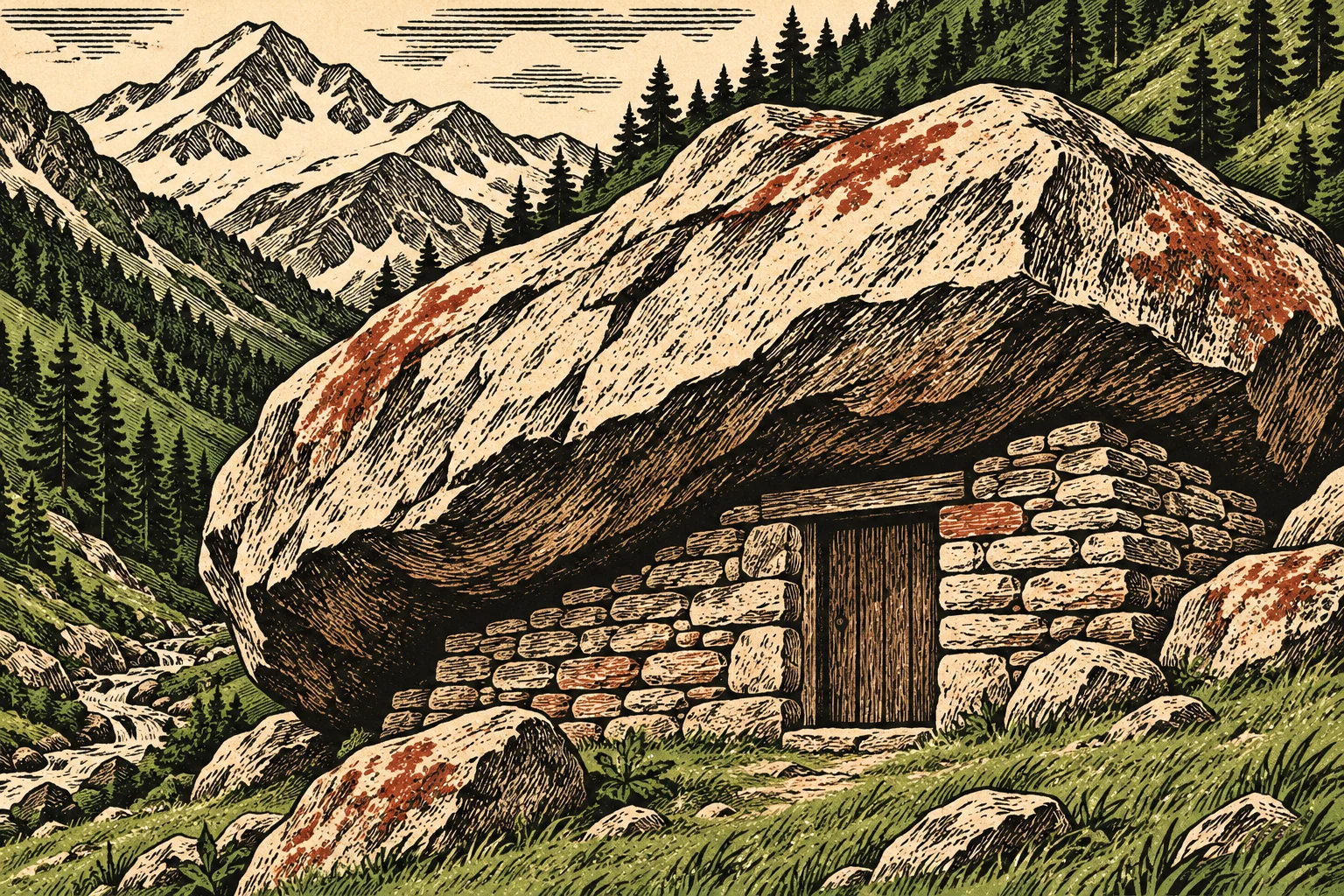
How the splüi have been used tells you a lot about the valley’s economics. Neolithic hunters probably sheltered from storms under the natural rock formations. Nobody knows when people started adding walls and doors. Once people settled for good, they built rustici, two-storey stone houses, to live in. The splüi then became utility rooms: cellars, cheese stores, haylofts, and grà, smokehouses for fire-drying chestnuts. One in Sabbione housed a loom. One at Sott Piodau was a wolf trap. The splüi del forno in Mondada still holds a bread oven. When your land is mostly rocks, the rocks have to do every job.
Harvey Ciampi’s own summary: “Do you know the phrase, ‘when life gives you lemons’? Well, in the Bavona Valley, when life gives you big rocks, you make a splüi. Or a raised garden.” Some of those gardens really are planted on top of fallen boulders.
Nobody home
From the 16th century on, repeated floods, landslides and rockfalls emptied most of the valley. The people who kept coming back in summer turned to transhumance, moving livestock between seasonal pastures and using the rustici and splüi when they needed them. That arrangement has more or less lasted. Most families with roots in the valley now come only for the summer. They store things in the splüi and leave when the weather turns. Only 11 people live there year-round. Many splüi are kept locked, Harvey Ciampi says, “because they are still used by locals to store cheese and wine.” Visitors are welcome in the unlocked ones “as long as we tread carefully.”
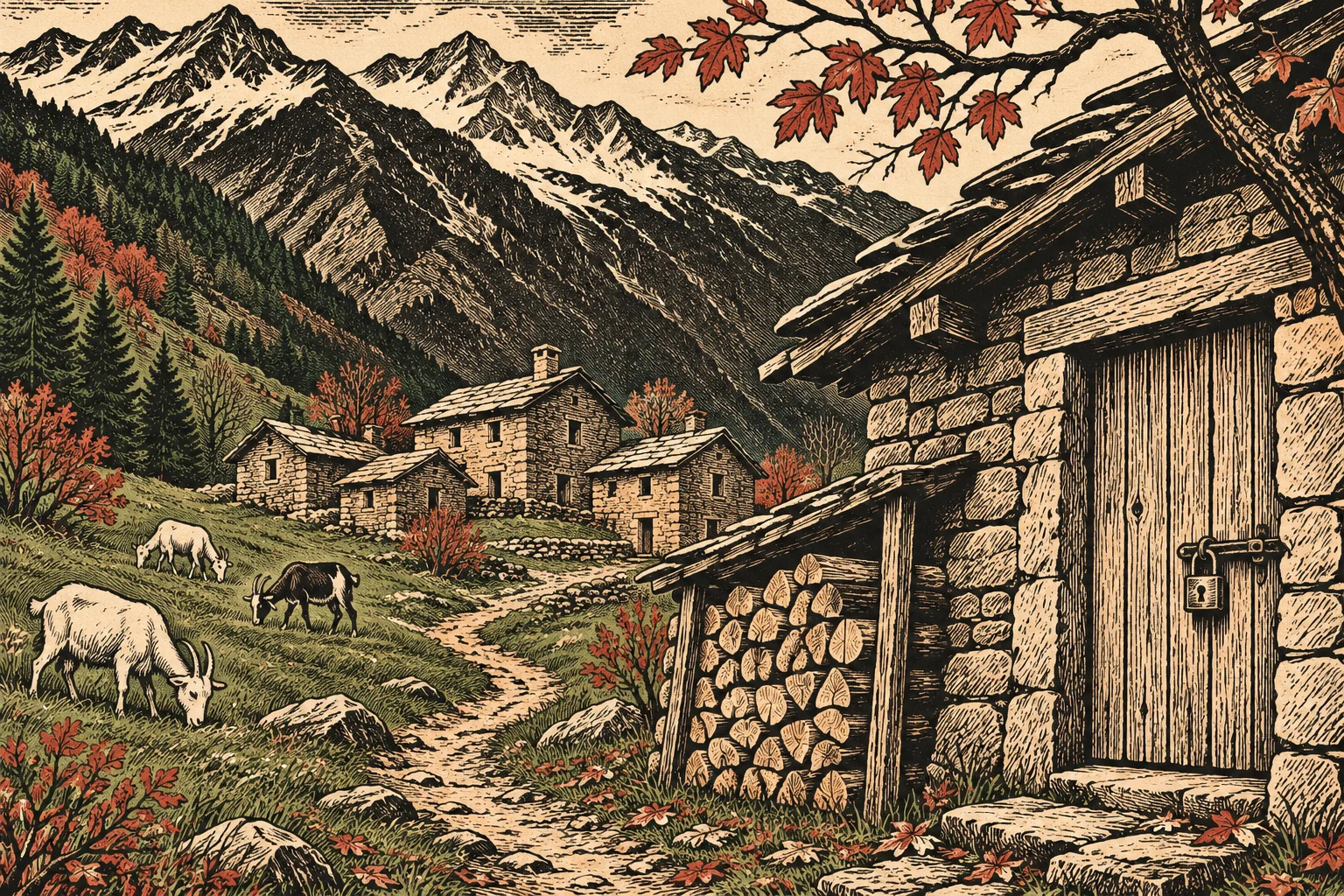
Roberto Pedrazzini and his wife Nadia are among the 11. They live in Sonlerto, in the upper valley, where they run a rustico and a small artisanal workshop. “Traditionally, by December, we had to leave before the snows came,” he told MacEacheran. “Otherwise we’d be stuck here all winter, with no way in or out.” What lets them stay now is snow ploughs clearing the road regularly. He can count the other full-time residents on his hands. They include a couple in their 50s in San Carlo and a family that runs a self-service café and a rustico.
The vote
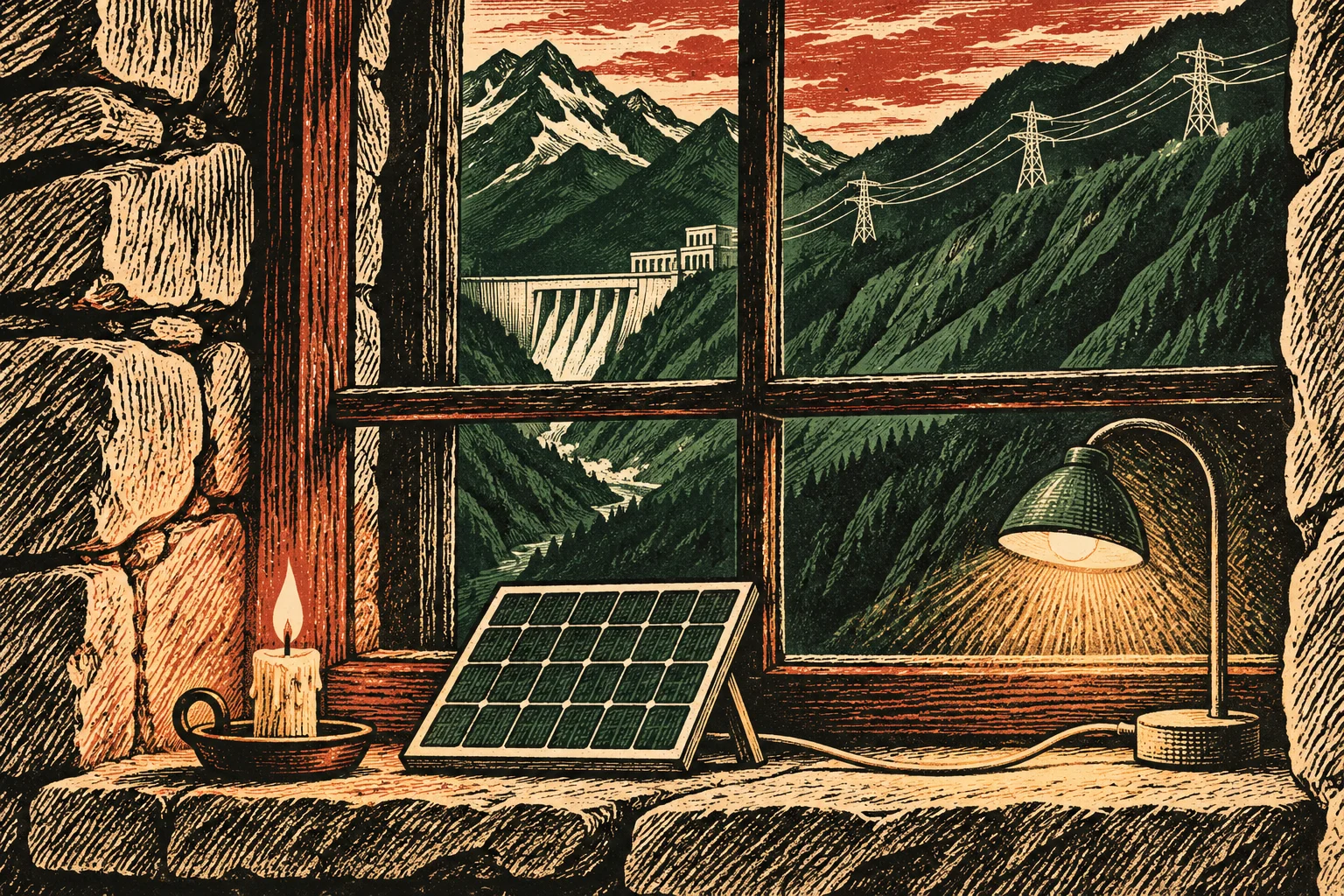
Now the best part. In the 1950s, hydroelectric plants and dams went up in the area, and 11 of the valley’s 12 terre, or stone hamlets, voted against being connected to mains electricity. San Carlo was the only one to say yes. In a 2014 report by The Local, a guide from the Fondazione Valle Bavona explained it this way: “They thought electricity was a luxury they could do without.” Euronews has reported that the power from the region’s hydro plants goes to the German-speaking regions of Switzerland, which had the money to build that infrastructure in the first place.
I like this a lot. Power is generated just up the hill, and the people living under it looked at the cost of connecting and decided candles were fine. Whether you call that principle or thrift, it held up. In the 1980s the valley slowly took up solar panels to run refrigerators and gas to heat water and stoves. Pedrazzini says that choice is widely considered a smart one, and that life there is not the hardship many people imagine.
Then there is what happened next. Many of the rustici, most of which date from the 15th to the 17th centuries, are now off-grid holiday lets. MacEacheran stayed at Casa Dola, which is let by Noemi Sartori of nearby Maggia. “There is no electricity in the house,” she reminded him. “Only a wood-burning stove for company.” He went in mid-October, after the season had ended. Nothing was open, so he bought dinner and breakfast at the train station, and on his first night he was the only person in Foroglio.
The visitor setup is fairly organised for a place that rejected modernity. The valley is a 45-minute bus ride from Locarno, and the trip from Zurich takes three trains and a bus. The best months are late May to late September, when the seasonal restaurants open. The 13.8km Transhumance Trail follows the old shepherds’ route past splüi, alpine pastures and the Foroglio waterfall. Half-day excursions with Vallemaggia Tours start at CHF226. The listings also include a practical tip: if you want full electricity, book a rustico in San Carlo.
So the hamlets that turned down electricity as a luxury in the 1950s now rent out its absence to tourists, and anyone who wants the lights on gets sent to the one hamlet that voted yes.