
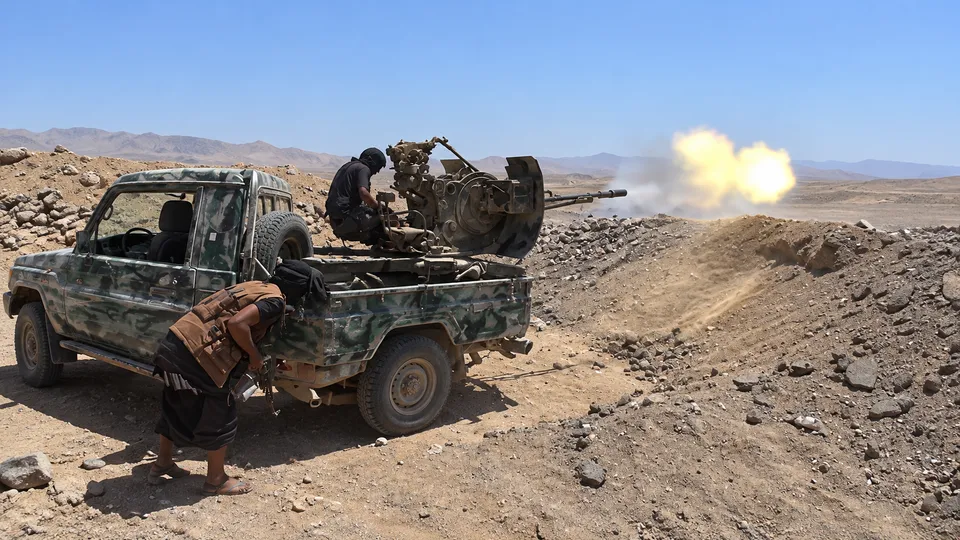
Mohammed bin Salman had a design for his kingdom: a place that would pull in capital, tourists and the planet’s great sporting spectacles. Instead, as CNN’s Mostafa Salem reports, drones and missiles out of Yemen are falling on Saudi cities, and the crown prince is being dragged back into the southern quagmire he spent years trying to fence off. The civil war reignited this summer and sharpened sharply last month, ending years of incomplete quiet. Eleven years of force, then negotiation, then a gingerly restored line to Tehran — and Riyadh now finds itself, by the account of every expert CNN asked, a victim of its own misreading of the board.
Three miscalculations, in that telling. Saudi Arabia broke its long partnership with the United Arab Emirates over Abu Dhabi’s patronage of a rival Yemeni force, then discovered it could not hold the pieces the Emiratis dropped. It counted on Donald Trump and found the American president would not answer in the way Riyadh expected. And it never managed to knit together the ragged factions still fighting the Houthis. The kingdom’s answer is another campaign, supported by Riyadh and named “Yemen’s Dawn.”
The broken alliance
The rupture with the Emirates came last year, and it came violently: Saudi warplanes bombed a shipment of military vehicles the UAE had sent into Yemen. An alliance a decade old, built on containing Iran in Yemen, ended in an airstrike. Abu Dhabi pulled its forces out, and Riyadh — which had demanded exactly that — stood alone. The kingdom then turned on its neighbor with a media campaign rare in its ferocity, accusing the Emiratis of feeding chaos in Yemen and in Sudan; Saudi columnists cast Abu Dhabi as a wayward younger brother defying an elder. Prominent journalist Dawood Al-Shirian wrote in January that Saudi Arabia is the “head and body” of regional stability, warning that if it stumbles, “the entire system is disrupted and the Gulf scatters.”
On the ground in Yemen, the stumble followed quickly. The four-year ceasefire with the Houthis was already thin, and the hasty Emirati withdrawal left thousands of fighters who had spent ten years under Abu Dhabi’s command suddenly disoriented under Riyadh’s.
There wasn’t a proper transition when the Emiratis left. It was frightening how different things became. The Emiratis’ command and control was very efficient, and the Saudis did not replace this efficiency.
So a southern Yemeni official, unnamed so he could speak freely to CNN, described the vacuum. The network says it put the question of support and transition to the Saudi government.
A funeral in Tehran
Eight weeks after the Emirati withdrawal, the United States and Israel went to war with Iran, and supreme leader Ayatollah Ali Khamenei was killed. The timing, several experts told CNN, could hardly have been worse for Riyadh: still digesting the UAE-backed separatist push in Yemen, it was now inside a regional conflagration, and the pressure Trump had piled on Tehran was always likely to be answered by a Houthi move against the kingdom. Yet when Iranian missiles began striking Saudi Arabia from the east, the Houthis — nominally still in a truce with Riyadh — held back from aiding their patron.
What broke the truce was an airplane. In July, Iran dispatched a commercial flight to carry a Houthi delegation to Khamenei’s funeral in Tehran, in open defiance of the Saudi air blockade. Riyadh struck the Houthi-held airport in Sanaa to stop it landing. The rebels declared the truce dead, imposed a naval blockade on Saudi shipping, and raced down Yemen’s coast to seize strategic ground at the Bab al-Mandeb Strait — the gravest escalation since 2022. Houthi strikes on Saudi oil facilities and pipelines followed, throttling crude supplies and sending prices sharply upward; the Saudis answered with airstrikes in the hundreds. Ahmed Nagi of the International Crisis Group lists the failures plainly: no preparation for a Houthi offensive, no coordination with the allied Yemeni forces inherited from the UAE, lost territory that corroded allied morale — while the rebels wield weaponry advanced enough to reach deep into Saudi cities. This week Saudi Arabia said at least three people, among them a Saudi pilot, were killed when Houthi forces hit several airports. Film festivals, award ceremonies and concerts have been suspended, and the kingdom’s flagship financial conference, due to gather marquee business figures at the end of October, is under pressure.
Waiting on Washington
The deepest wound may be the one inflicted from furthest away. Riyadh signed a new defense pact with Washington last year and carries the designation of Major Non-NATO Ally. Yet when Prince Mohammed telephoned Trump twice last month to urge American strikes on the Houthis — as CNN’s sources described at the time — the president refused. Worse, from the palace’s view: Washington sat down with the Houthis in Oman to safeguard its own ceasefire with them, an arrangement the rebels define as a war with Saudi Arabia alone, leaving American ships free passage through the Red Sea.
Michael Ratney, the former US ambassador to Riyadh, frames the shock in structural terms. The Saudi military, he says, built its “entire worldview” around the American partnership; it was never designed to fight these wars alone. Under an ordinary presidency, help for a partner under attack would have come through a rational, considered process. Now, Ratney argues, everything reduces to one question — what Trump thinks — and the Saudis likely feel exposed precisely because they know it. “They just needed the conflict to stay (as) far away from them as possible without the Houthis disrupting their transformation plans,” he said. “Now they find themselves in the middle of it.”
Coalition by telephone
So the kingdom builds its own architecture. Last month the crown prince flew to Cairo to see President Abdel Fattah el-Sisi, then received UAE Vice President Sheikh Mansour bin Zayed in Riyadh — a sign, alongside the apparent participation of UAE-loyal forces in the offensive, of at least a partial thaw with Abu Dhabi. France has agreed to deploy defense assets, personnel included; Britain is sending an aircraft to refuel Saudi jets; more than a hundred American military advisers are on the ground under a new joint forces command, supplying intelligence and targeting. And on Monday, after an emergency meeting in Riyadh, Saudi Arabia, Turkey and Pakistan agreed to “activate collective deterrence measures” under the Mecca Joint Defense Agreement, the three-nation pact created earlier this year.
The experts counsel cold water. Outside help and the early gains of the Saudi-backed Yemeni government will not close the file: the anti-Houthi factions still brawl among themselves, and no one has drawn the political shape of the war’s end. A sustained drive against Iranian-backed forces would demand organization, regional backing, money and logistics of a kind this coalition has yet to demonstrate it can hold together — the arithmetic of overstretch that hangs over the entire Dawn of Yemen offensive. An empire of investment wanted the war kept at a distance; the war, as wars will, declined to be managed.