
In a federal courtroom in Miami on Thursday, 22 October, a magistrate judge took up one of the oldest problems in litigation: the man who brought the case would not come in to answer questions about it. The man is the president of the United States, and the case is his $10 billion defamation suit against the BBC. U.S. Magistrate Judge Enjoliqué Lett ordered Donald Trump to sit for a deposition by 11 December or face the possibility that his lawsuit is thrown out, NBC News reported.
The claim is split evenly. The New York Post spelled out that Trump wants $5 billion in defamation damages and another $5 billion under Florida’s Deceptive and Unfair Trade Practices Act. Those are large sums, and they rest on the injury of a man who says he was wronged. The BBC wants to ask him about that injury under oath.
Matters of national importance
The timeline comes from the broadcaster’s lawyers, in an 13 October filing described by The Independent. They first asked for deposition dates in July and kept following up, and both sides eventually agreed on 16 October. Weeks of silence followed. Then, on 28 September, Trump’s counsel wrote that “the President is no longer available for his deposition on October 16 due to other matters of national importance”, and promised to “endeavor to provide you with a replacement date by the end of this week.” No date came. The BBC was then told that Trump “has no availability whatsoever for a deposition” before discovery closes on 18 December, and that he could appear in the second or third week of January.
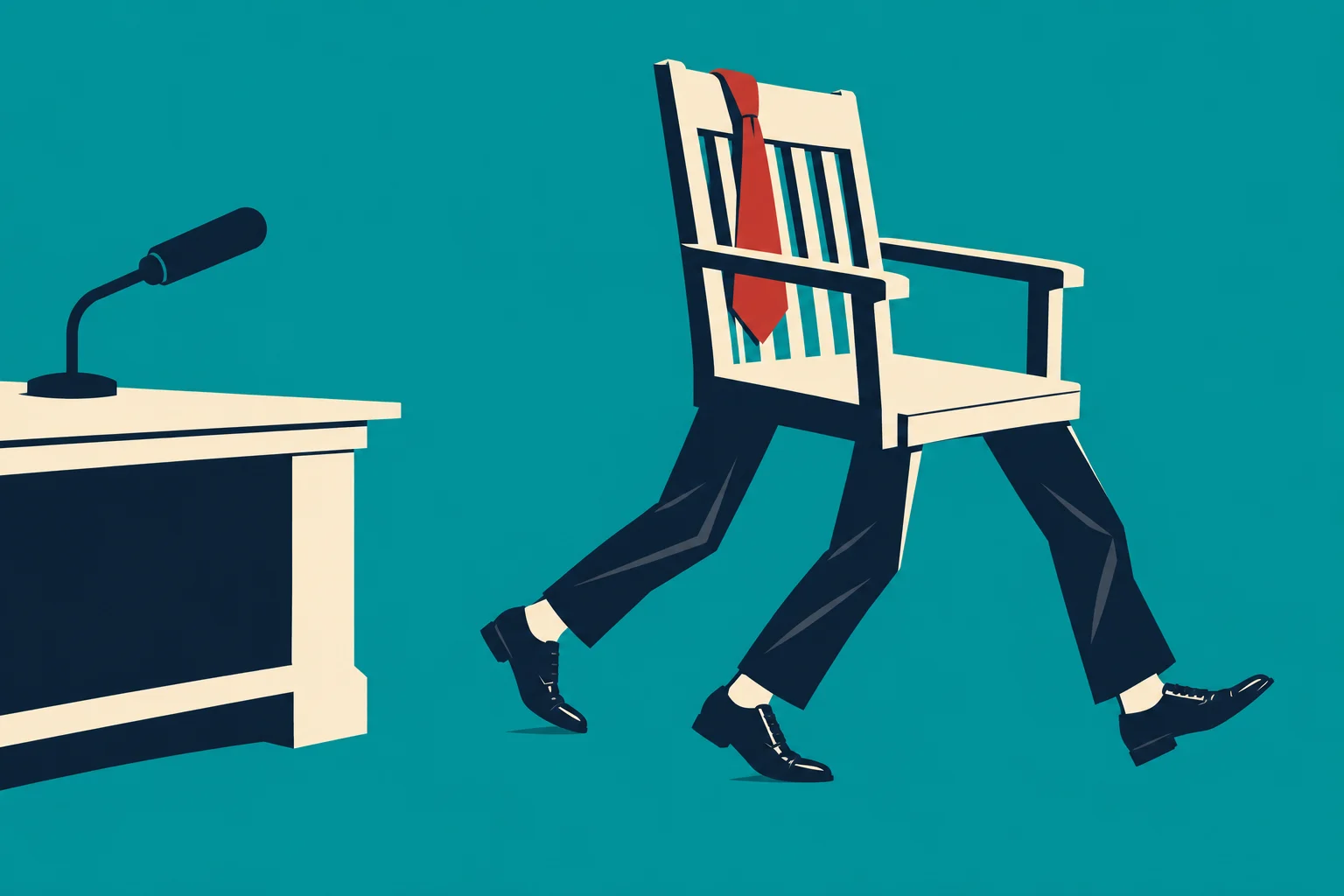
Charles Tobin, the BBC’s attorney, told the judge what the national importance turned out to be. The Independent reports it was a campaign event in Georgia; NBC says a political rally and a fundraiser. Steve Benen of MS NOW describes the president touring red states to rescue Republicans whose campaigns were suffering from his unpopularity. “He was participating in party politics and prioritized that over sitting for the deposition,” Tobin said.
The state had its business. The party had its rally. The court had its calendar.
A reflection, and only that: the powerful have always liked to be the ones asking the questions. A lawsuit hands a ruler a new kind of questioner, one he invited in himself.
Lett ruled that Trump must finish the deposition by 11 December or risk sanctions up to dismissal, unless the discovery window is pushed past 18 December. Over the objection of Trump’s lawyer Alejandro Brito, she allowed the session to be videotaped. Newsweek reported that Trump’s side had offered January dates on condition there be no recording. According to CNN’s account of the hearing, only the lawyers in the case may view the tape. CNN also reported that the judge and both parties agreed the date could well slip, that only the presiding judge can change the trial schedule, and that the BBC would accept a later deposition if the trial moved back with it.

There was also Mar-a-Lago. The BBC has subpoenaed Trump’s club for records on whether its documentary hurt membership applications or fees. Brito argued the subpoena should be quashed because Trump does not claim the program harmed the business. Tobin pointed to the complaint’s own words: the documentary “injured President Trump in his profession, occupation and trade.” Lett agreed that such records fall within what must be handed over. CNN reported that she also doubted Trump’s team had properly searched for its own internal documents.
Fifty minutes, one sentence
The program at the center of this, Trump: A Second Chance, was a 2024 Panorama documentary. It took Trump’s speech at the Ellipse before the Capitol was stormed on 6 January 2021 and joined passages delivered roughly 50 minutes apart, by MS NOW’s count (the Post says nearly an hour), into what looked like one statement: “We’re gonna walk down to the Capitol and I’ll be there with you and we fight. We fight like hell, and if you don’t fight like hell, you’re not gonna have a country anymore.” His call to protest “peacefully” was cut. Footage of the Proud Boys marching on the Capitol was laid over his words.
The BBC admitted the splice. Its chairman, Samir Shah, told a House of Commons committee the edit gave “the impression of a direct call for violent action” and apologised for an “error of judgment”, Variety reported. Director-General Tim Davie and news chief Deborah Turness resigned on 9 November 2025. Still, the corporation denies Trump was defamed or damaged. It notes the documentary did not air in the United States and is not on streaming services. Trump’s lawyers argue that BritBox subscribers or VPN users could have watched it.
Trump has said the network “literally put words in my mouth,” adding: “I guess they used AI.” It did not. The words were his, in a different order.

A ledger of suits
The suit belongs to a long series. Trump won a $16 million settlement from CBS News over a 60 Minutes interview with Kamala Harris and $15 million from ABC News over George Stephanopoulos’s description of the E. Jean Carroll verdict. He has filed a $14 billion suit against the New York Times and sued the Wall Street Journal over its report on a birthday letter he allegedly wrote to Jeffrey Epstein. Benen argues that nearly all of his suits against news organisations have failed, and points out that the president’s past depositions have gone badly for him. His government’s quarrels with the press go beyond the courts: the Justice Department has argued he can bar outlets from the White House.
The prosecutor as witness
The BBC has also subpoenaed Jack Smith, the former special counsel who investigated 6 January, and says its defence will turn on Trump’s intent and state of mind. Trump’s lawyers object. “Smith lacks any personal knowledge regarding the issues in this matter,” they wrote, adding that he was not present for the speech, had no part in preparing it and that his testimony “would be duplicative” of his public report and hours of testimony. According to the Associated Press account carried by PBS, Lett put off ruling until Smith and the BBC formally ask the Justice Department, his former employer, to approve a deposition.
The BBC’s lawyers answered in the same filing:
No one forced Plaintiff to file this lawsuit and to dispute that his speech on January 6 incited the violence that followed at the Capitol. But as long as he chooses to maintain the case, he cannot commit the fundamental injustice of preventing the BBC from obtaining the evidence it needs to robustly defend itself on every element of his claim.