
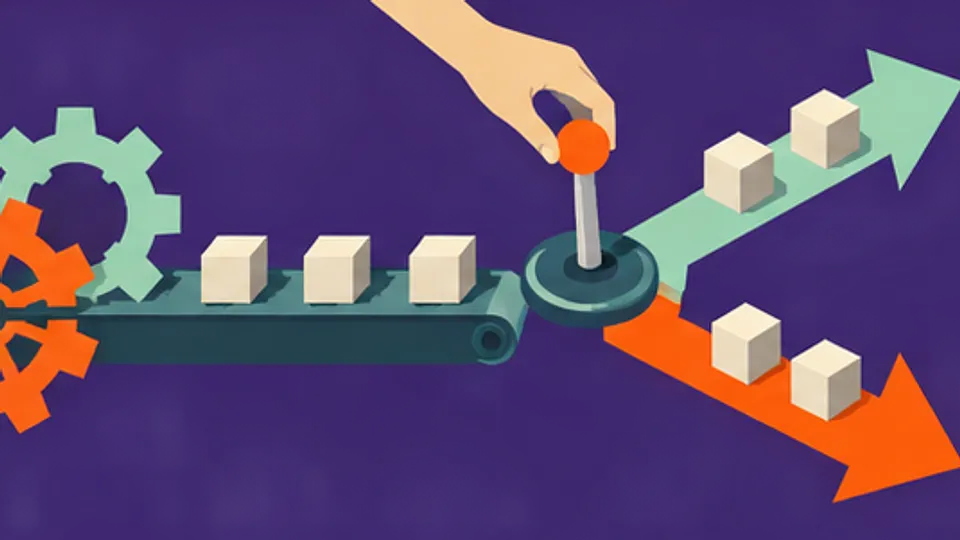
Every empire of work leaves a map of what it has conquered and what it has not. OpenAI has now drawn such a map of itself. In a report on how its own researchers use artificial intelligence, the company that sells automation to the world disclosed which tasks inside its walls the machines have taken — and which they have not dared to touch.
What the machine swallowed
The biggest automation gains this year, according to the company’s figures reported by Business Insider, came in coding, technical support, monitoring computer runs, and analyzing results. These are the legible labours of modern work: tasks whose success can be counted. A company can measure whether code was written, whether a product shipped, whether a bug was fixed. What can be measured can be handed over, and so it has been.
What remains in human hands
But look at the other side of the ledger. AI is still doing relatively little of the work that decides what projects to pursue, where to invest resources, or how to set priorities. Execution has become cheap; choice has not. Deciding what should be built in the first place resists the machine, because it requires judgment, context, tradeoffs — and a willingness to take risks that no model yet carries on its own account.
People still set our research priorities, judge which ideas and results to pursue, and decide whether to scale, pause, or deploy systems.
So OpenAI itself concedes, in its own report. The admission carries a quiet irony: the firm whose products are rewriting labour markets describes an internal division of work in which the human being is demoted from maker — and promoted to decider. Whether the rest of the economy will preserve such a throne for its people is another question, one the data cannot answer. But the glimpse is instructive. The value of work may be migrating away from doing and toward deciding, toward the small circle where someone must still say: this, and not that.