
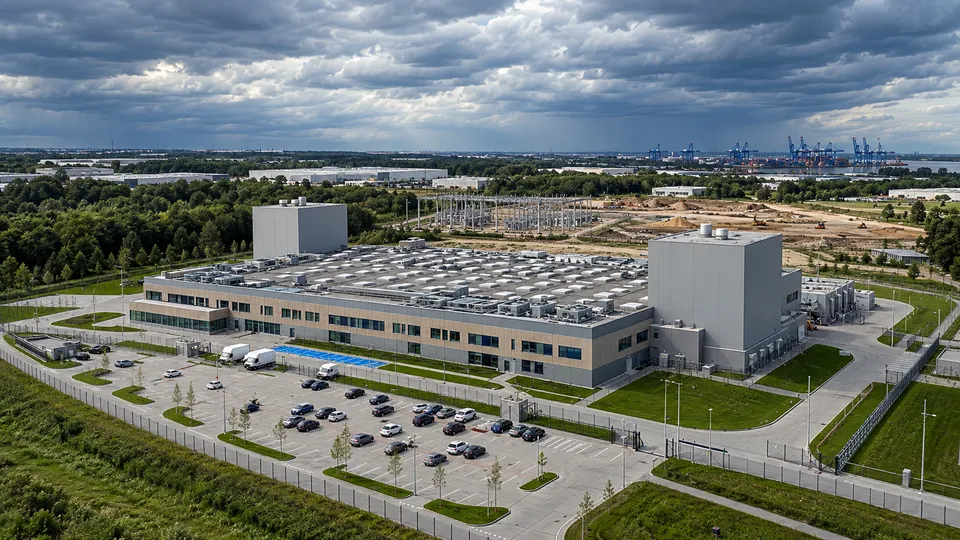
Here is a pleasing little paradox of the modern Italian electricity market, as laid out by Euronews: household bills remain stubbornly high, while on the wholesale market some operators can, at moments, be paid to consume power. Sun and wind generate when they feel like it, not when anyone needs them, and in moments of oversupply prices go negative. The obvious trade is to own a very large battery: get paid to fill it at noon, sell the contents back at dinner. Battery Energy Storage Systems, in the jargon, which has now produced what amounts to a gold rush — except that a remarkable amount of the gold being traded is not batteries at all.
The numbers first. By the end of 2025, connection requests for high- and extra-high-voltage storage submitted to Terna, the Italian grid operator, had reached 300 GW. Of that, 56 GW had been approved and just 6.8 GW were ready to start construction. Actual installed storage stood at 7.4 GW of power and 17.9 GWh of capacity. Terna reckons Italy will need roughly 72 GWh by 2030. So the queue of requests is about four times the entire projected need. Those 300 GW are not a construction pipeline; they are an enormous advance booking on the future electricity system.
Brussels knows the shape of the problem. In her State of the Union address on 16 September, Ursula von der Leyen noted that Europe installed more than 80 GW of new renewable capacity in 2025, while six times that is still waiting for a grid connection. “We must invest faster… speed up grid connections… develop storage,” she said. The connection point, in other words, has become the scarce resource — which is exactly the sort of thing that becomes an asset.
Germany shows the same dynamic in caricature. In 2025 alone, German grid operators received 18,158 applications for large storage systems totalling 573.5 GW, according to the Euronews report. Connection offers were issued for 54.2 GW; plants actually operating at medium voltage and above came to 3.6 GW. The Bundesnetzagentur has warned that some applications are duplicates — the same developer files the same project at several points on the grid and decides only later where to build. Euronews puts it plainly: before the batteries themselves are bought, what is being traded are options.
This is genuinely how it works, and it is worth saying out loud. A grid connection slot is scarce, because everyone wants one and the grid has finite capacity. Filing to reserve that slot costs some paperwork and some patience. Once the slot is approved and bundled with a permitted project, it becomes something a pension fund will pay real money for, because buying it skips years of queue. You do not have to know anything about electrons to see the trade. You just have to know that the queue itself is the asset.
The financing arc of one German developer, Kyon Energy, shows how fast the grown-ups arrived. In January 2024 TotalEnergies bought Kyon from its three founders for 90 million euros up front plus earn-outs; Kyon had developed 770 MW and held a firm pipeline of another 2 GW. At the time, co-founder Philipp Merk was explaining that banks would not yet finance big batteries, so Kyon built with its own capital and refinanced once a system was running. Two years on: in 2026 TotalEnergies sold Allianz Global Investors a 50% stake in eleven Kyon projects, totalling 789 MW and 1,628 MWh, and in July a project financing of around 440 million euros was announced, underwritten by ten financial institutions. The thing that made batteries bankable is the tolling agreement — essentially leasing out battery capacity under contract, which converts wobbly merchant revenue into something a credit committee can read. Ten banks do not lend against the price of electricity next Tuesday. They lend against a signed toll.
The paper value is the live one. “How many players have the financial strength to build? Very few, perhaps one in fifty,” Stefano Endrizzi, a partner at MergersCorp who works on deals in the renewables sector, told Euronews. Many more players can secure a plot of land and develop the project, as he put it, entirely on paper. Big funds and engineering and construction firms would rather buy an authorised project outright and go straight to building, a practical way of buying time without disappearing into the labyrinth of permitting. Value is created before a single battery is shipped.
Italy’s first big test of demand, the September 2025 MACSE auction, was oversubscribed more than four times: Terna awarded 10 GWh, all lithium-ion, and the weighted average price came in at 12,959 euros per MWh per year against a reserve premium of 37,000 euros — roughly a 65% drop. Sellers of battery capacity, it turns out, will take a lot less than the state expected to pay, which is what happens when 300 GW of paper is chasing a real contract. Meanwhile Modo Energy counted 82 BESS deals in Europe in 2025, up from 25 the year before, with 8.6 billion euros of disclosed value; reported debt jumped from 1.4 to 6.1 billion euros, and project finance now accounts for half of all transactions.
Now the state is getting sceptical about the paper. The European Commission’s grid connection guidelines of December 2025 explicitly name speculative applications and stalled projects as a cause of the queues, citing hoarding of capacity, multiple filings for one project, and even connections blocked purely to be resold. Its proposed remedies: maturity criteria, deadlines, penalties, and financial deposits you forfeit if you never build. Italy’s Bollette decree of February 2026 goes after what it calls the grid’s “virtual saturation” — capacity must be definitively allocated to authorised projects, and connections held by still-immature schemes can lapse. The implementing decree from MASE was signed on 8 September; the final regulatory step from ARERA is still pending. There is a certain irony that this selectivity arrives after years in which the RED III directive shortened permit deadlines and created fast-track lanes for exactly these projects — Brussels spent a decade teaching everyone to file quickly and is now fining them for filing frivolously.
And one more turn of the screw. The obvious way to flush out the speculators is to demand fat deposits and proof of maturity. “It is an enormous amount of work,” Endrizzi says of permitting: “Even for just 4 or 5 megawatts we are talking about thousands of documents.” Development costs remain a fraction of construction costs, but sitting on a position for years under a forfeit-heavy regime takes capital — and utilities, funds and large groups are the ones with capital. The crackdown on speculation plausibly concentrates the market it was meant to open.
Eventually the paper lands somewhere physical. Solar, agrivoltaics, wind and batteries are all bidding for sites and connections, with data centres piling in on the demand side too. Italy’s CREA puts the average value of agricultural land in 2024 at around 22,400 euros per hectare, documents photovoltaic offers of about 60,000 euros per hectare, and flags renewables’ impact on prices. Endrizzi reports farmland in northern Italy worth 15,000–25,000 euros per hectare reaching asking prices of 90,000–100,000 once it becomes attractive for energy development — a quadrupling or more for dirt that grows exactly the same crops.
As the report’s own framing puts it, the value of land no longer depends only on what can be grown on it, but on how much energy can flow past it. The farmers, at least, have worked the arbitrage out: the crop worth planting is a connection request.