
Reptiles come with armor. Frogs got, essentially, pajamas: soft, damp skin that doubles as a breathing organ and invites in whatever happens to be swimming by. So how do some frogs walk straight through one of the deadliest wildlife epidemics on record while their neighbors die? According to a study in the journal Animal Microbiome, at least one frog’s secret is that it’s wearing armor after all — armor made of bacteria, invisible to everyone including, until recently, science.
The epidemic in question is the chytrid fungus Batrachochytrium dendrobatidis, or Bd, which colonizes amphibian skin and eventually causes heart failure. It has devastated frog populations worldwide and driven dozens of species to extinction. And yet some species somehow shrug it off.
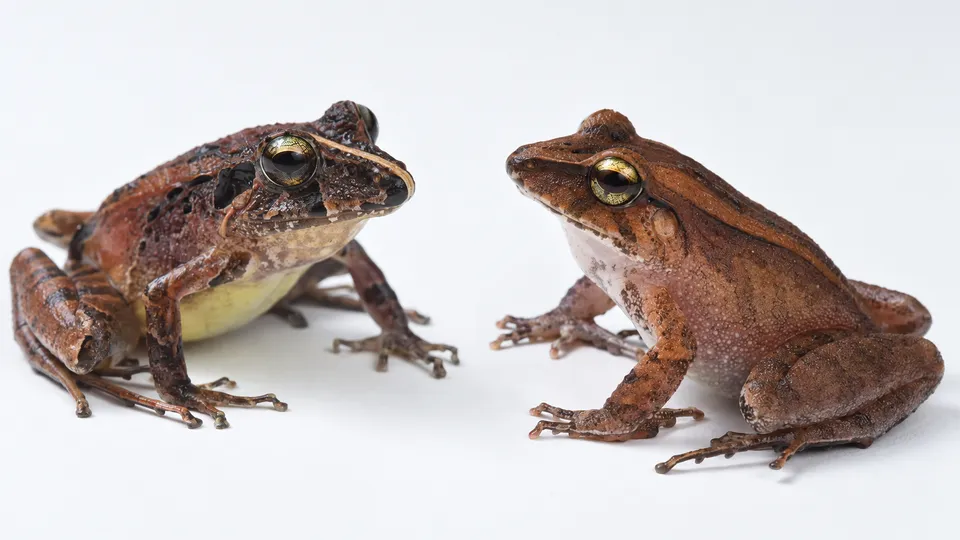
In the rainforests of Brazil, the contrast is neatly drawn. Hensel’s big-headed frog (Ischnocnema henselii) is highly susceptible to Bd, while the ecologically similar clay robber frog (Haddadus binotatus) is not. “For years we knew that the tropical frog H. binotatus rarely became infected with the fungus in the wild, but we didn’t know why,” said lead author Laura Schuck, a doctoral student at Penn State.
To find out, Schuck and her colleagues in Brazil collected 40 individuals of each species from forest fragments near São Paulo and ran a clean factorial experiment. Half the frogs of each species were exposed to the fungus; half were not. Within those groups, half first received antibiotic baths that wiped out their skin microbiomes — their “bacteriomes” — while the rest kept their full microbial entourage.
The results pointed straight at the microbes. Clay robber frogs exposed to the fungus survived well — unless they’d been antibiotic bathed first, in which case their survival plummeted. Hensel’s big-headed frogs fared poorly no matter what. In other words, the clay robber frog’s bacteriome isn’t just along for the ride; it’s the bouncer. “This study moved us from correlation to experimental evidence that the microbiome really is important against this disease,” Schuck remarked.
Schuck then went full librarian on the defense system. She extracted about 700 bacterial strains from the frogs’ skin, grew each one in culture, exposed every culture to the Bd fungus, scored how well each strain suppressed fungal growth, and sequenced the cultures’ DNA — building a reference database that maps bacteria to antifungal firepower.
The team describes the database as an armory: the ultimate guide to which frog species carry the necessary defenses to withstand Bd. Which means the most promising conservation tool against a fungus that has erased dozens of species may already be in circulation — smeared in a microscopic film across the backs of frogs that never knew they were armed.