
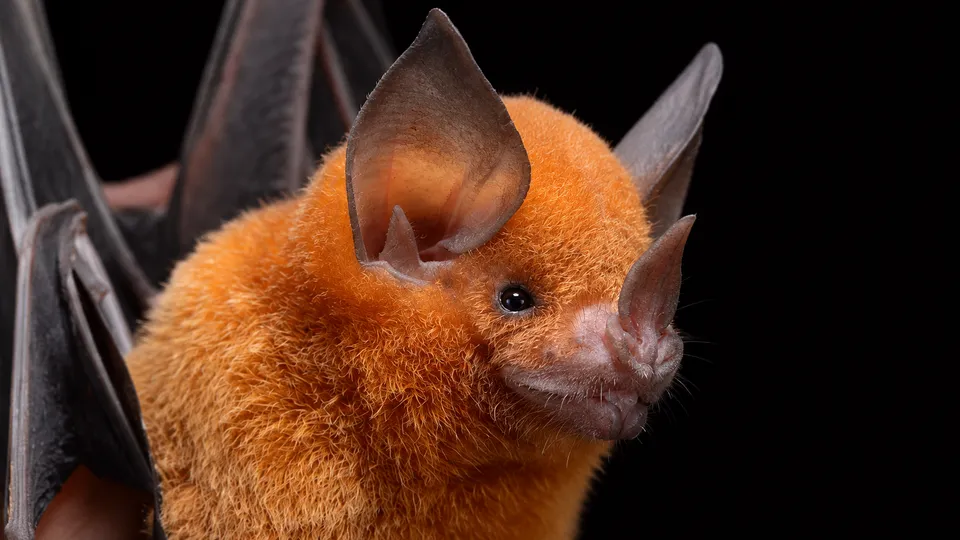
Every creature keeps a secret archive of where it has been, written in a script no librarian catalogued until recently. For decades, zoologists assumed bats had written theirs in Asia, in Africa, or somewhere in the Americas. A new study, the most comprehensive ever conducted on these mammals, reads the archive differently: the lineage arose around 65 million years ago in Europe, in the age of the dinosaurs, and spread from there to colonise the rest of the planet.
The research, published in the journal Nature, combines the genome sequencing of 103 species with the study of 44 fossils from different parts of the world. It belongs to Bat1K, an international consortium devoted to gathering genomic information on bats; on the Spanish side, researchers from the National Museum of Natural Sciences (MNCN-CSIC) and the University of Granada took part.
Reading the archive
Ismael Galván, a researcher at the MNCN, frames what has been achieved: it is the first time the genome of a flying mammal has been reconstructed, and the resource gives science a solid framework for investigating the genes behind bats’ most distinctive traits. He notes the line of inquiry could eventually inform human studies of ageing, immunity and resistance to disease.
The method was the message. Professor Liliana M. Dávalos of Stony Brook University explains that by jointly modelling the evolution of fossil and living species, the team could do what other techniques cannot — place the oldest group of fossil bats while taking genomic data into account, and so determine when and where the group appeared. The data suggest the first descendants of that European population dispersed into Africa, forming a Euro-African core from which bats later reached Asia, the Americas and Australia.
Michael Hiller of the Senckenberg Institute in Frankfurt describes the procedure: state-of-the-art DNA sequencing combined with computational methods to generate and compare genomes, identify the genes they contain, and cross-reference all of it against the 44 fossils. The result, says Professor Emma Teeling of University College Dublin, is a robust phylogenetic tree after decades of findings that often contradicted one another.
Flight and echo, from the very beginning
One finding carries the force of parable: powered flight and echolocation, the two gifts that define these animals, did not arrive as later refinements. They were present near the very origin of the group. The fossil of the genus Vielasia, regarded as an ancestor of modern bats, sits on the oldest branch of the family tree and reinforces that conclusion — a head start of equipment that may help explain the lineage’s evolutionary success across 65 million years.
To assemble the samples, the team went to the margins of the map, to little-known species in remote places: the bumblebee bat of Thailand and Myanmar, one of the smallest mammals on Earth; the Madagascar sucker-footed bat, which clings to smooth leaves with small suction cups; and New Zealand’s lesser short-tailed bat, which folds its wings and walks on them like forelegs along the forest floor.
What bats owe medicine
With more than 1,500 species distributed around the world, bats make up one fifth of all living mammals. They pollinate plants, disperse seeds and hold insect populations in check — quiet labour performed at night, unpaid and mostly unthanked. On top of that comes what most interests biomedical research: a notable resistance to disease and a longevity striking for animals of their size.
Professor David Ray of Texas Tech University stresses that the volume of data generated will let scientists track genomic variation at every scale — from a change in a single base to entire segments absent in one lineage and present in another. Those differences, he notes, help explain the enormous diversity of bats alive today and the origins of their singular traits, in work whose relevance reaches well beyond this one order of mammals.
There is a humility in such findings that the powerful of the earth might study. The textbooks drew the map of the bats with confidence, and the map was wrong. The archive was waiting all along — in bone, in blood, in the genomes of small animals clinging to leaves in Madagascar — for someone patient enough to read it whole.